

Blog

  • What Evidence Do You Need for an Illinois Car Accident Claim?

    What Evidence Do You Need for an Illinois Car Accident Claim?

    The strength of your car accident claim depends on the evidence you gather. In Illinois, proving negligence requires demonstrating that another driver breached their duty of care and caused your injuries. Strong documentation can mean the difference between a successful claim and a denied one, and insurers routinely use thin evidence as a reason to offer far less than a claim is actually worth.

    Why Evidence Quality Matters So Much

    Insurance adjusters and, if a case goes to trial, juries do not take a claimant’s word for what happened. They evaluate a claim based on documented facts: medical records that clearly tie an injury to the crash, financial records that prove actual losses, and independent evidence like photos, witness accounts, or camera footage that corroborates the claimant’s version of events. A claim built on memory and general assertions is far easier for an insurer to dispute than one built on a clear paper trail assembled from the first day forward.

    Evidence to Gather at the Accident Scene

    If you are physically able, collect this evidence immediately after the crash.

    Photographs and Video

    Use your smartphone to document vehicle damage from all angles, including wide shots showing overall damage and close-ups of specific damage points; debris and skid marks, which are physical evidence that can be cleaned up quickly; traffic signals and signs, which help prove what controls existed at the intersection; road conditions such as potholes, ice, wet pavement, or an active construction zone; weather and lighting conditions at the time; your own visible injuries, continuing to photograph as bruising or swelling develops over the following days; the final positions of the vehicles after impact; and the license plates of every vehicle involved.

    Other Driver Information

    Exchange and document the other driver’s license (photograph it if possible), insurance information including the policy number and company, vehicle registration, phone number and address, and license plate number.

    Witness Information

    Independent witnesses provide crucial third-party accounts. Collect names and phone numbers, email addresses, and brief notes on what each person actually saw. Ask witnesses if they would be willing to provide a statement later, since a witness who agreed at the scene is far more likely to actually follow through than one contacted cold weeks afterward.

    Scene Notes

    While details are fresh, note the exact time of the accident, what you were doing before impact, what the other driver was doing, the direction each vehicle was traveling, rough speed estimates, and anything the other driver said at the scene, since an admission of fault made in the moment is powerful evidence later.

    Official Documentation

    Police Report

    Always call 911 after an accident. The police report includes the officer’s observations of the scene, statements from both drivers, witness statements, a preliminary fault determination, any citations issued (which are powerful evidence of a traffic violation), and a diagram of the accident scene.

    Obtain a copy of the police report; you can request it from the responding department or through the Illinois State Police.

    Accident Report (SR-1)

    Under 625 ILCS 5/11-406, if police did not respond to the scene, Illinois law requires drivers to file a written SR-1 report with the Illinois Secretary of State within 10 days whenever the crash involves injury, death, or property damage exceeding $1,500, or $500 if any vehicle involved was uninsured. Failing to file this report can result in suspension of your driving privileges, separate from anything related to your injury claim.

    Medical Evidence

    Medical documentation is the foundation of your injury claim. Comprehensive, consistent records are essential, because this is the evidence category insurers scrutinize most closely.

    Seek Immediate Medical Attention

    See a doctor within 24 to 48 hours of your accident, even if you feel fine. This establishes a clear connection between the accident and your injuries, creates baseline documentation of your condition, and shows that you took your injuries seriously from the start.

    Delayed treatment gives insurance companies ammunition to argue your injuries were not caused by the accident, or were not serious enough to matter.

    What Medical Records Should Include

    Ensure your records document the mechanism of injury, meaning how the accident specifically caused your injuries; a diagnosis stated in precise medical terminology; objective findings from physical examination and imaging; the treatment plan, including prescribed medications, therapies, and procedures; a prognosis covering expected recovery timeline and any permanent limitations; and the specific functional limitations the injury creates in daily life.

    Follow Your Treatment Plan

    Consistent medical treatment creates a paper trail proving your injuries required ongoing care, that you took reasonable steps to recover, and the actual severity and duration of your symptoms. Gaps in treatment undermine your claim, since insurers routinely argue a gap means the injury had already resolved. Keep all appointments and follow medical advice.

    Diagnostic Imaging

    Objective medical evidence carries real weight: X-rays document fractures and bone injuries, MRI scans reveal soft tissue damage and disc herniations that X-rays miss, CT scans show detailed internal injuries, and EMG studies document nerve damage from whiplash or other trauma.

    Financial Documentation

    Economic damages require proof of actual financial losses, not estimates.

    Medical Bills and Expenses

    Keep hospital and emergency room bills, doctor visit invoices, physical therapy costs, prescription medication receipts, medical equipment purchases, and mileage logs for medical appointments.

    Lost Wages Documentation

    Keep pay stubs showing your pre-accident earnings, a letter from your employer confirming missed work, tax returns if you are self-employed, documentation of any used sick or vacation time, and evidence of any lost bonuses, commissions, or overtime opportunities.

    Property Damage

    Keep repair estimates from multiple shops, final repair invoices, the total loss valuation if your vehicle was totaled, receipts for damaged personal property, and any rental car expenses incurred while your vehicle was out of service.

    Digital and Electronic Evidence

    Dashcam Footage

    If you or any witnesses have dashcam video, preserve it immediately. This footage often provides indisputable proof of what actually happened, cutting through any dispute over who did what.

    Traffic and Security Cameras

    Note any nearby red light cameras, traffic monitoring cameras, business security cameras, or residential doorbell cameras. This footage may be deleted quickly on a routine cycle; an attorney can send preservation letters to prevent it from being erased.

    Vehicle Data (Black Box)

    Modern vehicles contain event data recorders that capture speed at impact, brake application, steering input, seatbelt status, and airbag deployment data. This data can prove speeding, a failure to brake, or other negligent driving that a driver’s own account might otherwise contradict.

    Cell Phone Records

    If you suspect the other driver was texting or using a phone, subpoenaed cell records can prove distracted driving at the time of the crash.

    Personal Documentation

    Pain and Symptom Journal

    Keep a daily record of pain levels on a 1 to 10 scale, specific symptoms and their severity, medications taken and their effects, activities you could not perform, sleep disruption, and emotional impacts such as anxiety, depression, or frustration. This contemporaneous documentation supports non-economic damage claims for pain and suffering in a way a memory reconstructed months later cannot.

    Impact Statements

    Written statements from family members, friends, and coworkers describing how your injuries have affected your daily routine, participation in family activities, hobbies and recreation, personality and mood, and work performance can add real, independent weight to a pain and suffering claim.

    Evidence Preservation Timeline

    Evidence disappears quickly, so act fast. Immediately: scene photos, witness contacts, and other driver information. Within 24 to 48 hours: a medical examination and detailed written notes while memory is still fresh. Within days: the police report and preservation letters for any video footage. Ongoing: medical records, bills, the pain journal, and lost wage documentation as the claim develops.

    When Evidence Points in Multiple Directions

    It is common for a real accident scene to produce evidence that does not all tell the same clean story. A witness might remember the light being yellow when another remembers it as red, or the police report might note both drivers gave slightly different speed estimates. This does not automatically weaken a claim; it is normal for eyewitness accounts to vary in minor details even when the core sequence of events is consistent. What matters is whether the weight of the evidence, taken together, points clearly toward one driver’s negligence. An attorney’s job in reviewing evidence is not to find a single perfect witness but to build a coherent picture from everything available, including where accounts conflict and why the more objective evidence, camera footage, vehicle damage patterns, event data recorder output, should be weighted more heavily than a rushed verbal recollection given at the scene.

    Common Evidence Mistakes That Weaken a Claim

    Even careful people make evidence mistakes after a crash, often without realizing the damage until much later. Posting about the accident or your recovery on social media is one of the most common: a photo from a family gathering, even one where you are clearly still in pain, can be presented out of context to suggest your injuries do not limit you as much as claimed. Talking to the other driver’s insurer before speaking with an attorney is another; a recorded statement given in the confused, adrenaline-heavy hours after a crash rarely reflects the full picture and can be used to lock in an inaccurate account. Waiting too long to see a doctor creates a documentation gap that insurers exploit even when the delay had a perfectly reasonable explanation, such as not realizing the injury was serious until symptoms worsened days later. And discarding damaged personal property, a car seat, a helmet, damaged clothing, before it has been photographed and assessed removes physical evidence that can be difficult or impossible to recreate later.

    Evidence for Passengers and Non-Driver Claimants

    If you were a passenger, a pedestrian, or a cyclist rather than a driver, most of the same evidence categories still apply, but a few things deserve extra attention. As a passenger, you generally are not the one exchanging insurance information at the scene, so make a point of collecting the driver information yourself if you are physically able, since you cannot assume the driver you were riding with will pass along complete details later. As a pedestrian or cyclist, your own physical position and path at the moment of impact often become a central factual dispute, so photographing the crosswalk, bike lane, or exact location where the collision occurred, along with any relevant signage, is particularly important. In both situations, medical documentation and witness accounts carry even more relative weight, since you may not have your own vehicle’s damage or an event data recorder to help establish the mechanics of the crash.

    Evidence in Cases Without a Police Report

    Not every crash results in a responding officer, particularly minor parking lot incidents or crashes where both drivers initially agree to simply exchange information. Without a police report, the other categories of evidence carry more weight than they otherwise would: your own contemporaneous photos and notes, witness statements gathered at the scene, and prompt medical documentation all become more important when there is no official report to anchor the basic facts of what happened. This is also exactly the situation the SR-1 filing requirement is designed for, since the state still wants a record of qualifying crashes even when no officer investigated at the scene.

    How an Attorney Helps Gather Evidence

    An experienced car accident lawyer can send legal preservation letters to prevent evidence destruction, subpoena traffic camera footage, cell phone records, and black box data that are not otherwise accessible to an individual claimant, hire accident reconstruction experts when the facts are genuinely disputed, obtain comprehensive medical records and expert opinions, interview witnesses and secure written statements while memories are still fresh, and calculate the full scope of damages, including future costs an unrepresented claimant might not think to document.

    A Realistic Example of Evidence Making the Difference

    Hypothetical: two drivers collide at a stop-sign intersection in a residential neighborhood, and each says the other ran the sign. There is no red light camera at this intersection and no independent witness who stopped to give a statement. On paper, this looks like a difficult, he-said-she-said case. But one driver had photographed the scene within minutes, including skid marks starting well before the stop sign for one vehicle and none at all for the other, plus a doorbell camera visible on a nearby house. An attorney sends a preservation letter to the homeowner and recovers footage showing the actual sequence of events before the resident’s camera storage cycles out and overwrites it a week later. What looked like an unwinnable dispute becomes a straightforward liability case once the doorbell footage is secured, illustrating why acting within days, not weeks, on digital evidence requests is not just good practice but sometimes the entire case.

    Contact Phillips Law Offices

    At Phillips Law Offices, we know exactly what evidence is needed to build strong car accident claims. We act quickly to preserve critical evidence before it disappears and build comprehensive cases that maximize your recovery.

    If you have been injured in a Chicago car accident, contact Phillips Law Offices at (312) 346-4262 for a free consultation. Time-sensitive evidence will not last, call today.

    Authoritative Sources

    Related Chicago Accident Guides

    FAQs

    What evidence is most important after an Illinois car accident?

    Photos, police report details, witness contacts, and early medical records are usually the strongest starting points, since they are hardest for an insurer to dispute later.

    Can I still file a claim if I do not have video footage?

    Yes. Claims can still succeed with medical records, witness statements, and thorough scene documentation, video footage simply makes a claim easier to prove when it exists.

    How soon should I collect evidence after a crash?

    As soon as possible. Some evidence disappears quickly, especially camera footage on a short retention cycle and witnesses who become harder to reach as time passes.

    What happens if I forget to file the SR-1 report?

    Failing to file an SR-1 when required can lead to suspension of your driving privileges, separate from your injury claim, so it is worth confirming with your attorney whether one is needed even when police responded to the scene.

    For an overview of how Illinois car accident claims work and how the firm handles them, see our Chicago car accident lawyer page.

    Every guide in our series on proving fault and evidence

    Talk to a Chicago car accident lawyer. Phillips Law Offices offers a free case review, and there is no fee unless we recover for you. Call (312) 346-4262 or request a free case review.

    This article is general information about Illinois law, not legal advice, and reading it does not create an attorney-client relationship. Illinois law changes; confirm anything you intend to rely on with a licensed Illinois attorney.

  • Dealing with Insurance Companies After a Chicago Car Accident: Tactics to Watch

    Dealing with Insurance Companies After a Chicago Car Accident: Tactics to Watch

    After a car accident in Chicago, you will inevitably deal with insurance companies, both yours and the at-fault driver’s. While insurers present themselves as helpful, their primary goal is minimizing payouts. Understanding their tactics is essential for protecting your claim and securing fair compensation.

    The Insurance Company’s Real Goal

    Insurance companies are for-profit businesses. Every dollar they pay in claims reduces their profits. Insurance adjusters, no matter how friendly, are trained to minimize claim payouts, find reasons to deny claims, shift blame to you in a way that reduces or eliminates your recovery, and settle quickly before you understand your claim’s true value.

    This is not speculation, it is their business model. Approach every interaction with this reality in mind, even when the adjuster on the phone sounds genuinely kind.

    Illinois Legal Protections Against Unfair Claims Handling

    Illinois law places real, enforceable limits on how insurers can handle a claim under the state’s Unfair Claims Settlement Practices provisions, codified at 215 ILCS 5/154.6. If an insurer denies your claim, it must provide a reasonable written explanation of the basis for the denial, generally within 30 days of completing its investigation, and that explanation has to identify the specific policy provision, exclusion, or condition it is relying on rather than a vague form letter. Insurers are also barred from engaging in a pattern of unreasonable delay in accepting or denying claims, misrepresenting policy provisions, or compelling claimants to file suit by offering substantially less than what is ultimately recovered. These protections are not new or temporary; they are part of Illinois’s longstanding insurance regulatory framework, and knowing they exist gives you real leverage when an adjuster’s conduct starts to look unreasonable.

    Despite these requirements, insurance companies continue using sophisticated tactics to minimize payouts within the boundaries the law allows. Knowing these tactics helps you fight back.

    Common Insurance Adjuster Tactics

    1. The Friendly Call

    Shortly after your accident, an adjuster will call. They will be warm, sympathetic, and seem genuinely concerned about your well-being. This is strategic; they want you to let your guard down and say things that hurt your claim.

    Watch for questions like “How are you feeling?” (hoping you will say “fine” or “okay”), “Can you tell me what happened?” (looking for an admission of fault), or “We want to resolve this quickly for you” (rushing you toward a fast, low settlement).

    2. Recorded Statement Requests

    Adjusters will ask for a recorded statement, claiming it is “routine” or “required.” You are not legally required to give a recorded statement to the other driver’s insurance company.

    Recorded statements are used to lock you into a version of events before you fully remember the details, catch inconsistencies they can use against you later, get you to minimize your injuries before you know their full extent, and ask leading questions that quietly imply your own fault. Politely decline, and if you have an attorney, refer all such requests to them.

    3. Quick Settlement Offers

    Receiving a settlement offer within days of your accident is a red flag, not good news. Early offers are designed to settle before you know the full extent of your injuries, lock you into a signed release before expensive treatment becomes necessary, and take advantage of the immediate financial stress most people feel right after a crash.

    Once you accept and sign a release, you generally cannot seek additional compensation later, even if your injuries turn out to be far more serious than initially thought.

    4. Disputing Medical Treatment

    Insurance companies challenge medical treatment in several familiar ways: arguing “treatment wasn’t necessary” by second-guessing your own doctor’s recommendations, claiming you received “too much treatment” for the injury described, questioning the “wrong type of treatment” such as chiropractic care or physical therapy, and pointing to any gap in your care as supposed evidence the injury was not serious.

    5. Pre-Existing Condition Arguments

    If you had any prior medical issues, especially involving the same body parts injured in the crash, insurers will claim your current problems are pre-existing, not accident-related.

    Illinois law allows recovery for aggravation of pre-existing conditions under the “eggshell plaintiff” doctrine. If the accident made an existing condition meaningfully worse, you are entitled to compensation for that aggravation, regardless of how healthy or unhealthy you were the day before the crash.

    6. Comparative Fault Manipulation

    Under 735 ILCS 5/2-1116, your compensation is reduced by your percentage of fault, and eliminated entirely if you are found 50 percent or more at fault.

    Adjusters aggressively assign blame to victims by claiming you were speeding even slightly, arguing you should have somehow avoided the collision, suggesting you were distracted, or questioning whether you were wearing a seatbelt at the time, even in crashes where seatbelt use has no bearing on how the collision itself happened.

    7. Software-Assisted Claim Review

    Major insurers increasingly rely on claims-processing software and predictive models to evaluate injury claims, rather than relying purely on an individual adjuster’s judgment. In practice this shows up as automated tools that flag claims for closer scrutiny or a lower initial offer based on injury type and treatment codes, medical bill review software that applies a standardized “usual and customary” charge cap regardless of your actual provider’s rates, and internal scoring that estimates how likely a claimant is to hire an attorney or pursue litigation, which can influence how aggressive the initial offer is. Insurers have also become more attentive to publicly available social media activity during an open claim, since a photo posted out of context can be used to argue against a claimed limitation.

    8. Delay Tactics

    Insurers know that delay works in their favor. Financial pressure mounts, making claimants more willing to accept less. Witnesses forget details. Evidence disappears. People simply get tired of fighting.

    Common delay tactics include requesting redundant documents you have already submitted, “losing” paperwork that requires you to resend it, and shuffling your file between adjusters so no one person is ever fully accountable for a decision.

    Dealing With Your Own Insurance Company

    Many people assume their own insurer is automatically on their side, but the same profit incentives apply when you file a claim against your own uninsured or underinsured motorist coverage, collision coverage, or medical payments coverage. Illinois requires insurers to deal fairly with their own policyholders, but your insurer is still a business evaluating a claim against its own bottom line, not a neutral party. This matters especially in a hit-and-run case or a crash involving an underinsured at-fault driver, where you are effectively negotiating against your own carrier the same way you would negotiate against the other driver’s insurer. Keep the same documentation discipline and the same caution about recorded statements with your own insurer that you would use with anyone else’s.

    Multiple Insurers on One Claim

    A single crash can involve several different insurance relationships at once: the at-fault driver’s liability carrier, your own auto policy’s uninsured or underinsured motorist coverage, your health insurer paying medical bills upfront and later asserting a reimbursement lien, and possibly a commercial or umbrella policy if a business vehicle was involved. Each of these insurers has its own adjuster, its own claim file, and its own incentive to minimize what it personally pays out, sometimes by pointing to one of the other policies as the “real” source of coverage. Keeping track of which insurer is responsible for which piece of the claim, and making sure none of them can quietly shift responsibility onto another without actually paying, is one of the more overlooked parts of managing a claim without professional help.

    What NOT to Say to Insurance Adjusters

    Avoid statements that can quietly damage your claim: saying “I’m fine” or “I’m okay,” even as a polite reflex, since this can be used to minimize your injuries later; saying “it was partly my fault” in any form, since you should never speculate about fault at all; using words like “I think” or “maybe,” since speculation phrased as fact can be used against you; describing specific injuries in detail before you actually know their full extent; and volunteering details about your daily activities, which can later be used to dispute how much the injury actually impacts your life.

    What TO Do When Dealing with Insurers

    1. Report the Accident, But Keep It Brief

    You must report the accident to your own insurance company under your policy’s terms. Provide basic facts only: date, time, and location; vehicles and parties involved; the police report number; and simply that you were injured, without detailed descriptions.

    2. Document Everything

    Save all written correspondence, take notes on every phone call including the date, time, adjuster’s name, and what was discussed, keep copies of everything you send to the insurance company, and request written confirmation of any significant verbal statement an adjuster makes to you.

    3. Don’t Sign Anything Without Legal Review

    Insurance companies may ask you to sign medical authorizations that are often written far too broadly, allowing access to your entire medical history rather than just records related to the crash; releases that give up all future claims, including for complications that have not yet surfaced; and settlement agreements accepting final payment. Have an attorney review any document before you sign it.

    4. Wait for Maximum Medical Improvement

    Do not settle until you have reached maximum medical improvement, the point where your condition has stabilized enough for a doctor to reliably estimate your future needs. Settling too early may leave you personally responsible for future medical costs the settlement never accounted for.

    5. Consider Legal Representation

    Accident victims represented by an attorney tend to recover more, even after accounting for attorney fees, than those who handle claims alone. An experienced lawyer handles all insurance communication on your behalf, knows the true value of your claim based on comparable case data, counters adjuster tactics effectively because they see the same playbook run repeatedly, and can take your case to trial if the insurer will not offer a fair resolution.

    How to Escalate When an Adjuster Stalls

    If an adjuster stops responding, keeps requesting the same documents, or gives vague non-answers about timeline, there are concrete steps beyond simply waiting. Put your requests in writing (email, not just phone calls) so there is a paper trail showing the delay. Ask directly for the adjuster’s supervisor if you are not getting substantive responses after a reasonable period. File a complaint with the Illinois Department of Insurance’s consumer division if you believe the delay or conduct crosses into genuinely unfair claims handling, not just normal negotiation friction. And recognize that once a case is represented by an attorney, most insurers respond faster and more substantively, in part because they know a represented claimant is far more likely to actually pursue the bad-faith and delay issues that an unrepresented person often does not have the time or knowledge to escalate.

    When Insurance Companies Act in Bad Faith

    Illinois law requires insurance companies to handle claims in good faith. Bad faith practices include unreasonably denying a valid claim, failing to investigate a claim properly, delaying payment without justification, misrepresenting policy terms to a claimant, and making unreasonably low settlement offers as a pattern of conduct rather than an isolated negotiating position.

    Victims of genuine insurance bad faith may be entitled to additional damages beyond the original claim value, though proving bad faith requires more than simply disagreeing with an insurer’s initial offer, it requires showing a pattern of unreasonable conduct under the specific standards set out in Illinois insurance law.

    A Realistic Example of the Playbook in Action

    Hypothetical: three days after a rear-end crash on the Eisenhower Expressway, an adjuster calls sounding friendly and concerned, asks how the claimant is feeling, and mentions the company would like to “wrap this up quickly” with a settlement check. The claimant, still sore but not yet diagnosed with anything beyond bruising, mentions feeling “okay, just a little stiff.” Two weeks later an MRI reveals a herniated disc that requires months of physical therapy and possibly surgery. Because no settlement was signed and no recorded statement was given beyond the required basic facts, the claim can still be pursued at its real value. Had the claimant accepted the early offer or given a detailed recorded statement minimizing the pain in that first call, the same injury would likely have been used against a later, more accurate claim.

    Get Help from Phillips Law Offices

    At Phillips Law Offices, we have spent decades fighting insurance company tactics. We know their playbook, and we know how to counter it.

    When you hire us, the insurance company deals with experienced attorneys, not an injured victim trying to navigate a complex system alone. We protect your rights, handle all communications, and fight for the full compensation you deserve. That includes recognizing which of the tactics above are actually being used on your specific claim, pushing back with the right documentation at the right time, and escalating to litigation when an insurer refuses to negotiate in good faith.

    Every one of the tactics described in this guide is common, not rare, and none of them are a sign you have a weak case. They are simply how the claims process works from the insurer’s side of the table, and knowing that in advance is one of the most practical advantages an injured person can have going into a negotiation.

    Do not let insurance companies take advantage of you. Call Phillips Law Offices at (312) 346-4262 for a free consultation.

    Authoritative Sources

    Related Chicago Accident Guides

    FAQs

    Why do insurance adjusters ask for recorded statements?

    They often use statements to evaluate liability and damages, so keep answers factual and avoid speculation, or decline until you have spoken with an attorney.

    Can I reject a quick settlement offer?

    Yes. You can wait until treatment progress and long-term impacts are clearer before settling, and doing so is often the difference between a fair settlement and an unfair one.

    What documents help counter insurer tactics?

    Medical records, receipts, wage-loss proof, and organized claim communication logs are key, since insurers respond to documented facts far more than to disputed recollections.

    What should I do if I believe an insurer is acting in bad faith?

    Document every interaction, request written explanations for any denial or delay, and consult an attorney, since Illinois recognizes bad faith claims handling as a separate legal issue from the underlying injury claim.

    For an overview of how Illinois car accident claims work and how the firm handles them, see our Chicago car accident lawyer page.

    Every guide in our series on dealing with the insurance company

    Talk to a Chicago car accident lawyer. Phillips Law Offices offers a free case review, and there is no fee unless we recover for you. Call (312) 346-4262 or request a free case review.

    This article is general information about Illinois law, not legal advice, and reading it does not create an attorney-client relationship. Illinois law changes; confirm anything you intend to rely on with a licensed Illinois attorney.

  • Intersection Accidents in Chicago: Red Light, Stop Sign & Right-of-Way Claims

    Intersection Accidents in Chicago: Red Light, Stop Sign & Right-of-Way Claims

    Chicago’s busy intersections are among the most dangerous places on our roads. From the chaotic six-way intersections in the Loop to residential four-way stops on the South Side, intersection accidents cause devastating injuries every day. Understanding Illinois traffic laws and how to prove fault in these crashes is essential for accident victims seeking compensation.

    Illinois Traffic Signal Laws

    Under 625 ILCS 5/11-306, Illinois law defines what each traffic signal means and the legal duties of drivers.

    Red Light Requirements

    Drivers facing a steady red signal must stop before entering the crosswalk or intersection and remain stopped until the light turns green. The only exception is a permitted right turn on red after coming to a complete stop and yielding to pedestrians and cross traffic, unless a sign specifically prohibits it.

    Yellow Light Requirements

    A yellow signal warns that the red signal is about to appear. Drivers should stop if they can do so safely. Entering an intersection on yellow is legal, but accelerating to “beat the light” often leads to accidents when the light turns red mid-intersection, and in Chicago it can also trigger a red light camera citation if the vehicle is still in the intersection after the signal changes.

    Green Light Requirements

    A green light permits vehicles to proceed, but drivers must still yield to vehicles and pedestrians lawfully in the intersection. A green light does not guarantee safe passage; drivers must exercise due care regardless of who has the right-of-way on paper.

    Stop Sign Violations

    Under 625 ILCS 5/11-904, drivers approaching a stop sign must come to a complete stop before entering the crosswalk or intersection, yield the right-of-way to vehicles and pedestrians already in the intersection, and yield to vehicles approaching on the cross street so closely as to constitute an immediate hazard.

    “Rolling stops” or “California stops” violate Illinois law even when the driver slows down significantly. If a driver fails to stop completely and causes an accident, they are presumptively at fault, and a citation for the stop sign violation typically becomes central evidence in the injury claim that follows.

    Right-of-Way Rules at Intersections

    Illinois right-of-way rules determine who proceeds first at intersections.

    Four-Way Stops

    At intersections with stop signs for all directions, the first vehicle to stop has the right-of-way. If two vehicles stop simultaneously, the vehicle on the right goes first, and vehicles going straight generally have right-of-way over turning vehicles.

    Uncontrolled Intersections

    At intersections without signals or signs, drivers must yield to vehicles approaching from the right that are close enough to pose an immediate hazard. These intersections are relatively rare in dense parts of Chicago but common in some residential side streets and suburban areas within the metro.

    Left Turns

    Under 625 ILCS 5/11-902, drivers turning left must yield to oncoming traffic. This applies whether you are at a traffic light, even with a green signal, or at an uncontrolled intersection. Left-turn accidents are among the most dangerous intersection crashes, because the turning vehicle’s side and the oncoming vehicle’s front tend to collide at high combined speed.

    Common Types of Intersection Accidents

    T-Bone (Broadside) Collisions

    The most dangerous intersection crashes occur when one vehicle strikes the side of another. These “T-bone” accidents often result in severe injuries because vehicle sides offer far less structural protection than front or rear ends. Common causes include running red lights or stop signs, failing to yield on left turns, misjudging gaps in cross traffic, and distracted driving through an intersection.

    Left-Turn Accidents

    Left-turning vehicles are frequently involved in intersection crashes. The turning driver usually bears liability for failing to yield, but exceptions exist when the oncoming vehicle was speeding excessively, the oncoming driver ran a red light, or the turning driver had a protected green arrow at the time of the collision.

    Right Turn on Red Accidents

    Drivers making right turns on red must yield to cross traffic and pedestrians. Accidents occur when turning drivers fail to come to a complete stop, look left for traffic while a pedestrian approaches from the right, or misjudge the speed of an approaching vehicle.

    Rear-End Collisions at Intersections

    When traffic stops for signals, following vehicles sometimes fail to stop in time, rear-ending cars waiting at the light, particularly when a driver is watching the signal ahead rather than the vehicle directly in front.

    Proving Fault in Intersection Accidents

    Unlike rear-end collisions, intersection accidents do not carry an automatic presumption of fault for either driver. Evidence is critical, and often the difference between a strong claim and a disputed one.

    Red Light Camera Footage

    Chicago operates red light cameras at numerous intersections. This footage can definitively prove who had the red light. Your attorney can subpoena this evidence, but it may be deleted after a set retention period, so acting quickly matters.

    Traffic Camera Video

    Beyond red light enforcement cameras, many intersections have traffic monitoring cameras operated by the Chicago Department of Transportation, and this footage may separately capture a crash even when it was not recorded by an enforcement camera.

    Witness Testimony

    Independent witnesses, other drivers, pedestrians, and nearby business employees provide crucial testimony about light colors and driver behavior. Collect contact information at the scene whenever it is safe to do so, since witnesses are far harder to track down later.

    Police Reports

    Officers investigate intersection accidents and often issue citations for traffic violations. While not conclusive proof of fault in civil court, citations for running red lights or failing to yield strongly support your claim.

    Vehicle Damage Patterns

    The location and severity of damage can indicate vehicle positions and directions of travel. Accident reconstruction experts can analyze damage, crush patterns, and final resting positions to determine who was actually in the intersection first.

    Event Data Recorders (Black Boxes)

    Modern vehicles record speed, braking, throttle position, and other data in the seconds before a crash. This information can prove whether a driver braked, accelerated, or did nothing at all approaching an intersection, and it is often more objective than any human account of the same seconds.

    Comparative Fault in Intersection Cases

    Intersection accidents frequently involve shared fault arguments. Under 735 ILCS 5/2-1116, your compensation is reduced by your percentage of fault.

    Illustrative example: Driver A runs a red light. Driver B, who had the green, was traveling 15 mph over the posted limit. A jury might find Driver A 80 percent at fault and Driver B 20 percent at fault. If Driver B’s damages total $100,000, the recovery would be reduced to $80,000.

    If you are found 50 percent or more at fault, you recover nothing under Illinois law, which is exactly why insurers push comparative fault arguments even in cases that look one-sided at first glance.

    Chicago’s Most Dangerous Intersections

    Certain Chicago intersections see a disproportionate number of crashes relative to comparable roads elsewhere in the city, including the Cicero Avenue and I-55 interchange area, where high-speed expressway traffic merges into local streets; the Western Avenue corridor, one of Chicago’s longest and busiest streets with dozens of signalized crossings; Ashland Avenue intersections, which combine heavy traffic volume with complex turning patterns; stretches where Lake Shore Drive meets major east-west streets, where higher speeds and limited sightlines compound normal intersection risk; and the city’s several remaining six-way intersections, which create confusing right-of-way situations even for drivers who know the area well.

    Injuries from Intersection Accidents

    The severity of intersection accident injuries often exceeds other crash types because of the impact angles involved. Traumatic brain injuries are common because side impacts cause violent, unrestrained head movement that front and rear airbags are not designed to fully address. Spinal cord injuries, including paralysis in the most severe T-bone crashes, happen because the vehicle’s side structure offers less crush space to absorb force than the front or rear. Broken bones, particularly ribs, the pelvis, and limbs on the side of impact, are common because there is comparatively little material between the occupant and the intruding vehicle. Internal organ damage from blunt force trauma to the abdomen and chest is a serious concern even when no external wound is visible. Intersection crashes also carry a notably higher fatality rate than many other crash types precisely because of these impact dynamics.

    Pedestrians and Cyclists at Intersections

    Intersections are also where a large share of Chicago’s pedestrian and cyclist crashes occur, most often involving a turning vehicle that fails to yield to someone lawfully in a crosswalk or bike lane. A driver making a right turn on red who is looking left for a gap in traffic can easily miss a pedestrian stepping off the curb from the right, and a driver turning left across a bike lane can misjudge a cyclist’s speed in the same way drivers misjudge oncoming vehicles. Illinois law requires drivers to yield to pedestrians in a crosswalk regardless of whether the pedestrian has a walk signal, though a pedestrian who steps out against a clearly displayed “don’t walk” signal can also bear some comparative fault depending on the specific facts.

    A Realistic Example: A Left-Turn Dispute

    Hypothetical: a driver is turning left across oncoming traffic at a busy intersection on Milwaukee Avenue when a motorcyclist, approaching in the oncoming lane, strikes the turning vehicle. The turning driver tells police the motorcycle “came out of nowhere,” a common account in left-turn crashes because motorcycles are physically narrower and can be harder to spot in a gap-judgment decision. The motorcyclist’s insurer initially accepts the standard framing that a left-turning driver failing to yield is at fault. During investigation, however, the turning driver’s dashcam shows the motorcyclist was traveling roughly 20 mph over the posted limit at the moment of impact. An accident reconstruction expert calculates that at the posted speed limit, the turning driver would have had adequate time to complete the turn safely. The case ultimately settles with the motorcyclist’s own recovery reduced by a meaningful percentage for excessive speed, even though the underlying turning-without-yielding violation still placed most of the fault on the turning driver. This illustrates why gathering objective evidence, not just the initial “who yielded to whom” framing, still matters even in a crash type that looks straightforward on the surface.

    Multi-Vehicle Intersection Crashes

    Busy Chicago intersections sometimes produce crashes involving three or more vehicles, particularly where a T-bone collision pushes one or both vehicles into a third car waiting at the signal or crossing on a different phase of the light. These cases require sorting out multiple, sometimes overlapping, negligence claims: the driver who ran the light bears primary responsibility, but a driver who was already in violation of some other rule, following too closely, failing to signal, or driving distracted, can also share fault for failing to avoid the secondary impact even if they did not cause the initial collision. Because more parties and more insurance policies are typically involved, these cases often take longer to resolve and benefit substantially from an attorney coordinating the claims against multiple defendants rather than each injured party negotiating separately with a different insurer.

    How Settlement Value Compares to Other Crash Types

    Because intersection crashes, particularly T-bone collisions, tend to produce more severe injuries than a typical low-speed rear-end crash, settlement values in intersection cases often run higher for a comparable initial vehicle-damage appearance. A T-bone crash at only 25 or 30 mph can still transmit significant force directly into the occupant compartment on the struck side, producing injuries that would require a much higher-speed frontal impact to replicate. Insurers are generally aware of this dynamic too, which is part of why liability disputes in intersection cases can be more aggressively contested than in a rear-end claim where the presumption of fault already does much of the legal work for the injured party.

    What to Do After an Intersection Accident

    1. Stay at the scene and call 911.
    2. Document the traffic signals. Note what color the light was when you entered the intersection, while the memory is still fresh.
    3. Photograph everything: vehicle positions, damage, traffic signals, signs, and road markings.
    4. Get witness information, especially from anyone who saw the light colors or the moment of impact.
    5. Look for cameras. Note any red light, traffic, or nearby business security cameras that may have captured the crash.
    6. Seek medical attention, even if injuries seem minor at first.
    7. Contact an attorney promptly. Intersection cases require fast evidence preservation, particularly camera footage on a short retention cycle.

    Statute of Limitations for Intersection Accident Claims

    Illinois’s standard personal injury statute of limitations, 735 ILCS 5/13-202, gives you two years from the date of the crash to file a lawsuit. If a CTA bus, a city vehicle, or another government-owned vehicle was involved, a separate one-year written notice deadline under the Illinois Local Governmental and Governmental Employees Tort Immunity Act applies instead, which is worth flagging early since intersections in Chicago see a meaningful volume of bus and municipal vehicle traffic.

    Contact Phillips Law Offices

    Intersection accident cases often come down to whose account of events the evidence actually supports. At Phillips Law Offices, we act quickly to preserve critical evidence, camera footage, witness statements, and vehicle data, before it disappears.

    Our Chicago car accident attorneys have handled a large volume of intersection collision cases. We know how to prove fault, counter comparative negligence arguments, and fight for the compensation you deserve. That includes moving fast on camera footage requests, coordinating claims when multiple vehicles or drivers are involved, and pushing back firmly when an insurer tries to use a thin, disputed liability picture as an excuse to lowball an otherwise strong claim.

    If you have been injured in an intersection accident in Chicago, call Phillips Law Offices at (312) 346-4262 for a free consultation. Time is critical, evidence does not last forever.

    Authoritative Sources

    Related Chicago Accident Guides

    FAQs

    Who is usually at fault in an intersection crash?

    Fault depends on right-of-way, signals, lane position, and independent evidence like camera footage or witness statements, unlike a rear-end crash there is no automatic presumption favoring either driver.

    Does a red-light citation guarantee liability?

    Not always, but it can strongly influence how both the insurer and, if needed, a jury evaluate fault.

    What if both drivers share blame at an intersection?

    Illinois comparative fault rules reduce recovery based on each party’s percentage of fault, and bar recovery entirely if you are found 50 percent or more at fault.

    How long does red light camera footage stay available?

    Retention periods vary and footage is often deleted on a routine cycle, which is why it is important to have an attorney request preservation and subpoena the video as early as possible after the crash.

    Can multiple drivers be liable in one intersection crash?

    Yes. Intersection crashes involving three or more vehicles are common, and liability can be split among several drivers depending on who caused the initial impact versus who contributed to a secondary collision.

    Every guide in our series on collision types and fault

    Talk to a Chicago car accident lawyer. Phillips Law Offices offers a free case review, and there is no fee unless we recover for you. Call (312) 346-4262 or request a free case review.

    This article is general information about Illinois law, not legal advice, and reading it does not create an attorney-client relationship. Illinois law changes; confirm anything you intend to rely on with a licensed Illinois attorney.
  • Rear-End Collision Claims in Illinois: Proving Fault & Damages

    Rear-End Collision Claims in Illinois: Proving Fault & Damages

    Rear-end collisions are the most common type of car accident in Chicago and throughout Illinois. While these crashes often seem straightforward, the driver in back hit the driver in front, proving fault and recovering fair compensation involves more complexity than many victims realize. Here is what you need to know about rear-end collision claims under Illinois law.

    The Presumption of Rear Driver Fault

    In Illinois, there is a rebuttable presumption that the rear driver is at fault in a rear-end collision. This presumption is based on a simple principle: drivers have a duty to maintain a safe following distance that allows them to stop safely if the vehicle ahead slows or stops.

    Under 625 ILCS 5/11-710, Illinois law states that the driver of a motor vehicle shall not follow another vehicle more closely than is reasonable and prudent, having due regard for the speed of the vehicles and the traffic upon and the condition of the highway.

    This means if you rear-end another vehicle, the legal system assumes you were following too closely, unless you can prove otherwise. The word “rebuttable” matters here: this is a starting assumption, not an unbreakable rule, and Illinois courts have recognized real exceptions.

    When the Rear Driver Isn’t at Fault

    While the presumption favors the front driver, it can be overcome with evidence. The rear driver may not be liable, or may share reduced liability, in several situations.

    Sudden and Unexpected Stops

    If the front driver stopped suddenly for no legitimate reason, such as “brake checking” another driver out of road rage or stopping in the middle of a highway lane without cause, liability may shift toward the front driver.

    Malfunctioning Brake Lights

    Drivers rely on brake lights to know when the vehicle ahead is slowing. If the front vehicle’s brake lights were not working, the front driver may share fault for failing to maintain the vehicle in safe operating condition.

    Unsafe Lane Changes

    When a driver cuts in front of another vehicle and immediately brakes, or fails to leave adequate space when merging, they may be at fault for the resulting collision. This is technically a lane-change accident wearing the appearance of a rear-end crash, not a true following-distance case.

    Reversing Vehicle

    If the front vehicle was backing up, in a parking lot or driveway, for example, and struck the vehicle behind it, the “rear” position in the collision does not determine fault at all; the reversing driver bears the primary duty of care.

    Road Hazards

    Debris, potholes, or other sudden road hazards that caused the front driver to stop unexpectedly may reduce the rear driver’s liability, though a following distance appropriate to the road should account for at least some unexpected events, so this defense has limits.

    What to Do at the Scene of a Rear-End Collision

    Because the presumption of rear-driver fault can be challenged, what happens in the first few minutes after impact matters more than most people realize. Move to a safe location if the vehicles are drivable and it is safe to do so, since secondary collisions in the same lane are a real risk, particularly on expressways. Call 911 even for a crash that feels minor; a responding officer’s report, including any citation issued to the other driver, becomes some of the most persuasive evidence in a later dispute. Exchange insurance and contact information with the other driver, but keep the conversation limited to the facts needed for that exchange rather than discussing who was at fault or how you are feeling. Photograph both vehicles from multiple angles, the road and lane markings, any skid marks, and the general traffic conditions before anything changes. If you feel any pain at all, even something you would normally shrug off, mention it to the responding officer and seek medical evaluation the same day if possible, since an emergency room or urgent care note timestamped to the day of the crash is difficult for an insurer to argue away later.

    Common Rear-End Collision Injuries

    The sudden impact of a rear-end collision causes specific, recognizable injury patterns.

    Whiplash

    The signature rear-end collision injury, whiplash occurs when the head is thrown forward and backward violently. Symptoms include neck pain, stiffness, headaches, and reduced range of motion. Whiplash can become chronic, causing months or years of ongoing suffering rather than resolving in a few weeks.

    Back and Spinal Injuries

    The force of impact can herniate or bulge spinal discs, strain back muscles, and in severe cases cause spinal cord damage. These injuries often require extensive treatment and may result in permanent limitations, particularly when the impact occurs at highway speed.

    Traumatic Brain Injuries

    Even without direct head impact against the steering wheel or window, the brain can be injured by the sudden acceleration and deceleration forces of a rear-end crash. Concussions and more serious traumatic brain injuries can result even from crashes that look minor from the outside.

    Shoulder and Arm Injuries

    Bracing against the steering wheel or being jerked violently by the seatbelt can cause rotator cuff tears, shoulder strains, and arm injuries that sometimes require surgical repair.

    Facial Injuries

    Impact with the steering wheel, dashboard, or a deploying airbag can cause facial lacerations, broken noses, dental damage, and eye injuries.

    Proving Your Rear-End Collision Claim

    Even with the presumption of rear driver fault working in your favor, building a strong claim still requires solid evidence, especially once an insurer starts looking for an exception to argue. Think of the presumption as shifting the burden, not eliminating it: the rear driver’s insurer has to affirmatively prove one of the exceptions above applies, but if you have not preserved any evidence of your own, a well-prepared adjuster can sometimes manufacture doubt out of a thin record even where none legitimately exists.

    Police Report

    Always call police after a rear-end collision. The officer’s report documents the scene, driver statements, and often includes a preliminary fault determination. Citations for following too closely or distracted driving strengthen your claim considerably.

    Photographic Evidence

    Photograph the damage to both vehicles, including the location and severity of the impact, any skid marks or their absence (which can indicate a sudden stop or a failure to brake at all), traffic conditions and road layout, weather and visibility conditions, and your own visible injuries.

    Witness Statements

    Other drivers or pedestrians who saw the collision can confirm that the rear driver was tailgating, distracted, or speeding before impact, corroborating your account with an independent perspective.

    Dashcam Footage

    If you or a nearby witness has dashcam video, this provides powerful, largely undisputable evidence of exactly what happened in the seconds before impact.

    Cell Phone Records

    If the rear driver was texting or using a phone at the time, subpoenaed phone records can prove distracted driving, which is often the underlying reason a driver failed to notice slowing traffic in time.

    Comparative Negligence in Rear-End Collisions

    Under Illinois’s modified comparative negligence law (735 ILCS 5/2-1116), your compensation is reduced by your percentage of fault. If you are 50 percent or more at fault, you recover nothing.

    Insurance companies often try to assign partial blame to front drivers in rear-end collisions by arguing you stopped suddenly without good reason, your brake lights were out, you were distracted and did not notice slowing traffic ahead, or you failed to pull off the road when your vehicle had mechanical problems. An experienced attorney can counter these arguments with the police report, witness statements, and vehicle inspection records, protecting your recovery from an unsupported fault split.

    Multi-Vehicle Rear-End Pileups

    Chain-reaction rear-end collisions involving three or more vehicles create complex liability questions. In these cases, the last vehicle in the chain typically bears significant fault, middle vehicles may be both victims and at-fault parties simultaneously, multiple insurance policies may apply, and careful accident reconstruction is often needed to determine the actual sequence of impacts rather than assuming everyone hit the car in front of them at the same moment.

    If you are the front vehicle in a pileup, you may have claims against multiple drivers behind you, and identifying which driver actually caused which impact matters a great deal for how the case gets resolved.

    Damages in Rear-End Collision Cases

    Economic Damages

    Economic damages include medical expenses, both past and reasonably certain future costs, lost wages and any reduced future earning capacity, vehicle repair or replacement, and out-of-pocket costs such as transportation to appointments and hired home care.

    Non-Economic Damages

    Non-economic damages include pain and suffering, emotional distress, loss of enjoyment of life, and scarring or disfigurement.

    Rear-end collision settlements range widely, from a few thousand dollars for minor fender-benders to hundreds of thousands of dollars or more for serious injuries requiring surgery or causing permanent damage. Where a specific case falls in that range depends heavily on liability clarity, injury severity, and available insurance coverage. Because Illinois’s minimum required liability coverage is only 25/50/20, a driver with only the state minimum can leave a badly injured victim without enough insurance to cover their actual losses even in a case where fault is completely undisputed, which is exactly the situation your own uninsured or underinsured motorist coverage exists to address.

    A Realistic Example: When the Presumption Gets Challenged

    Hypothetical: a driver rear-ends another vehicle on the Kennedy Expressway during evening rush hour. The insurer for the rear driver initially accepts the presumption of fault, but during investigation discovers the front driver’s brake lights were not functioning, confirmed by a mechanic’s inspection report obtained after the crash. The insurer now argues the front driver should share 20 percent of the fault for failing to maintain a working brake light system. Because the rear driver was also found to be traveling 10 mph over the posted limit at the time, an independent accident reconstruction concludes both factors contributed, and the parties eventually settle with the front driver’s recovery reduced by roughly 15 percent rather than either the full presumption of pure rear-driver fault or the higher fault percentage the insurer initially proposed. This illustrates how the presumption is a strong starting point in negotiations, not an unshakeable guarantee, and why evidence still matters even in a “clear” rear-end case.

    Rear-End Crashes Involving Commercial Vehicles

    A rear-end collision involving a delivery van, box truck, or semi-truck raises the stakes considerably. Commercial vehicles weigh far more than passenger cars, so a rear-end impact at the same speed transfers substantially more force into the vehicle ahead, which is one reason rear-end crashes involving trucks produce a disproportionate share of catastrophic injuries relative to their overall crash numbers. Commercial drivers and their employers are also subject to federal hours-of-service and vehicle maintenance regulations under the Federal Motor Carrier Safety Administration, and a violation of those rules, driving while fatigued past the legal hours limit, or operating with known bad brakes, can support a claim not just against the driver but against the trucking company itself for negligent hiring, training, or vehicle maintenance. These cases typically involve a separate, much larger insurance policy than a standard personal auto policy, which changes both the settlement dynamics and the investigation needed to build the claim, including preserving electronic logging device data before it is routinely overwritten.

    Common Insurance Tactics in Rear-End Cases

    Despite the presumption of rear driver fault, insurance companies still employ tactics to minimize your claim, including “low impact” arguments claiming minor vehicle damage means minor injuries, pre-existing condition blame attributing your injuries to prior conditions rather than the crash, quick lowball offers made before you know the full extent of your injuries, and delay tactics hoping you will accept less out of frustration or financial pressure as bills pile up.

    Vehicle Damage and Property Claims

    Alongside the injury claim, a rear-end collision usually generates a separate property damage claim for repairing or replacing your vehicle. If repair costs approach or exceed a set percentage of the vehicle’s actual cash value, the insurer will typically declare it a total loss and offer a payout based on comparable vehicle sale prices rather than paying for repairs. That total-loss valuation is itself frequently negotiable; insurers sometimes use pricing tools that undervalue a vehicle’s actual condition, mileage, or regional market value, and it is worth pushing back with your own comparable listings if the initial number looks low. If your vehicle needed a rental during repairs, rental reimbursement is generally available either through your own policy’s rental coverage or through the at-fault driver’s property damage liability coverage, and diminished value, the reduction in resale value a vehicle suffers simply from having been in a reported accident even after a proper repair, can sometimes be claimed separately from the repair cost itself under Illinois law.

    Statute of Limitations for Rear-End Collision Claims

    Illinois’s standard personal injury statute of limitations, 735 ILCS 5/13-202, gives you two years from the date of the crash to file a lawsuit for a rear-end collision claim, the same deadline that applies to any other type of car accident. If a government vehicle, such as a CTA bus or a city-owned truck, was involved in the collision, a separate one-year written notice deadline under the Illinois Local Governmental and Governmental Employees Tort Immunity Act applies instead, and missing that shorter notice window can bar an otherwise valid claim entirely.

    Get Help from Phillips Law Offices

    Even “simple” rear-end collision cases can become complicated when insurance companies dispute liability or minimize injuries. At Phillips Law Offices, we have handled a large volume of rear-end collision claims and know how to overcome insurance company tactics.

    We will investigate your accident, document your injuries, and fight for the full compensation you deserve, not the lowball offer the insurance company hopes you will accept. That includes identifying every source of available coverage, pushing back on any comparative fault argument that is not backed by real evidence, and taking a case to trial rather than accepting an unfair number when negotiation alone does not produce a fair result.

    If you have been injured in a rear-end collision in Chicago, contact Phillips Law Offices at (312) 346-4262 for a free consultation.

    Authoritative Sources

    Related Chicago Accident Guides

    FAQs

    Are rear-end crashes always the trailing driver’s fault?

    Often yes, but not always. Sudden unjustified stops, malfunctioning brake lights, unsafe lane changes, or chain-reaction pileups can shift some or all liability away from the rear driver.

    What injuries are common in rear-end collisions?

    Whiplash, neck strain, back and disc injuries, and concussion symptoms are frequently reported, even in crashes that look minor from the vehicle damage alone.

    Should I seek treatment even after a low-speed rear-end crash?

    Yes. Some symptoms appear hours or days later, and early medical records help both your recovery and the strength of your claim if you ultimately need to pursue compensation.

    Does the fault presumption mean I do not need evidence?

    No. The presumption is a strong starting point, but it is rebuttable, and insurers regularly look for an exception to argue. Photos, witness statements, and a police report still meaningfully strengthen a claim.

    Related guides on collision types and fault

    Talk to a Chicago car accident lawyer. Phillips Law Offices offers a free case review, and there is no fee unless we recover for you. Call (312) 346-4262 or request a free case review.

    This article is general information about Illinois law, not legal advice, and reading it does not create an attorney-client relationship. Illinois law changes; confirm anything you intend to rely on with a licensed Illinois attorney.
  • Whiplash & Soft Tissue Injuries: Proving ‘Invisible’ Car Accident Damages

    Whiplash & Soft Tissue Injuries: Proving ‘Invisible’ Car Accident Damages

    You were rear-ended in Chicago traffic. The impact was not catastrophic, no broken bones, no visible wounds, no ambulance ride. But days later, your neck is stiff, your shoulders ache, and headaches have become your constant companion. You are experiencing what insurance companies dismissively call “soft tissue injuries,” and proving their true impact is one of the biggest challenges in car accident claims.

    What Are Soft Tissue Injuries?

    Soft tissue injuries affect muscles, ligaments, and tendons rather than bones. Common soft tissue injuries from car accidents include the following.

    Whiplash

    The most common car accident injury, whiplash occurs when the head is suddenly jerked forward and backward, or side to side, straining the neck muscles and ligaments. Symptoms include neck pain and stiffness, headaches that often start at the base of the skull, reduced range of motion in the neck, shoulder and upper back pain, tingling or numbness in the arms, fatigue and dizziness, and difficulty concentrating or remembering.

    Sprains and Strains

    Sprains involve stretched or torn ligaments, which connect bone to bone, while strains affect muscles or tendons. Both can cause significant pain and mobility limitations, and both are frequently dismissed by insurers as “minor” despite weeks of real functional impairment.

    Contusions (Deep Bruising)

    Severe bruising from seatbelt impact, steering wheel contact, or being thrown against the vehicle interior can cause lasting pain and internal tissue damage that is not always obvious from the outside.

    Herniated or Bulging Discs

    While technically involving spinal structures rather than pure soft tissue, disc injuries are often grouped with soft tissue claims because they share the same early-diagnosis and imaging challenges. These can cause chronic pain, numbness, and radiating nerve symptoms, and severe cases may require surgery.

    Why Insurance Companies Undervalue Soft Tissue Claims

    Insurance adjusters are trained to minimize soft tissue injury claims, and understanding why makes it easier to counter their arguments.

    “Invisible” on Imaging

    Unlike broken bones that show clearly on X-rays, soft tissue damage often does not appear on standard imaging. This allows insurers to argue the injury does not exist or is not as severe as claimed, even when the pain and functional limitation are entirely real.

    Subjective Symptoms

    Pain, stiffness, and reduced mobility are subjective; they rely on your own description rather than a single objective measurement. Insurers exploit this by questioning whether symptoms are as severe as described or exaggerated for the claim.

    Delayed Onset

    Soft tissue injuries often do not manifest immediately. When symptoms appear a day or two after a crash, insurers sometimes claim something else caused them or argue you are fabricating the connection to the accident.

    Fraud Stigma

    Historically, some fraudulent claims involved fake or exaggerated soft tissue injuries. Insurance companies use that history to cast suspicion on all soft tissue claims, even legitimate ones, which is why documentation matters so much more for this category of injury than for a broken bone visible on an X-ray.

    Building a Strong Soft Tissue Injury Claim

    Overcoming insurance company skepticism requires comprehensive documentation and strategic presentation from the very first days after the crash. Unlike a fracture visible on an X-ray, a soft tissue claim lives or dies on the paper trail you build while you are recovering, which is exactly the period when most people are least focused on paperwork and most focused on simply getting through the day.

    1. Seek Immediate Medical Attention

    Even if you feel “fine” after a crash, see a doctor within 24 to 48 hours. This creates a medical record linking your injuries to the accident and prevents insurers from claiming your injuries have some other, unrelated cause.

    Tell your doctor about every symptom, even minor ones. Soft tissue injuries often worsen before they improve, so early documentation of the initial symptoms, even mild ones, supports your claim later if things get worse.

    2. Follow Your Treatment Plan Consistently

    Insurance companies analyze your treatment records for gaps. Missing appointments, skipping physical therapy, or not taking prescribed medications gives them ammunition to argue that if it really hurt, you would have sought treatment, that your injuries must have healed since you stopped treatment, or that you failed to mitigate your own damages. Consistent treatment demonstrates the ongoing, real impact of your injuries in a way nothing else can.

    3. Get Appropriate Diagnostic Testing

    While standard X-rays may not show soft tissue damage, other imaging can help document injuries. MRI scans can reveal disc herniations, ligament tears, and muscle damage. CT scans show detailed images of soft tissue structures that X-rays miss. EMG and nerve conduction studies can document nerve damage from whiplash that would otherwise remain invisible. Ask your doctor whether advanced imaging is appropriate for your specific symptoms rather than assuming a normal X-ray means nothing is wrong.

    4. Keep a Daily Pain Journal

    Document your symptoms and their impact on daily life: pain levels on a 1 to 10 scale at different times of day, activities you cannot perform or struggle with, sleep disruption, medications taken and their effects, the impact on work, household tasks, and hobbies, and the emotional effects, including frustration, depression, or anxiety. This contemporaneous record provides powerful evidence of ongoing suffering that cannot be dismissed later as an after-the-fact exaggeration written for the lawsuit.

    5. Obtain Detailed Medical Reports

    Your treating physicians should provide detailed reports that include a specific diagnosis stated in medical terminology, the mechanism of injury explaining how the crash caused the damage, objective findings from the physical examination, the results of any diagnostic imaging, the treatment provided and recommended going forward, a prognosis and expected recovery timeline, and any permanent restrictions or limitations, if applicable.

    6. Document the Accident’s Severity

    Connect your injuries to the forces involved in the collision with photos of vehicle damage, repair estimates or a totaled-vehicle valuation, the police report’s notes on impact severity, and witness statements about the collision itself. Significant vehicle damage supports significant injury claims, but be prepared for insurers to argue the opposite too, that minor vehicle damage could not have caused a serious injury, which is a claim biomechanical research does not actually support as a blanket rule.

    When Soft Tissue Injuries Become Chronic

    Not all soft tissue injuries heal quickly. Published research on whiplash-associated disorders suggests that roughly 15 to 40 percent of patients go on to develop chronic neck pain that persists for months or years after the crash, with some longer-term studies reporting even higher rates. Factors that increase chronic injury risk include the severity of the initial impact, your position in the vehicle at the moment of impact (head turned, looking in a mirror), age and any prior neck conditions, a delay in seeking treatment, and psychosocial factors such as ongoing stress or physically demanding work.

    Chronic soft tissue injuries may require ongoing treatment, medication, injections, or even surgery, which significantly increases case value but also requires far more extensive documentation than a case that resolves in a few weeks. A case that turns chronic partway through treatment is also one of the clearest reasons not to settle early: a quick settlement based on the first month of symptoms cannot account for a diagnosis that only becomes clear three or four months later, and once a release is signed, there is generally no going back to ask for more even if your condition worsens substantially afterward.

    Settlement Ranges for Soft Tissue Injuries

    Settlement values for soft tissue injuries vary widely depending on severity, treatment duration, and documentation quality. As a general guide, minor whiplash that resolves in weeks tends to fall in the low thousands to roughly $10,000; moderate soft tissue injuries requiring months of treatment often land between $10,000 and $50,000; severe soft tissue injuries with chronic pain and extensive treatment can range from $50,000 to $150,000; and disc injuries requiring surgery frequently exceed $100,000, sometimes well beyond that depending on the surgery and long-term prognosis. These are general ranges, not a promise about what any specific case is worth.

    Under Illinois comparative negligence law (735 ILCS 5/2-1116), any fault assigned to you reduces these amounts proportionally, and if you are found 50 percent or more at fault, you recover nothing at all.

    Common Insurance Tactics Against Soft Tissue Claims

    Be prepared for these insurance company strategies.

    “Low Impact” Arguments

    Insurers claim low-speed collisions cannot cause real injuries. Biomechanical research has repeatedly complicated this assumption; occupant injury does not correlate cleanly with vehicle damage, since factors like seat position, head restraint height, and the angle of impact all affect how much force actually reaches the neck and spine regardless of how much the bumper crumples.

    Independent Medical Examinations (IMEs)

    Insurance companies may require you to see “their” doctor for an independent medical examination. These physicians are retained and paid by the insurer, and their reports often minimize injuries relative to your own treating physician’s findings. Your attorney can help you prepare for the exam and, in some cases, may be able to attend.

    Pre-Existing Condition Blame

    If you had any prior neck or back issues, insurers will argue those, not the accident, caused your current problems. Illinois law allows recovery for aggravation of a pre-existing condition under the “eggshell plaintiff” doctrine, meaning a defendant takes a victim as they find them, prior condition and all.

    Surveillance

    Insurers may hire investigators to film you, hoping to catch activities that appear to contradict your claimed limitations. A single photo of you carrying a light grocery bag can be presented out of context to argue your injury is not as limiting as described. Assume you may be watched during an open claim and act consistently with your actual treatment restrictions.

    Recorded Statements

    An adjuster may call soon after the crash and ask to record a statement about how you are feeling. Early in recovery, people often minimize their own symptoms out of politeness or because adrenaline is still masking the pain, saying something like “I’m a little sore but okay.” That statement can later be used to argue your injuries were minor from the start, even though the medical reality only became clear days later. It is generally best to speak with an attorney before giving any recorded statement to the other driver’s insurance company.

    A Realistic Example of How These Cases Unfold

    Hypothetical: a driver is stopped at a red light on Ashland Avenue when she is rear-ended at roughly 15 mph. There is visible bumper damage but no airbag deployment, and she declines an ambulance at the scene because she feels shaken but not obviously hurt. Two days later, she wakes up with a stiff neck and a headache that will not go away. She sees her primary care doctor, who diagnoses whiplash and refers her to physical therapy.

    The insurance adjuster’s first move is a “low impact” argument: the bumper damage looks minor, so how could a real injury have resulted? The adjuster also flags the two-day gap between the crash and the first medical visit as suspicious. Because she kept a daily pain journal starting the night of the crash, attended every physical therapy appointment for the following ten weeks, and had her treating physician document a clear mechanism-of-injury explanation tying the whiplash to the collision, the adjuster’s arguments do not hold up well against the actual record. The claim ultimately resolves for a figure reflecting the full ten weeks of documented treatment and lost enjoyment of activities during recovery, not the lowball number the adjuster opened with.

    The difference between a soft tissue claim that settles fairly and one that gets picked apart almost always comes down to documentation discipline in exactly this way, not the severity of the initial vehicle damage.

    Comparative Fault and Soft Tissue Claims

    Because soft tissue injuries are already easier for an insurer to dispute on medical grounds, adjusters frequently reach for a comparative fault argument as a second line of attack when the medical dispute alone is not working. In a rear-end collision, for example, an adjuster might argue you tapped your brakes suddenly and without cause, shifting some fault onto you even though the rear driver bears the primary legal duty to maintain a safe following distance under Illinois law. Because any percentage of fault assigned to you directly reduces your recovery under 735 ILCS 5/2-1116, and because you recover nothing at all if you are found 50 percent or more at fault, pushing back on an unsupported comparative fault argument is just as important as pushing back on the medical dispute itself.

    Statute of Limitations for Soft Tissue Claims

    Illinois’s standard personal injury statute of limitations, set out in 735 ILCS 5/13-202, gives you two years from the date of the crash to file a lawsuit, and that deadline applies to soft tissue injury claims exactly the same as it applies to broken bones or catastrophic injuries. Because soft tissue injuries sometimes take longer to fully reveal their extent, and because chronic cases can drag on well past the initial treatment window, it is worth having a claim evaluated by an attorney early, even if you are still in active treatment, rather than waiting until the deadline is close.

    How Phillips Law Offices Fights for Soft Tissue Victims

    At Phillips Law Offices, we understand that soft tissue injuries cause real suffering, even when they do not show up on an X-ray. We fight insurance company tactics by working with medical experts who can document and explain soft tissue damage in terms a jury or adjuster can understand, gathering comprehensive evidence of accident severity and injury causation, countering “low impact” arguments with biomechanical analysis when appropriate, preparing clients for independent medical examinations and challenging biased examiner opinions, using pain journals, treatment records, and witness testimony to prove the day-to-day impact of the injury, and taking cases to trial when insurers refuse fair settlements.

    Do not let insurance companies dismiss your real injuries. Call Phillips Law Offices at (312) 346-4262 for a free consultation about your soft tissue injury claim.

    Authoritative Sources

    Related Chicago Accident Guides

    FAQs

    Can soft tissue injuries qualify for compensation?

    Yes. If medical records and symptoms are documented consistently from early after the crash, soft tissue injuries can support a full compensation claim, including pain and suffering.

    Why do insurers dispute whiplash claims?

    They often argue there are limited objective findings on imaging, which is exactly why detailed treatment records and consistent symptom tracking matter so much for this type of injury.

    Should I get follow-up care after a rear-end crash?

    Yes. Symptoms may worsen after the first 24 to 72 hours, and consistent follow-up care helps both your recovery and the strength of your claim.

    How long do I have to file a soft tissue injury lawsuit in Illinois?

    Generally two years from the date of the crash under 735 ILCS 5/13-202, the same deadline that applies to any other car accident injury claim in Illinois.

    Can the other driver’s insurer use my own words against me?

    Yes. A casual statement made at the scene or during a recorded call, such as saying you feel “okay” shortly after the crash, can later be used to argue your injuries were minor, even if symptoms worsened significantly in the days that followed.

    Every guide in our series on injuries and medical treatment

    Talk to a Chicago car accident lawyer. Phillips Law Offices offers a free case review, and there is no fee unless we recover for you. Call (312) 346-4262 or request a free case review.

    This article is general information about Illinois law, not legal advice, and reading it does not create an attorney-client relationship. Illinois law changes; confirm anything you intend to rely on with a licensed Illinois attorney.
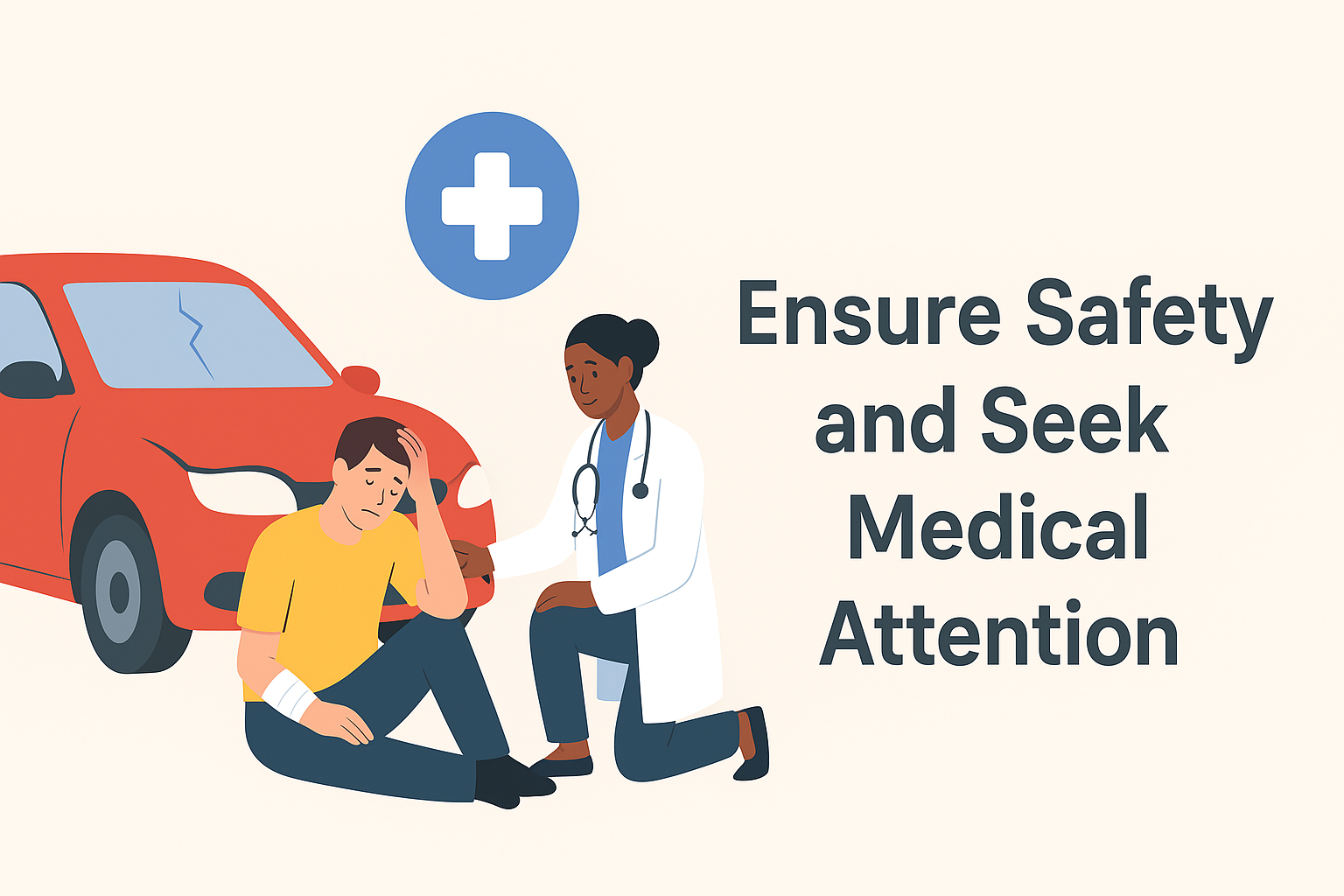
  • How Much Is My Car Accident Case Worth? Illinois Settlement Factors

    How Much Is My Car Accident Case Worth? Illinois Settlement Factors

    After a car accident in Chicago, one of the first questions victims ask is: “How much is my case worth?” There is no simple formula that applies to every case, and any website or ad that promises an exact number without reviewing your medical records and the actual insurance coverage involved is not giving you an honest answer. Understanding the factors that actually determine settlement value can help you set realistic expectations, recognize whether an insurance company’s offer reflects what your claim is really worth, and avoid the common mistake of signing away your rights before you understand what those rights are.

    This guide walks through how Illinois law categorizes damages, how attorneys and insurers estimate pain-and-suffering value, the specific factors that push a case’s value up or down, and what actually happens to a settlement once liens, costs, and fees are subtracted from the number you first hear about.

    Typical Settlement Ranges by Injury Severity

    Settlement amounts vary dramatically based on injury severity and case circumstances. The ranges below are general guidance drawn from how Illinois personal injury claims typically resolve, not a promise about any specific case:

    • Minor injuries (bruises, minor strains): roughly $2,500 to $10,000
    • Moderate injuries (soft tissue damage, minor fractures): roughly $10,000 to $75,000
    • Serious injuries (herniated discs, surgery required): roughly $75,000 to $300,000
    • Severe or catastrophic injuries (traumatic brain injury, spinal cord injury, permanent disability): roughly $300,000 and up, sometimes into the millions depending on lifetime care needs
    • Wrongful death: highly variable, often several hundred thousand dollars and up depending on the decedent’s age, income, and dependents

    These ranges are general guidelines, not a substitute for a real case evaluation. Your specific case value depends on the unique factors discussed below, and two people with what looks like the same injury on paper can end up with very different outcomes depending on liability clarity, insurance limits, and documentation quality.

    The Two Categories of Damages

    Illinois personal injury law divides compensation into two main categories.

    Economic Damages (Calculable Losses)

    Economic damages have a specific dollar value that can be calculated from bills, receipts, and records:

    • Medical expenses: emergency room, hospital stays, surgery, doctor visits, physical therapy, medications, medical equipment, and reasonably certain future medical care
    • Lost wages: income missed during recovery, including sick days and vacation time used instead of taking unpaid leave
    • Lost earning capacity: a reduced ability to earn income in the future because of permanent injuries
    • Property damage: vehicle repair or replacement, and damaged personal belongings inside the vehicle
    • Out-of-pocket expenses: transportation to appointments, home modifications, and hired help for household tasks you can no longer do yourself

    Non-Economic Damages (Quality of Life Losses)

    Non-economic damages compensate for losses that do not come with a price tag on a receipt:

    • Pain and suffering: physical pain from the injury itself and from treatment
    • Emotional distress: anxiety, depression, post-traumatic stress, or a new fear of driving
    • Loss of enjoyment of life: an inability to participate in hobbies, sports, or activities you previously enjoyed
    • Loss of consortium: the impact on your relationship with a spouse, pursued as a separate claim by the spouse
    • Disfigurement and scarring: permanent physical changes from the injury
    • Disability: temporary or permanent limitations on daily activities

    How Pain and Suffering Is Calculated

    Illinois has no fixed statutory formula for calculating pain and suffering. Two informal methods are commonly used by attorneys and insurers as a starting point for negotiation, not as a binding rule a court must follow.

    The Multiplier Method

    Your total economic damages are multiplied by a factor, often between 1.5 and 5, sometimes higher for catastrophic injuries. The multiplier depends on the severity of the injuries, the length of recovery, whether the injuries are permanent, the impact on daily life, and how clear liability is.

    Illustrative example: if you have $50,000 in medical bills and lost wages, and your injuries warrant a 3x multiplier, the pain and suffering component would be valued around $150,000, for a total illustrative case value near $200,000. This is a demonstration of the method, not a promise about what any real case is worth.

    The Per Diem Method

    A daily rate is assigned for your pain and suffering, then multiplied by the number of days you experienced symptoms.

    Illustrative example: at $200 per day for 300 days of recovery, the pain and suffering component would be roughly $60,000 under this method.

    In practice, neither method is applied mechanically. Insurance adjusters use internal software that blends elements of both, then an experienced attorney negotiates against that starting number using medical records, the treating physician’s own prognosis, and comparable verdict and settlement data for similar injuries in Cook County.

    Key Factors That Increase Case Value

    1. Severity and Permanence of Injuries

    More serious injuries that require extensive treatment or result in permanent limitations significantly increase case value. Injuries requiring surgery, causing chronic pain, or resulting in a lasting disability command higher settlements than injuries that fully resolve within a few weeks.

    2. Clear Liability

    When the other driver is clearly at fault, such as a rear-end collision, a red light violation, or a DUI arrest at the scene, insurance companies are more likely to offer fair settlements rather than risk a trial where liability is not in dispute.

    3. Strong Medical Documentation

    Consistent medical treatment with detailed records proving the connection between the crash and your injuries strengthens a claim substantially. A record that clearly ties each diagnosis back to the date of the crash is worth more, in practical negotiating terms, than the same diagnosis with a thin or inconsistent chart.

    4. Available Insurance Coverage

    Your recovery is often limited by the insurance actually available, not just by what your injuries are worth on paper. Illinois’s minimum required liability coverage is 25/50/20, meaning $25,000 per person and $50,000 per crash for bodily injury, and $20,000 for property damage. That minimum frequently is not enough to cover a serious injury. Multiple sources of coverage, including the at-fault driver’s policy, your own uninsured or underinsured motorist coverage, and any applicable umbrella policy, can increase the total compensation actually available.

    5. Impact on Daily Life

    Documentation of how the injuries affect your work, family responsibilities, hobbies, and overall quality of life adds real value to the non-economic side of a claim. A journal kept during recovery, noting specific missed events and daily limitations, is often more persuasive to an adjuster than a general statement that “it hurt a lot.”

    Factors That Decrease Case Value

    Comparative Fault Under Illinois Law

    Under 735 ILCS 5/2-1116, Illinois follows modified comparative negligence:

    • If you are 50 percent or more at fault, you recover nothing
    • If you are less than 50 percent at fault, your recovery is reduced by your percentage of fault

    Illustrative example: your case is worth $100,000, but you are found 30 percent at fault for following too closely. Your recovery would be reduced to $70,000.

    Pre-Existing Conditions

    Insurance companies will scrutinize your medical history for pre-existing conditions. Illinois follows the “eggshell plaintiff” rule, meaning a defendant takes a victim as they find them. If the crash aggravated a pre-existing condition, you are still entitled to compensation for that aggravation, even if a healthier person might not have been hurt as badly by the same impact. Insurers routinely argue the opposite at first, so this doctrine is one of the more common points of dispute in a negotiation.

    Gaps in Medical Treatment

    Delays in seeking treatment or gaps in ongoing care suggest, in an adjuster’s eyes, that the injuries were not as serious as claimed. Insurers use treatment gaps to minimize a claim even when the real explanation is something mundane, like a missed appointment due to work or lack of transportation.

    Social Media Activity

    Photos showing physical activity, travel, or social events can be used to argue your injuries do not affect your life the way you have described. Insurance defense teams routinely review a claimant’s public social media accounts during a pending claim, so it is worth being cautious about what you post while a case is open.

    How Case Value Scales With Injury Type

    To illustrate how the factors above compound in practice, consider two contrasting hypothetical claims arising from similar crashes.

    Hypothetical 1: a driver is rear-ended at a stoplight and sustains a soft-tissue neck injury treated with several weeks of physical therapy, with $8,000 in medical bills and $2,000 in lost wages. Liability is undisputed. Applying a modest multiplier appropriate for a fully-resolving soft-tissue injury, a realistic settlement range might land in the low five figures.

    Hypothetical 2: a driver is struck by a commercial vehicle on an expressway, sustains a herniated disc requiring lumbar fusion surgery, misses four months of work, and is left with a permanent lifting restriction. Medical bills and lost wages alone exceed $150,000, liability is clear, and the commercial policy behind the at-fault driver carries substantially higher limits than a standard personal auto policy. A case with this profile, permanent injury, clear fault, and adequate insurance, would be expected to settle far higher than Hypothetical 1, often well into six figures or beyond depending on the specific medical prognosis.

    The gap between these two outcomes is not random. It tracks directly to the factors discussed above: injury permanence, liability clarity, and available coverage. A third hypothetical illustrates how comparative fault interacts with an otherwise strong claim: a driver with a herniated disc and $60,000 in economic damages, but found 25 percent at fault for a rolling stop before entering the intersection, would see the same evidence and same medical record produce a materially lower net recovery than an identical injury with clear, undisputed liability. This is why an insurance adjuster’s opening comparative-fault argument is worth challenging rather than accepting at face value, even when the underlying medical case is strong.

    Why You Shouldn’t Accept the First Offer

    Insurance companies routinely make initial settlement offers that are far below a claim’s real value. They know that many victims need money quickly and will accept low offers, that unrepresented claimants often do not know a case’s true value, that early offers are made before the full extent of injuries is known, and that medical bills continue to accumulate during treatment.

    Never accept a settlement before reaching maximum medical improvement, or MMI, the point where your condition has stabilized enough that a doctor can reasonably project your future medical needs. Settling before MMI risks signing away your right to compensation for complications that surface later, since a signed release typically closes the claim permanently.

    How Liens and Deductions Affect What You Actually Keep

    A settlement’s headline number is not the same as what you take home. Health insurers, Medicare, Medicaid, and treating providers who accepted a letter of protection can all assert a lien against your settlement under Illinois’s Health Care Services Lien Act, and attorney fees and case costs come out before you receive your share. A case that “settles” for $150,000 might net considerably less once medical liens, case expenses, and the contingency fee are subtracted, which is one reason a knowledgeable attorney will negotiate lien reductions as part of the overall resolution, not just the headline settlement number with the insurance company.

    Health insurers and Medicaid typically have a statutory right to be reimbursed out of a personal injury recovery for the medical bills they already paid on your behalf, and providers who treated you on a letter of protection, meaning they agreed to wait for payment until the case resolves, are paid directly from the settlement proceeds before any money reaches you. A common and avoidable mistake is negotiating hard on the total settlement number while never asking whether the liens attached to that settlement can themselves be reduced. Lien reduction negotiations, separate from negotiating with the at-fault driver’s insurer, can meaningfully increase what you actually keep even when the headline settlement figure does not change.

    Lump Sum vs. Structured Settlements

    Most Illinois car accident claims settle as a single lump-sum payment once negotiations conclude, and this is the right choice for the majority of cases, particularly where damages are largely economic and already incurred. For catastrophic injury cases involving decades of future medical care, however, a structured settlement, paid out over time through an annuity rather than all at once, can sometimes make more financial sense. A structured settlement can provide guaranteed income for life, which matters when a permanent injury requires ongoing attendant care or medical equipment replacement decades into the future. Whether a lump sum or a structured arrangement fits your situation depends heavily on the nature of the injury and your own financial circumstances, and it is a decision worth discussing directly with your attorney rather than assuming one option is automatically better.

    When Multiple Insurance Policies Are Involved

    Case value is not just a legal question, it is also a practical question of which policies can actually pay. A single at-fault driver with only the state minimum coverage caps what that driver’s insurer will pay regardless of how serious your injuries are. In crashes involving a commercial vehicle, a delivery driver, or a rideshare vehicle, however, the operative policy is often much larger, sometimes $1 million or more, which is one reason two seemingly similar crashes can produce very different outcomes. Identifying every policy that could respond to a claim, including umbrella coverage the at-fault party may carry personally, is part of what a thorough case investigation does before any settlement number is discussed with the insurer.

    How an Attorney Increases Your Settlement

    Accident victims represented by an attorney tend to recover more, even after accounting for attorney fees, than those who negotiate alone, largely because an experienced car accident lawyer accurately values a claim using legal expertise and comparable case data, gathers evidence to establish liability against the at-fault driver, pushes back on comparative fault arguments that would otherwise reduce your recovery, negotiates directly with adjusters who use practiced tactics for a living, identifies every available source of compensation including multiple policies or additional defendants, and is prepared to take a case to trial when an insurer will not offer a fair settlement.

    Get a Free Case Valuation from Phillips Law Offices

    At Phillips Law Offices, we understand how to accurately value cases and fight for maximum compensation on behalf of injured clients across Illinois.

    During your free consultation, we will review your accident, evaluate your injuries, and provide an honest assessment of your case’s potential value. We work on contingency, so you pay nothing unless we win. Illinois’s standard personal injury statute of limitations under 735 ILCS 5/13-202 gives you two years from the date of the crash to file suit, so it is worth having a case evaluated well before that deadline approaches.

    Call Phillips Law Offices today at (312) 346-4262 to find out what your car accident case may be worth.

    Authoritative Sources

    Related Chicago Accident Guides

    FAQs

    What factors affect Illinois car accident settlement value?

    Liability strength, injury severity, treatment duration, wage loss, and available insurance policy limits are the major drivers of settlement value.

    Is there an average settlement amount that applies to every case?

    No. Case values vary significantly based on the specific facts, evidence, and long-term medical impact of each crash.

    When should I avoid settling quickly?

    Avoid settling before your medical condition and future care needs are reasonably clear, since a signed release generally closes the claim permanently.

    Do medical bills and attorney fees come out of my settlement?

    Yes. Health insurance or medical provider liens, case costs, and attorney fees are typically deducted before you receive your net share, which is why the settlement’s headline number is not what you actually take home.

    Related guides on what your claim is worth

    Talk to a Chicago car accident lawyer. Phillips Law Offices offers a free case review, and there is no fee unless we recover for you. Call (312) 346-4262 or request a free case review.

    This article is general information about Illinois law, not legal advice, and reading it does not create an attorney-client relationship. Illinois law changes; confirm anything you intend to rely on with a licensed Illinois attorney.
  • Winter Driving Accidents in Chicago: Ice, Snow & Liability Issues

    Winter Driving Accidents in Chicago: Ice, Snow & Liability Issues

    Chicago winters are brutal, and dangerous. From black ice on Lake Shore Drive to snow-covered side streets in residential neighborhoods, winter weather creates hazardous driving conditions that lead to thousands of accidents each year. If you have been injured in a winter car accident, you may wonder who is liable when ice and snow are involved. The answer often surprises people, because Illinois law does not treat bad weather as an automatic excuse for careless driving.

    Winter Accident Statistics in Chicago

    Illinois experiences some of the most treacherous winter driving conditions in the country. According to the Illinois Department of Transportation (IDOT), winter weather contributes to a significant share of annual traffic crashes:

    • Snow and ice-related crashes spike dramatically between December and February
    • The first snowfall of the season typically sees crash rates increase by 30 to 50 percent, since drivers have not yet re-adjusted to slick conditions
    • Black ice, an invisible frozen coating on roadways, causes some of the most severe crashes because drivers do not see it coming
    • Rush hour crashes increase substantially during winter storms, when commuters try to keep to a normal schedule despite dangerous roads

    A single hard freeze after a thaw can turn an ordinary evening commute into a multi-car pileup within minutes. Cook County courts see a predictable rise in personal injury filings every January and February tied directly to these conditions.

    Can You Still Be Liable in a Winter Weather Accident?

    Yes, bad weather does not excuse negligent driving. This is one of the most important legal concepts for winter accident victims to understand, and it is also one of the most commonly misunderstood by drivers who assume “the roads were icy” ends the conversation about fault.

    Under Illinois law, drivers have a duty to operate their vehicles safely given the existing conditions. When roads are icy or snow-covered, drivers must adjust their behavior accordingly. Failing to do so constitutes negligence, the same legal standard that applies to any other type of crash. Weather does not create a separate, lower bar for careful driving; it raises the bar for what a reasonable driver is expected to do.

    The “Reasonable Driver” Standard

    Illinois courts apply a “reasonable driver” standard when evaluating winter accident liability. A reasonable driver in winter conditions would:

    • Reduce speed below posted limits when roads are slippery, since posted limits assume dry pavement
    • Increase following distance well beyond the normal three-second rule to allow for longer stopping distances
    • Use headlights in reduced visibility conditions, including daytime snow squalls
    • Avoid sudden braking or acceleration that could cause loss of control on a slick surface
    • Clear snow and ice from all windows, mirrors, and lights before driving, not just a small peephole in the windshield
    • Ensure tires are adequate for winter conditions, with sufficient tread depth

    A driver who fails to take these precautions and causes a crash can be held liable for resulting injuries, regardless of the weather. Insurance adjusters know this too, which is why winter claims often turn into a fight over exactly what a “reasonable” driver would have done in the same conditions rather than a fight over whether the weather itself was dangerous.

    Common Causes of Winter Driving Accidents

    Black Ice Accidents

    Black ice forms when temperatures hover around freezing, creating a nearly invisible layer of ice on roadways. Common black ice locations in Chicago include:

    • Bridges and overpasses, which freeze before the surrounding road surface because cold air circulates both above and below the deck
    • Shaded areas under viaducts along the Metra and CTA lines
    • Intersections where exhaust and tire friction melt snow that later refreezes overnight
    • Early morning roads after overnight temperature drops, particularly on side streets that see less traffic and salt coverage than arterial roads

    While black ice itself is not anyone’s fault, a driver traveling too fast for conditions who loses control on black ice is still negligent. The legal question is never “was there ice.” It is “did this driver operate at a speed and following distance appropriate for a road that could plausibly have ice on it.”

    Rear-End Collisions

    Winter rear-end collisions are extremely common. Drivers who follow too closely on slick roads often cannot stop in time when traffic slows. Under Illinois law, the rear driver is typically presumed at fault in rear-end crashes, and icy roads do not change this presumption. If anything, icy conditions make the presumption harder to rebut, because a following driver who knew or should have known the roads were slick had an even greater duty to leave extra space.

    Sliding Through Intersections

    Running a red light or stop sign because “the car would not stop” is not a valid defense. Drivers must anticipate longer stopping distances and begin braking earlier in winter conditions. Illinois’s basic speed statute, 625 ILCS 5/11-601, requires drivers to reduce speed for actual road conditions, not just the posted limit, and this statute is frequently cited in winter fault disputes.

    Loss of Control Accidents

    Fishtailing, spinning out, and overcorrecting are common winter crash scenarios. These typically result from excessive speed for conditions, sudden steering movements, aggressive braking, or poor tire condition. Overcorrection deserves special mention, because it is one of the most frequent causes of single-vehicle winter crashes that end up crossing into oncoming traffic. A driver who oversteers out of a minor skid and crosses the centerline can be found negligent even though the original skid was not their fault.

    Multi-Vehicle Pileups

    Chicago expressways like I-90, I-94, and I-290 are notorious for winter pileups, especially in the stretches where lanes narrow near interchanges or where sightlines are blocked by overpasses. These crashes often involve a dozen or more vehicles and require careful investigation to sort out which drivers actually caused the initial collision versus which drivers were simply caught in a chain reaction they could not have avoided. Reconstructing a pileup usually means pulling dashcam footage from multiple vehicles, IDOT traffic camera archives where available, and 911 call timestamps to build an accurate sequence of impacts.

    Illinois Comparative Negligence in Winter Accidents

    Illinois follows a modified comparative negligence rule under 735 ILCS 5/2-1116. This means:

    • You can recover damages if you are less than 50 percent at fault
    • Your compensation is reduced by your percentage of fault
    • If you are 50 percent or more at fault, you recover nothing

    How This Applies to Winter Accidents

    Insurance companies often try to shift blame in winter accidents by arguing that both drivers should have been more careful. For example:

    Hypothetical scenario: Driver A slides through a stop sign on an icy side street and hits Driver B, who was traveling 5 mph over the posted limit at the time. Driver B has $100,000 in documented damages. The insurance company for Driver A opens the claim by arguing Driver B was 20 percent at fault for the speed alone, which would reduce Driver B’s recovery to $80,000, even though Driver A ran the stop sign.

    An experienced attorney can push back on this kind of comparative fault argument by pointing to the actual cause of the collision, the failure to stop, rather than a secondary, more speculative contributing factor. Insurers frequently open with an aggressive fault split and negotiate down from there, so an early lowball comparative-fault number is not the final word on your claim.

    Who Else May Be Liable for Winter Accidents?

    Beyond the other driver, additional parties may share liability for winter accidents:

    Government Entities

    Cities and counties have a duty to maintain reasonably safe roads. Potential claims against government entities may arise from a failure to salt or plow roads within a reasonable time, inadequate drainage that leads to ice formation in the same spot every winter, missing or obscured road signs, or intersections that are poorly designed and prone to repeat ice accumulation.

    Important: Claims against the State of Illinois itself generally must be filed with the Illinois Court of Claims under 705 ILCS 505, which has its own procedures and deadlines separate from a normal circuit court lawsuit. Claims against a city or county, such as Chicago itself, instead fall under the Local Governmental and Governmental Employees Tort Immunity Act, which requires the lawsuit itself to be filed within one year of the injury, a much shorter deadline than the standard two-year window for a typical negligence claim. There is no separate pre-suit notice requirement against a local public entity; the notice provision was repealed in 1986. Missing that one-year filing deadline against a municipality is one of the most common and most avoidable ways a valid winter road-defect claim gets thrown out before it is ever heard.

    Property Owners

    Under Illinois’s Snow and Ice Removal Act, 745 ILCS 75, residential property owners generally cannot be held liable for injuries caused by a natural accumulation of snow and ice on sidewalks abutting their property, and the statute specifically protects owners who make a good-faith attempt at removal from being sued over how well that removal worked. This protection is narrower than many people assume: it applies to residential sidewalks, not driveways, parking lots, or commercial properties, and it does not protect an owner who creates an unnatural accumulation, for example through a broken gutter that repeatedly dumps water onto a walkway where it refreezes, or through snow-plowing that piles ice into a spot pedestrians and vehicles cannot avoid.

    • The owner created an unnatural accumulation, such as through improper drainage or downspout placement
    • Snow removal efforts made conditions more dangerous than doing nothing, for example by packing loose snow into a hard, slick sheet
    • The property is commercial, not residential, where a different and generally stricter standard of care applies

    Commercial Vehicle Operators

    Commercial trucks and buses have additional duties in winter weather. Federal Motor Carrier Safety Administration regulations require commercial drivers to adjust speed and following distance for adverse conditions, and a driver who fails to do so can be cited under those regulations in addition to Illinois traffic law. Trucking companies also carry an independent duty to maintain proper tire condition, brake function, and driver training for the season, and a company that dispatches a truck with worn tires into a known winter storm can face liability that goes beyond the individual driver’s actions.

    Evidence in Winter Accident Cases

    Building a strong winter accident case requires specific evidence that goes beyond what a typical fair-weather crash claim needs.

    Weather Documentation

    • Official weather reports from the National Weather Service for the exact time and location of the crash
    • Temperature records showing freezing conditions at the relevant hour, not just the daily high or low
    • Precipitation data, including snowfall totals and any freezing rain
    • Road condition reports from IDOT, where available for the corridor involved

    Scene Evidence

    • Photos of road conditions at the crash scene, taken as soon as it is safe to do so
    • Images of ice or snow accumulation, including any untreated or unplowed patches
    • Skid mark measurements and patterns, when visible
    • Vehicle damage showing impact direction and severity

    Vehicle Condition

    • Tire tread depth and condition on both vehicles, where obtainable
    • Brake system functionality
    • Windshield wiper and defroster operation
    • Headlight and taillight functionality, since a burned-out taillight can turn a minor winter fender-bender into a disputed liability case

    What to Do After a Winter Car Accident

    If you are involved in a winter weather crash in Chicago:

    1. Move to safety if possible. Secondary collisions are common in winter conditions, since other drivers approaching the same icy stretch may not be able to stop in time either.
    2. Call 911. Always get a police report, even in what seems like a minor crash.
    3. Document the conditions. Photograph ice, snow, and road conditions immediately, before plows or salt trucks change the scene.
    4. Note the temperature. Check your phone’s weather app and screenshot it with a visible timestamp.
    5. Get witness information. Other drivers may have seen the crash or the conditions leading up to it.
    6. Do not admit fault. Saying “I could not stop on the ice” at the scene can later be used against you, even if the real cause was the other driver’s following distance.
    7. Seek medical attention. Cold and adrenaline can mask injury symptoms for hours or days.
    8. Contact an attorney promptly. Winter accident cases require experienced investigation while weather data and scene conditions are still fresh, and Illinois’s standard two-year statute of limitations for personal injury claims (735 ILCS 5/13-202) still applies regardless of the season.

    Insurance Company Tactics in Winter Claims

    Be prepared for insurance adjusters to use winter weather against you.

    • “Act of God” arguments: Insurers may claim the weather itself caused the crash, not their driver’s choices.
    • Shared fault allegations: They will scrutinize your driving for any reason to assign partial blame, down to your speed, your tire brand, or how quickly you braked.
    • “You should have stayed home”: Some adjusters argue you assumed the risk simply by driving in bad weather, an argument Illinois law does not actually support as a bar to recovery.
    • Quick lowball offers: They may try to settle cheaply before you understand the full extent of your injuries, which can take days or weeks to fully surface after a winter crash.

    None of these arguments eliminate liability when a driver fails to operate safely for conditions. They are negotiating positions, not statements of law, and a well-documented claim can push back on every one of them.

    Uninsured and Underinsured Drivers in Winter Crashes

    Winter multi-vehicle pileups sometimes involve a driver who is uninsured or carries only Illinois’s statutory minimum liability coverage, which is often not enough to cover serious injuries from a high-speed expressway chain reaction. If the at-fault driver’s coverage is inadequate, your own uninsured or underinsured motorist (UM/UIM) coverage can step in to cover the gap, provided you carry it and provided you notify your own insurer of the claim in a timely manner. This is worth checking early in any winter pileup case, since the number of vehicles involved often means the at-fault driver’s policy limits get split among several injured claimants before any one person sees a full payout.

    Get Help from Phillips Law Offices

    Winter accident cases require attorneys who understand both Illinois negligence law and the unique challenges of proving liability in adverse weather conditions. At Phillips Law Offices, we have decades of experience handling Chicago winter accident claims.

    We investigate the crash scene, gather weather data, document road conditions, and push back against insurance company attempts to blame the weather instead of the negligent driver who caused your injuries.

    If you have been injured in a winter car accident in Chicago, contact Phillips Law Offices today at (312) 346-4262 for a free consultation. Do not let the insurance company use the weather as an excuse.

    Authoritative Sources

    Related Chicago Accident Guides

    FAQs

    Who is liable in winter-weather crashes?

    Drivers are still expected to use reasonable care for conditions, including speed and following distance. A driver who does not adjust for icy or snow-covered roads and causes a crash can be held liable the same as in any other negligence case.

    Does bad weather automatically remove fault?

    No. Weather is a factor courts and insurers consider, but negligence can still be found if a driver acted unreasonably given the conditions they could see and should have anticipated.

    What evidence helps in a winter crash claim?

    Scene photos, road condition reports, witness statements, weather data for the exact time and location, and timely medical documentation are all helpful in a winter crash claim.

    Can I sue the City of Chicago for not plowing or salting a street?

    It is possible in narrow circumstances, but these claims are difficult and carry a strict one-year deadline to file suit under 745 ILCS 10/8-101 rather than the standard two-year deadline. You generally need to show the city knew or should have known about a dangerous condition and failed to address it within a reasonable time, not simply that a street was not yet plowed during an active storm.

    What if the other driver in a winter pileup does not have enough insurance?

    Your own uninsured or underinsured motorist coverage can potentially cover the gap. This is especially important in large expressway pileups, where policy limits often have to be divided among multiple injured people.

    Related guides on collision types and fault

    Talk to a Chicago car accident lawyer. Phillips Law Offices offers a free case review, and there is no fee unless we recover for you. Call (312) 346-4262 or request a free case review.

    This article is general information about Illinois law, not legal advice, and reading it does not create an attorney-client relationship. Illinois law changes; confirm anything you intend to rely on with a licensed Illinois attorney.
  • Hit and Run Accidents in Illinois: Criminal Penalties & Victim Rights

    Hit and Run Accidents in Illinois: Criminal Penalties & Victim Rights

    Being the victim of a hit and run accident is frightening and frustrating. The driver who caused your injuries fled the scene, leaving you to deal with medical bills, vehicle damage, and the uncertainty of whether you’ll ever receive compensation. Understanding Illinois hit and run laws, and your rights as a victim, is crucial to protecting yourself and pursuing the justice you deserve.

    What Constitutes a Hit and Run in Illinois?

    Under the Illinois Vehicle Code, a hit and run occurs when a driver involved in an accident fails to fulfill their legal obligations. Illinois law (625 ILCS 5/11-401 and 625 ILCS 5/11-402) requires drivers involved in accidents to:

    • Stop immediately at the scene of the accident
    • Provide contact and insurance information to other involved parties
    • Render reasonable assistance to anyone who is injured
    • Report the accident to police within 30 minutes if injuries or death occurred (unless physically unable)

    A driver commits hit and run by leaving the scene without stopping, sharing contact details, or aiding injured parties.

    Criminal Penalties for Hit and Run Drivers

    Illinois takes hit and run offenses seriously. The criminal penalties depend on the severity of the accident:

    Property Damage Only

    When a hit and run involves only property damage (no injuries), it is classified as a Class A misdemeanor under 625 ILCS 5/11-402:

    • Up to 1 year in jail
    • Fines up to $2,500
    • Mandatory license suspension

    Accidents Involving Injury

    When someone is injured in a hit and run, the offense becomes a Class 2 felony under 625 ILCS 5/11-401:

    • 3 to 7 years in prison
    • Substantial fines
    • Mandatory license revocation

    Fatal Hit and Run

    When a hit and run results in death, the driver faces a Class 1 felony:

    • 4 to 15 years in prison
    • Fines up to $25,000
    • Permanent license revocation

    Failure to Report

    Failure to report an accident resulting in injury or death to police is also a Class 1 felony, carrying the same 4-15 year prison sentence.

    No Statute of Limitations for Criminal Prosecution

    Illinois eliminated the criminal statute of limitations for hit and run prosecution through Senate Bill 1943, signed into law in 2005 and known as the Patrick Leahy Law, named for a six-year-old killed by a hit-and-run driver in Winfield, Illinois in 1999. Before this law, prosecutors had only three years to charge a driver who fled the scene, and just eighteen months to charge a driver who failed to render aid or provide information after a crash causing death, injury, or property damage. The Patrick Leahy Law removed that ticking clock entirely for these offenses, meaning investigators and prosecutors now have unlimited time to identify and criminally charge a hit-and-run driver, however long it takes.

    Your Rights as a Hit and Run Victim

    As a victim of a hit and run in Illinois, you have important legal rights:

    Right to Pursue Civil Compensation

    Regardless of whether the hit and run driver is found, you may be entitled to compensation for:

    • Medical expenses: Hospital bills, surgery, rehabilitation, ongoing treatment
    • Lost wages: Income lost due to injuries, including future earning capacity
    • Vehicle repair or replacement costs
    • Pain and suffering: Physical pain and emotional distress
    • Wrongful death damages: If a loved one was killed, including funeral expenses

    Statute of Limitations for Civil Claims

    Under 735 ILCS 5/13-202, you have two years from the date of the accident to file a personal injury lawsuit against a hit and run driver (if identified). Don’t wait – evidence can disappear, and witnesses’ memories fade. Note that this two-year civil deadline is entirely separate from the unlimited criminal prosecution window described above; even if the driver is eventually identified and criminally charged years later, your own civil claim against them still runs on the standard two-year clock from the date of the crash, not from whenever they’re caught.

    Compensation Options When the Driver Isn’t Found

    Many hit and run victims worry they have no options if the responsible driver is never identified. Fortunately, Illinois law provides alternatives:

    Uninsured Motorist (UM) Coverage

    Illinois requires all auto insurance policies to include uninsured motorist coverage. This coverage specifically applies to hit and run accidents where the at-fault driver cannot be identified. Your UM coverage can pay for:

    • Medical expenses
    • Lost wages
    • Pain and suffering
    • Other damages, up to your policy limits

    Underinsured Motorist (UIM) Coverage

    If the hit and run driver is found but has insufficient insurance, your UIM coverage can make up the difference between their policy limits and your actual damages.

    Medical Payments (MedPay) Coverage

    If you carry MedPay coverage, it pays for your medical expenses regardless of fault, providing quick access to funds while you pursue other compensation.

    Filing a UM Claim: What to Expect

    A hit-and-run UM claim isn’t automatic just because you were hit by an unidentified driver; most policies require you to report the hit-and-run to police within a set window (often 24 hours) and to notify your own insurer promptly as well. Because there’s no other driver to point to, your own insurer effectively steps into that role for claims-evaluation purposes, which means the same comparative-fault and damages disputes that come up in an ordinary third-party claim can come up here too, just directed at your own carrier instead of an opposing one. Independent corroborating evidence, physical evidence at the scene, a witness account, damage consistent with a vehicle-to-vehicle collision, matters more in a hit-and-run UM claim than in a claim against an identified driver, since there’s no other party’s insurer to help establish that a crash actually happened the way you describe it. A written, timestamped account created as soon as possible after the crash, before memory naturally starts to blur specific details, can itself become useful supporting evidence months later when the claim is actually evaluated.

    Hit-and-Run Pedestrian and Cyclist Cases

    Pedestrians and cyclists face particular risk in hit-and-run crashes, since they have less physical evidence to work with than a vehicle-to-vehicle collision, no exchanged paint transfer between two cars, no matching dent patterns, and the injuries are often more severe relative to the impact speed. The same UM coverage generally extends to pedestrians and cyclists struck by an unidentified driver, but the policy in question is typically the injured person’s own auto policy (or a household member’s, if they don’t carry their own), even though they weren’t driving a car at the time of the crash. This surprises some pedestrian and cyclist victims who assume auto insurance only covers people who were themselves in a vehicle; Illinois UM coverage generally follows the person, not just the vehicle, for exactly this kind of scenario. If the injured pedestrian or cyclist doesn’t carry their own auto policy and no household member’s policy applies, a resident relative’s policy sometimes still extends coverage depending on household composition, which is worth checking rather than assuming no coverage exists simply because the victim personally owns no car.

    What to Do After a Hit and Run Accident

    Your actions immediately after a hit and run can significantly impact your ability to recover compensation:

    1. Stay at the Scene and Call 911

    Report the accident immediately. A police report creates official documentation of the incident and initiates the investigation to find the responsible driver.

    2. Gather Whatever Information You Can

    Even partial information helps investigators:

    • License plate number (even partial)
    • Vehicle make, model, and color
    • Direction the vehicle fled
    • Description of the driver
    • Any distinguishing features (dents, bumper stickers, damage)

    3. Look for Witnesses

    Ask anyone nearby if they saw what happened. Get contact information from witnesses – their testimony could be crucial.

    4. Check for Surveillance Cameras

    Look for nearby businesses, traffic cameras, or residential security cameras that may have captured the accident or the fleeing vehicle.

    5. Document Everything

    Take photos of:

    • Your vehicle damage
    • The accident scene
    • Your injuries
    • Any debris left by the other vehicle
    • Skid marks or road conditions

    6. Seek Medical Attention

    Get examined by a doctor even if you feel fine. Some injuries don’t show symptoms immediately, and medical documentation is essential for your claim.

    7. Notify Your Insurance Company

    Report the hit and run to your insurer promptly to activate your UM/UIM coverage. Be factual but don’t provide recorded statements without consulting an attorney first.

    How Police Investigate Hit and Run Accidents

    Law enforcement uses multiple methods to identify hit and run drivers:

    • Surveillance footage review from traffic and security cameras
    • Physical evidence analysis: Paint transfers, debris, vehicle parts
    • Witness interviews
    • License plate databases and partial plate searches
    • Body shop notifications: Alerting repair shops to watch for matching damage
    • Social media and tip lines

    Common Mistakes Hit-and-Run Victims Make

    • Not calling police immediately. Waiting even a few hours to report can jeopardize a UM claim, since most policies specify a prompt reporting window, and it also gives investigators less time to canvass the area for camera footage before it’s overwritten, since most commercial security systems cycle their storage within days or weeks.
    • Assuming there’s nothing to be done without a plate number. Partial descriptions, vehicle damage patterns, and camera footage from nearby businesses have identified drivers even when the victim caught no plate information at all.
    • Not checking UM coverage before assuming there’s no recovery available. Many drivers don’t realize hit-and-run coverage is built into their standard policy until they actually need it.
    • Delaying medical treatment. The same documentation problems that affect any injury claim apply here, and a hit-and-run claim already has to establish more from scratch, so a treatment gap is even more costly to a hit-and-run UM claim than to an ordinary third-party claim.
    • Giving an incomplete statement to their own insurer. Because your insurer is effectively standing in for the missing at-fault driver, the same care in how you describe the crash to your own insurer applies as it would to an opposing insurer in an ordinary claim, and it’s reasonable to consult an attorney before that statement rather than after.

    Why Hit and Run Drivers Flee

    Understanding why drivers flee can help identify them. Common reasons include:

    • Intoxication: The driver was drunk or on drugs
    • No insurance or license: They feared legal consequences
    • Outstanding warrants: The driver had active arrest warrants
    • Stolen vehicle: They were driving a stolen car
    • Panic: They made a split-second bad decision

    A Realistic Example

    Consider a hypothetical: a pedestrian is struck in a parking lot by a driver who immediately speeds away without stopping. The victim catches a partial plate number and a description of a dark-colored SUV, and a nearby store’s exterior camera captures a partial angle of the vehicle. In this scenario, the victim’s own UM coverage would typically be the primary path to compensation while police pursue the investigation, and the camera footage, requested and preserved quickly before the store’s system overwrites it, could later support both the criminal investigation and, if the driver is eventually identified, a separate civil claim within the standard two-year window from the date of the crash. If the driver is never identified, the criminal case may remain open indefinitely under the Patrick Leahy Law, but the victim’s own UM claim doesn’t have to wait on that outcome to proceed.

    A second version of this scenario shows why documentation matters even more in a hit-and-run: suppose the store’s camera turns out to have been aimed the wrong direction, and no witness comes forward. Without the partial plate number and vehicle description gathered at the scene, the UM insurer would have essentially nothing beyond the victim’s own account to evaluate the claim against, and insurers are understandably more skeptical of an unverifiable hit-and-run claim than one supported by even partial independent evidence. This is the practical reason the immediate-aftermath steps below matter as much as, or more than, the medical and legal steps that follow.

    What If the Driver Is Found After You’ve Already Settled a UM Claim?

    If your UM claim has already resolved and the driver is later identified, either through the ongoing police investigation or new evidence, you may still have options against them directly, particularly if your damages exceeded what your UM policy limits actually paid. Illinois law generally allows this kind of subsequent action within the standard 2-year window from the date of the crash, though the practical details, including whether your UM insurer has a subrogation interest in any recovery from the now-identified driver, depend on the specific terms of your policy and how the earlier claim was resolved. This is worth raising with an attorney if a driver is identified after your insurance claim has already closed, rather than assuming the matter is fully over. Keeping a personal record of your claim’s timeline and settlement amount, separate from whatever paperwork your insurer keeps on file, makes this kind of follow-up conversation considerably easier if it ever becomes relevant.

    Get Legal Help for Your Hit and Run Claim

    Hit and run cases present unique challenges, from tracking down the responsible driver to navigating insurance claims when the driver remains unidentified. An experienced Chicago car accident attorney can:

    • Conduct independent investigations to identify the driver
    • Maximize your UM/UIM insurance recovery
    • Handle negotiations with insurance companies
    • Pursue all available sources of compensation
    • Protect your rights throughout the process

    At Phillips Law Offices, we’ve helped countless hit and run victims secure the compensation they deserve, whether or not the responsible driver was ever found. Our team knows how to investigate these cases and pursue every available avenue of recovery.

    If you’ve been injured in a hit and run accident in Chicago or anywhere in Illinois, contact Phillips Law Offices today at (312) 346-4262 for a free consultation.

    Authoritative Sources

    Related Chicago Accident Guides

    FAQs

    What should I do first after a hit-and-run crash?

    Call 911, seek medical care, and preserve all evidence including witness details and camera footage.

    Can I recover if the driver is never found?

    Possibly. UM coverage may apply depending on your policy and the claim facts.

    How important is quick reporting in hit-and-run cases?

    Very important. Early reporting improves investigation and evidence preservation.

    Does the criminal case against a hit-and-run driver affect my civil claim’s deadline?

    No. Your civil claim still runs on the standard 2-year deadline from the date of the crash, even though Illinois has no time limit on criminally prosecuting the driver once identified. Keep this distinction in mind if a hit-and-run driver isn’t caught until years after your crash.

    Do I have to report a hit-and-run to police before filing a UM claim?

    Most policies require prompt police notification, often within 24 hours, as a condition of a hit-and-run UM claim, so reporting immediately protects both the criminal investigation and your own insurance claim.

    Related guides on crashes caused by negligent drivers

    Talk to a Chicago car accident lawyer. Phillips Law Offices offers a free case review, and there is no fee unless we recover for you. Call (312) 346-4262 or request a free case review.

    This article is general information about Illinois law, not legal advice, and reading it does not create an attorney-client relationship. Illinois law changes; confirm anything you intend to rely on with a licensed Illinois attorney.

  • 2025 Illinois Personal Injury Law Changes: What Accident Victims Need to Know

    2025 Illinois Personal Injury Law Changes: What Accident Victims Need to Know

    Illinois has enacted several significant changes to personal injury law that took effect in 2025. If you’ve been injured in a car accident, understanding these new laws could directly impact your ability to recover compensation and navigate the claims process. Here’s what Chicago accident victims need to know about the latest legislative updates.

    Medical Debt Relief Act: Protection from Credit Damage

    One of the most impactful changes for accident victims is the Illinois Medical Debt Relief Pilot Program, established by the Illinois Department of Healthcare and Family Services and required to be in place by January 1, 2025. The program launched July 1, 2025, partnering with the nonprofit Undue Medical Debt to purchase and forgive qualifying medical debt for eligible Illinois residents, generally those below 400% of the federal poverty level or carrying medical debt equal to 5% or more of household income. As of this writing, the program has relieved several hundred million dollars in medical debt for hundreds of thousands of Illinois residents, funded by state appropriations with a stated goal of eliminating roughly $1 billion in medical debt statewide.

    Separately, Public Act 103-0648 (formerly Senate Bill 2933), effective January 1, 2025, amended the Illinois Consumer Fraud and Deceptive Business Practices Act to prohibit consumer reporting agencies from including medical debt on a consumer’s credit report or maintaining a file containing medical debt information. This means unpaid hospital bills from your car accident injuries can no longer be reported to credit bureaus the way an unpaid credit card or loan balance can.

    Why This Matters for Car Accident Victims

    Previously, the threat of credit damage from unpaid medical bills created real pressure for accident victims to accept early, unfair settlement offers just to stop the bills from piling up and affecting their credit. With these protections in place, you have more room to:

    • Focus on your medical recovery without financial panic
    • Wait for a fair settlement offer rather than accepting a lowball amount
    • Fully understand the extent of your injuries before settling
    • Negotiate from a position of strength rather than desperation

    It’s worth noting what this protection does not do: it doesn’t erase the underlying obligation to eventually pay medical providers (through your settlement, your own insurance, or the debt relief program if you qualify), and it doesn’t stop a provider from pursuing collection through other means. It specifically removes the credit-reporting leverage that made early lowball settlements feel more urgent than they actually were. It’s also worth understanding that this protection is separate from any lien or subrogation right your health insurer or Medicaid may have against your eventual settlement; a hospital bill no longer showing up on your credit report doesn’t mean the underlying obligation to reimburse whoever paid it has disappeared.

    Scott’s Law Updates: Stronger Move Over Protections

    Illinois strengthened Scott’s Law (the Move Over Law) under Public Act 103-0711, effective January 1, 2025. The updates include:

    • Increased penalties for drivers who violate the law, with fines that scale considerably higher for repeat violations or violations causing injury or death
    • Expanded coverage confirming the law’s application to a broader range of roadside vehicles displaying hazard or warning lights, not just police and emergency vehicles
    • Continued mandatory lane-change-or-slow-down requirements when approaching any stopped vehicle with hazard lights activated

    Impact on Car Accident Claims

    If a driver fails to follow Scott’s Law and causes an accident, that statutory violation serves as strong evidence of negligence in your personal injury claim. A documented Scott’s Law violation can help establish the other driver’s liability and strengthen your case for compensation, particularly in crashes involving a stopped vehicle on a shoulder, a tow truck, or roadside assistance.

    House Bill 3313: Proposed Discovery Limits

    House Bill 3313, introduced in the 104th Illinois General Assembly in 2025, proposes limiting formal discovery in personal injury claims against motor vehicle operators where total damages sought are equal to or less than Illinois’s minimum required liability insurance limits. As of this writing, HB 3313 remains pending in committee and has not been enacted into law – it’s a proposal, not a current rule, and it’s worth tracking rather than treating as settled. If passed as introduced, it would restrict plaintiffs’ ability to take depositions or pursue certain discovery in smaller-value claims, while still requiring each side to disclose trial documents in advance.

    Proponents argue this would speed up the legal process for lower-value claims that clog court dockets; critics argue it could reduce fairness for accident victims who need discovery to establish the true extent of injuries that initially look minor, particularly those without experienced legal representation. This is exactly the kind of pending legislation worth watching if you have a claim currently valued near Illinois’s statutory minimum limits.

    How the Medical Debt Relief Program Actually Works

    The mechanics are worth understanding if you might qualify. The state provides grant funding to a nonprofit medical debt relief coordinator, Undue Medical Debt, which uses that funding, along with other private sources, to purchase medical debt from hospitals and collection agencies at steep discounts, often just a few cents on the dollar, and then forgives it entirely rather than collecting. Because debt can be purchased so cheaply in bulk, a relatively modest state appropriation translates into a much larger dollar amount of actual debt relief; state officials have described the ratio as roughly $100 of debt relief for every $1 spent. Eligibility is generally based on household income (below 400% of the federal poverty level) or a medical-debt-to-income ratio (medical debt equal to 5% or more of annual household income). If you qualify, you typically don’t need to apply directly; the program identifies and notifies eligible residents whose debt has been purchased and forgiven. This is a separate track entirely from your car accident injury claim, but it can meaningfully reduce the financial pressure some victims feel while a claim is still being negotiated. The program’s funding is appropriated annually by the state legislature, so eligibility criteria and available funds can shift from year to year, which is worth confirming against the program’s current status rather than assuming last year’s terms still apply exactly.

    Stricter Insurance Company Requirements

    The 2025 legislative session also introduced stricter requirements for how insurance companies handle personal injury claims, generally requiring more detailed written explanations for claim denials and setting clearer expectations around timely engagement in settlement discussions.

    New Insurance Tactics to Watch

    Despite these protections, insurers continue to expand their use of data-driven claims-evaluation software to argue that injured parties share more fault than the facts actually support. Fault disputes remain common even in cases where liability initially looks straightforward, and these automated evaluation tools tend to produce lower initial valuations than a human adjuster working from the same facts might reach, which is part of why understanding your own case’s actual value, independent of a software-generated number, matters more than ever. These tools generally aren’t disclosed to claimants, and their internal weighting of factors like pre-existing conditions or treatment gaps isn’t something an unrepresented claimant can meaningfully audit or challenge without independent expertise.

    Why HB 3313 Is Controversial

    The proposed discovery limits in HB 3313 target claims valued at or below Illinois’s minimum liability insurance limits, currently $25,000 per person. On its face, that sounds like it would only affect small claims, but a case’s true value is often not obvious at the outset. An injury that initially looks minor, a soft tissue strain, a mild concussion, can turn out to be far more serious once treatment progresses, and discovery, depositions of the other driver, requests for their phone records or driving history, is one of the main tools an attorney uses to establish facts that increase a claim’s value beyond an insurer’s initial low estimate. Critics argue that restricting discovery specifically in lower-value claims disproportionately affects exactly the accident victims least equipped to push back on an insurer’s initial assessment: those without deep pockets to fund expert evaluation and those most likely to be unrepresented. Supporters counter that the current system allows disproportionately expensive discovery in genuinely small claims, driving up costs for insurers and, indirectly, premiums for everyone, and that the disclosure requirement preserved under the bill still gives injured parties access to the documents actually needed at trial. Whichever side of that argument you find persuasive, the practical point for accident victims right now is that HB 3313 isn’t law yet, and treating it as though it already restricts your rights would be premature. Illinois bills routinely sit in committee for one or more full legislative sessions before either advancing or dying without a vote, so the absence of a final outcome doesn’t itself signal which way it’s likely to go.

    Laws That Haven’t Changed

    While these updates are significant, several core Illinois personal injury laws remain unchanged:

    Statute of Limitations

    Under 735 ILCS 5/13-202, you still have two years from the date of the accident to file a personal injury lawsuit in Illinois. For property damage claims (vehicle damage, personal belongings), you have five years under 735 ILCS 5/13-205.

    Modified Comparative Negligence

    Illinois continues to follow the modified comparative negligence rule under 735 ILCS 5/2-1116. You cannot recover damages if you are found more than 50% at fault for the accident. If you’re 50% or less at fault, your compensation is reduced by your percentage of blame.

    Example: If a jury awards you $100,000 but finds you were 20% at fault, your recovery is reduced to $80,000.

    Minimum Insurance Requirements

    Illinois drivers are still required to carry minimum liability insurance of:

    • $25,000 per person for bodily injury
    • $50,000 per accident for bodily injury
    • $20,000 for property damage

    How These Changes Affect Your Car Accident Claim

    The 2025 law changes create both opportunities and challenges for accident victims:

    Opportunities

    • Medical debt protection gives you time to heal and negotiate fairly, without credit-score pressure forcing a rushed settlement
    • Scott’s Law violations provide stronger evidence of negligence in roadside-stop crashes
    • Insurance companies face somewhat stricter accountability requirements around claim denials

    Challenges

    • If enacted, proposed discovery limits under HB 3313 could make it harder to develop evidence in smaller claims
    • Insurance companies are using more sophisticated, software-driven tactics to dispute fault
    • Thorough documentation matters as much as ever, regardless of which of these changes ultimately affects a given case

    Scott’s Law in Practice: What Counts as a Violation

    Scott’s Law requires drivers approaching a stopped vehicle displaying hazard, flashing, or oscillating lights to either move over a lane, if it’s safe to do so, or reduce speed and proceed with caution if changing lanes isn’t possible. This applies not just to police cars and ambulances but, following the 2025 expansion, more broadly to tow trucks, utility vehicles, and other roadside service vehicles with warning lights activated. A driver who fails to do either, maintaining speed and lane position while passing a stopped vehicle with active hazard lights, is potentially in violation regardless of whether a crash actually results. When a crash does happen under these circumstances, the citation and the underlying statutory violation become part of the evidentiary record supporting a negligence claim, in much the same way a red-light camera citation supports a claim at an intersection. Documenting the stopped vehicle’s warning lights, and whether they were clearly visible and functioning at the time, is worth doing promptly, since that detail can otherwise become a disputed fact rather than an obvious one.

    A Realistic Example

    Consider a hypothetical: a driver is rear-ended after stopping behind a disabled vehicle with hazard lights on the Kennedy Expressway shoulder, and the rear driver is cited for a Scott’s Law violation. The injured driver also racks up substantial medical bills during a lengthy recovery. Under the current legal landscape, the Scott’s Law citation strengthens the negligence case considerably, and the medical debt protections mean the injured driver isn’t under the same credit-damage pressure to settle quickly that they might have faced before 2025, giving their attorney more room to let treatment finish and the claim’s value become clear before negotiating. None of this changes the underlying 2-year filing deadline or the comparative-negligence math if any shared fault is found; it changes the practical pressure and evidence picture around the claim.

    Change the facts slightly: the same crash, but the injured driver’s total damages, once treatment concludes, come in right around $22,000, below Illinois’s $25,000 minimum liability limit. If HB 3313 were enacted in its current form and applicable at the time this claim is resolved, this is exactly the scenario it would restrict discovery on, even though the injured driver still has a legitimate, fully documented claim. This is precisely why the bill’s ultimate fate matters to ordinary accident victims, not just to attorneys and insurers, and why it’s worth periodically checking on legislation like this rather than assuming today’s rules will remain static throughout a multi-year injury claim.

    Steps to Protect Your Rights in 2025

    Given these legal changes, here’s how to maximize your car accident claim:

    1. Document everything thoroughly: Take photos, gather witness information, and keep all medical records organized
    2. Seek prompt medical attention: Detailed medical documentation matters more than ever as insurers rely on evaluation software that scrutinizes treatment gaps
    3. Don’t rush to settle: The medical debt protections give you time to understand the full extent of your injuries without credit-score pressure
    4. Be cautious with insurance adjusters: Their data-driven tools are designed to minimize your compensation, not to fairly value your claim
    5. Consult an experienced attorney: Professional guidance is increasingly valuable as both the law and insurer tactics grow more complex

    Get Help from Phillips Law Offices

    Understanding how Illinois’s 2025 law changes affect your specific situation requires experienced legal guidance. At Phillips Law Offices, we stay current on all legislative updates that impact our clients’ cases.

    If you’ve been injured in a Chicago car accident, contact us for a free consultation. We’ll explain how these new laws apply to your case and help you pursue the full compensation you deserve.

    Call Phillips Law Offices today at (312) 346-4262 for a free case evaluation.

    Authoritative Sources

    Related Chicago Accident Guides

    FAQs

    How do law changes affect active injury claims?

    It depends on effective dates and case facts, so timeline review is critical.

    Should I update my strategy after a legal change?

    Yes. Changes in statutes or procedure can affect evidence, deadlines, and valuation.

    Where can I verify Illinois law updates?

    Use official sources like the Illinois General Assembly and Illinois courts websites.

    Is House Bill 3313 currently the law in Illinois?

    No. As of this writing it remains a pending bill in committee, not an enacted statute, though it’s worth monitoring if your claim’s value is near Illinois’s minimum insurance limits.

    Does the Medical Debt Relief Program erase what I owe a hospital automatically?

    No. It’s a means-tested program with income and debt-ratio eligibility requirements, administered through a nonprofit partner, not an automatic discharge of every accident victim’s medical bills.

    Related guides on Illinois traffic law and deadlines

    Talk to a Chicago car accident lawyer. Phillips Law Offices offers a free case review, and there is no fee unless we recover for you. Call (312) 346-4262 or request a free case review.

    This article is general information about Illinois law, not legal advice, and reading it does not create an attorney-client relationship. Illinois law changes; confirm anything you intend to rely on with a licensed Illinois attorney.

  • Chicago Car Accident FAQ: Your Questions Answered

    Chicago Car Accident FAQ: Your Questions Answered

    After a car accident in Chicago, victims have many questions about their rights, the legal process, and what compensation they may be entitled to. Below are answers to the most common questions our attorneys receive from car accident victims throughout Illinois. Every case turns on its own facts, so treat these as a starting point for understanding your situation, not a substitute for a case-specific review.

    General Car Accident Questions

    How long do I have to file a car accident lawsuit in Illinois?

    Under 735 ILCS 5/13-202, you have 2 years from the date of the accident to file a personal injury lawsuit. Missing this deadline typically bars you from recovering compensation. A few exceptions extend or shorten this window: claims against a local government entity (a city vehicle, a road-design defect) generally must be filed within one year instead, and claims involving a minor are typically tolled until the minor turns 18. See our detailed guide on Illinois car accident lawsuit deadlines.

    What should I do immediately after a car accident?

    1. Check for injuries and call 911
    2. Move to safety if possible
    3. Exchange information with other drivers
    4. Document the scene with photos and videos
    5. Get witness contact information
    6. Seek medical attention, even for minor symptoms
    7. Report the accident to your insurance
    8. Consult with a car accident attorney before giving recorded statements

    Read our complete step-by-step guide: What Should I Do After a Car Accident in Chicago?

    Do I need a lawyer for a car accident claim?

    While you’re not required to have a lawyer, accident victims who hire attorneys receive significantly higher settlements on average, even after accounting for attorney’s fees. An attorney is especially important when you suffered serious injuries, fault is disputed, or the insurance company is using tactics to minimize your claim. For a minor fender-bender with no injuries and clear fault, handling the property-damage claim yourself is often reasonable; the calculation changes quickly once an injury, a disputed fault percentage, or a lowball offer enters the picture.

    What if the police don’t come to the scene?

    Chicago police don’t always respond to minor crashes with no injuries, particularly during high call-volume periods. If officers don’t respond, you can typically file a report yourself at a police station within a set window after the crash, and documenting the scene thoroughly yourself, photos, other driver’s information, witness contacts, becomes even more important since there won’t be an official report to rely on later. A self-filed report is generally still accepted by insurers as valid documentation of the crash, even without an officer’s on-scene assessment of fault.

    Property Damage Questions

    Will the insurance company total my car?

    Insurers generally declare a vehicle a total loss when the cost of repairs approaches or exceeds a set percentage of the car’s actual cash value (commonly around 70-80%, though the exact threshold varies by insurer and isn’t set by Illinois statute). If your car is totaled, the insurer owes you the vehicle’s fair market value immediately before the crash, not what you originally paid for it or what you’d need to pay for a comparable replacement today, which can leave a gap worth negotiating, particularly in used-car markets where prices have moved since your purchase.

    Am I entitled to a rental car while mine is being repaired?

    If you have rental reimbursement coverage on your own policy, yes, up to your policy’s daily and total limits. If you’re pursuing a claim against the at-fault driver’s insurer instead, that insurer typically owes you a comparable rental for a reasonable repair period, though “reasonable” is often a point of friction if repairs run long due to parts delays or a body shop’s backlog.

    Do I have to use the insurance company’s preferred repair shop?

    No. You have the right to choose your own repair shop in Illinois. An insurer can recommend a shop in its network, sometimes with a faster claims process or a workmanship guarantee attached, but it cannot require you to use one, and steering language that suggests otherwise isn’t accurate. If you have concerns about repair quality, it’s reasonable to get a second estimate before authorizing work, particularly on a newer vehicle where OEM parts and manufacturer-specified repair procedures matter for safety systems like advanced driver-assistance features.

    Insurance Questions

    Should I give a recorded statement to the other driver’s insurance company?

    No, not without consulting an attorney first. Insurance adjusters are trained to ask questions that can be used against you. Read more about whether you should talk to the other driver’s insurance.

    What if the at-fault driver doesn’t have insurance?

    If you have uninsured/underinsured motorist (UM/UIM) coverage, you can file a claim with your own insurer. See our full guide on what to do when the other driver is uninsured or underinsured.

    How much is my car accident case worth?

    Every case is different. Compensation typically includes medical expenses, lost wages, loss of earning capacity, pain and suffering, and property damage. Read our detailed breakdown: How Much Is My Car Accident Case Worth?

    Do I have to pay my health insurer back out of my settlement?

    Often, yes, at least in part. If your health insurer or Medicare/Medicaid paid for crash-related treatment, they generally have a lien or subrogation right against your eventual settlement, meaning some portion of your recovery goes toward reimbursing what they already paid. The exact amount owed depends on the type of coverage and applicable statutory caps, and an attorney can often negotiate that lien down, which is one of the less visible ways legal representation affects your net recovery beyond the headline settlement figure.

    Fault and Liability Questions

    What if I was partially at fault for the accident?

    Illinois uses modified comparative fault under 735 ILCS 5/2-1116. You can still recover damages as long as you’re not more than 50% at fault, but your recovery is reduced by your percentage of fault. Read our detailed guide on how partial blame affects your claim.

    How is fault determined in a car accident?

    Fault is determined by examining police reports, witness statements, physical evidence, traffic camera footage, accident reconstruction analysis, and vehicle damage patterns. See our full guide: How Is Fault Determined in a Chicago Car Accident?

    What if the other driver was texting?

    Illinois prohibits texting while driving under 625 ILCS 5/12-610.2. If the other driver was texting, this is strong evidence of negligence. Phone records can be subpoenaed. Learn more in our Illinois distracted driving accident claims guide.

    What if the other driver flees, is arrested, or is uncooperative at the scene?

    Get whatever information you can, a license plate, vehicle description, direction of travel, and let responding officers know immediately so it can be included in the report. If the driver leaves entirely, this becomes a hit-and-run claim, generally handled through your own uninsured motorist coverage rather than a direct claim against a driver who was never identified. An uncooperative but present driver doesn’t change your legal options; the police report and your own documentation still establish the basic facts of the crash.

    Specific Accident Type Questions

    Where are the most dangerous intersections in Chicago?

    Certain Chicago intersections have higher accident rates due to traffic volume, confusing layouts, or poor visibility. See our analysis: Chicago’s Most Dangerous Intersections for Car Accidents.

    Are rear-end collisions always the fault of the rear driver?

    Not always, but usually. While the rear driver has a duty to maintain safe following distance, the front driver may share fault. Learn about rear-end collision claims in Illinois.

    What happens if I’m injured in a rental car accident?

    Rental car accidents involve complex insurance issues. Read our guide on rental car accident liability in Illinois.

    What if I was hit by an Uber or Lyft?

    Rideshare accidents involve multiple insurance layers. See our Chicago Uber & Lyft Accident Claims Guide.

    What about hit-and-run accidents?

    If the other driver fled, you still have options. Read our guide on hit-and-run victim rights in Illinois.

    What if the crash happened in winter weather?

    Weather doesn’t automatically excuse a driver from fault; Illinois’s basic speed law requires drivers to adjust their speed for road conditions, so a crash blamed on ice or snow can still support a negligence claim if the driver was going too fast for the conditions. See our guide on winter driving accidents in Chicago.

    Medical Treatment Questions

    Should I go to the doctor even if I feel fine?

    Yes, absolutely. Many serious injuries, including whiplash and soft tissue injuries, may not show symptoms for hours or days. Prompt medical evaluation creates documentation linking your injuries to the accident.

    Who pays for my medical bills after a car accident?

    The at-fault driver’s insurance is ultimately responsible, but you may need to use your own insurance initially. See our full guide: Who Pays for My Medical Bills After a Car Accident?

    Can I choose my own doctor?

    Yes. In personal injury claims, you have the right to treat with any medical provider.

    What if I can’t afford treatment while my claim is pending?

    Many providers, particularly those experienced with personal injury cases, will treat on a letter of protection, an agreement to be paid directly out of your eventual settlement rather than requiring payment upfront. This isn’t available from every provider, and it doesn’t eliminate the underlying bill, but it’s a common way injured people access care while a claim is still being negotiated.

    Will an independent medical exam requested by the insurer be truly independent?

    Not necessarily. Insurers often hire the same handful of physicians repeatedly for these exams, and those physicians’ opinions tend to skew toward the insurer’s interests over time simply due to the ongoing business relationship, even without any formal instruction to do so, a pattern documented across many jurisdictions in litigation over these examiner relationships. This doesn’t mean the exam should be skipped, since your policy may require attending it, but it’s worth having your own treating physicians’ records and opinions well-documented beforehand so a single insurer-selected exam doesn’t become the only medical opinion in the file.

    Wrongful Death and Serious Injury Questions

    What if a family member died in a Chicago car accident?

    Illinois’s Wrongful Death Act allows certain family members, typically the spouse and next of kin, to bring a claim for the losses caused by the death, including loss of financial support, loss of companionship, and funeral/burial expenses. This claim generally runs on a 2-year deadline from the date of death rather than the crash date itself, which matters when there’s a gap between the crash and when the injury ultimately proves fatal. The estate may also pursue a separate survival action for the deceased’s own pain, suffering, and medical expenses between the crash and death, distinct from the wrongful death claim itself, and both can proceed together.

    What if my injuries are permanent?

    Permanent injuries (disfigurement, disability, chronic pain, reduced earning capacity) generally increase a claim’s value considerably, since damages account for future medical care and lost future income, not just costs already incurred. These cases typically require input from medical experts and sometimes a vocational or life-care-planning expert to properly value the future component of the claim, which is part of why permanent-injury cases usually take longer to resolve than a straightforward soft-tissue claim.

    What if I need surgery after my claim has already settled?

    Once a settlement is signed, it’s almost always final and can’t be reopened, even if your condition later turns out to require surgery no one anticipated at the time. This is exactly why settling before treatment has stabilized, or before a treating physician has given a reasonably confident prognosis, carries real risk; a case is generally worth more, and safer to resolve, once the medical picture is clear rather than while it’s still evolving.

    Settlement Questions

    How long does a car accident case take?

    Simple cases may settle in a few months; complex cases can take 2+ years. See our guide on average car accident settlements in Illinois.

    Should I accept the insurance company’s first offer?

    Almost never. Initial offers are typically lowball amounts. Never accept without understanding your total damages and consulting an attorney. Learn about what damages you can recover.

    What percentage does a car accident lawyer take?

    Most Illinois personal injury attorneys, including our office, work on contingency, typically around one-third of the recovery, though the exact percentage and any case-cost deductions should be spelled out clearly in your written fee agreement before you sign it. You pay nothing upfront, and generally nothing at all if there’s no recovery.

    Can I still pursue a claim if I already talked to my own insurance company?

    Yes. Reporting the crash to your own insurer is standard and generally required by your policy. The concern is specifically about giving a detailed recorded statement to the other driver’s insurer, or making a statement to your own insurer that could later be used against you in a comparative-fault dispute, not the basic act of notifying your own carrier that a crash occurred. Most policies require prompt notice of any crash regardless of fault, and delaying that notification can itself create a separate coverage problem unrelated to the underlying injury claim.

    Workplace and Commercial Vehicle Questions

    What if I was hit while driving for work?

    If you were on the job at the time of the crash, you may have both a workers’ compensation claim through your own employer and a separate personal injury claim against the at-fault driver, since workers’ comp doesn’t require proving anyone else was negligent, and a third-party negligence claim doesn’t run through your employer at all. These two claims interact in specific ways, including a reimbursement right your employer’s workers’ comp carrier may have against a third-party settlement, which is worth understanding before finalizing either claim.

    What if a commercial truck or delivery vehicle hit me?

    Commercial vehicle crashes often involve additional layers not present in an ordinary passenger-vehicle crash: the driver’s employer may be vicariously liable, federal motor carrier safety regulations may apply and create additional negligence theories, and the vehicle’s own telematics or driver logs can be important evidence that needs to be preserved quickly before it’s overwritten or the vehicle changes hands. Commercial vehicles are often required to carry higher liability coverage limits than passenger vehicles, which can also mean a more favorable coverage picture than a comparable crash with an individual driver at minimum limits.

    Contact Our Chicago Car Accident Attorneys

    Still have questions about your car accident case? Our Chicago car accident lawyers at Phillips Law Offices provide free consultations. Call (312) 346-4262 today – there’s no fee unless we recover compensation for you.

    Authoritative Sources

    Related Chicago Accident Guides

    For an overview of how Illinois car accident claims work and how the firm handles them, see our Chicago car accident lawyer page.

    Related guides on what to do after a crash

    Talk to a Chicago car accident lawyer. Phillips Law Offices offers a free case review, and there is no fee unless we recover for you. Call (312) 346-4262 or request a free case review.

    This article is general information about Illinois law, not legal advice, and reading it does not create an attorney-client relationship. Illinois law changes; confirm anything you intend to rely on with a licensed Illinois attorney.

This will close in 20 seconds


This will close in 20 seconds

Call (312) 346-4262 Free Case Review