

Car accidents are stressful enough when the other driver has insurance. When they don’t, or when their coverage is too thin to pay for what actually happened to you, the situation gets a lot harder to navigate. Between mounting medical bills, property damage, lost wages, and the emotional toll of the crash itself, victims are often left wondering how they’re supposed to recover financially when the person who caused the wreck can’t pay for it. This scenario is more common in Chicago than most drivers assume. A meaningful share of Illinois motorists carry no insurance at all, and plenty more carry only the state minimum, which doesn’t come close to covering a serious injury. At Phillips Law Offices, we’ve spent over 30 years helping Illinois accident victims work through exactly this problem. Below is what actually happens under Illinois law when the at-fault driver is uninsured or underinsured, and the choices that shape how much you can recover.
Understanding Uninsured and Underinsured Motorist Coverage
An uninsured driver has no liability insurance at all. An underinsured driver has a policy, but the limits are too low to cover your full damages once medical bills, lost income, and pain and suffering are added up. Both situations point you toward the same tool: your own policy’s uninsured/underinsured motorist coverage, commonly shortened to UM/UIM. UM coverage steps in when the at-fault driver has no insurance. UIM coverage steps in when they have insurance, but not enough. The practical difference matters because UIM claims usually can’t move forward until the at-fault driver’s own liability coverage has been dealt with first, more on that below.
Illinois Law Requires UM Coverage on Every Policy
This isn’t an optional add-on you might have skipped. Under 215 ILCS 5/143a, Illinois insurers are required to include uninsured motorist coverage on every auto policy issued in the state, at limits at least equal to the driver’s bodily injury liability limits, currently a $25,000 per person / $50,000 per accident floor, unless the policyholder rejected it in writing. Underinsured motorist coverage is typically bundled in alongside it, though the two aren’t legally identical. What this means practically: unless you specifically declined it on your policy application, you almost certainly have some UM/UIM coverage right now, even if you’ve never thought about it. Pulling your declarations page is the fastest way to find out exactly what your limits are.
Hit-and-Run Accidents Are Treated as Uninsured Motorist Claims
If the driver who hit you fled the scene before you got their information, you’re not automatically out of luck. Illinois treats a hit-and-run driver as functionally uninsured for UM purposes, since there’s no way to confirm they had coverage, or even identify who they were. The catch is evidentiary: insurers generally require a police report, prompt reporting of the accident, and some physical or witness corroboration that a vehicle actually struck you, since a hit-and-run UM claim is easier to fabricate than one with an identified at-fault driver. This is one of the biggest reasons calling the police at the scene matters even when it feels unnecessary.
Steps to Take After an Accident with an Uninsured or Underinsured Driver
When the other driver lacks sufficient coverage, acting quickly and carefully protects your ability to recover. Here’s what that looks like in practice.
1. Get Medical Attention First
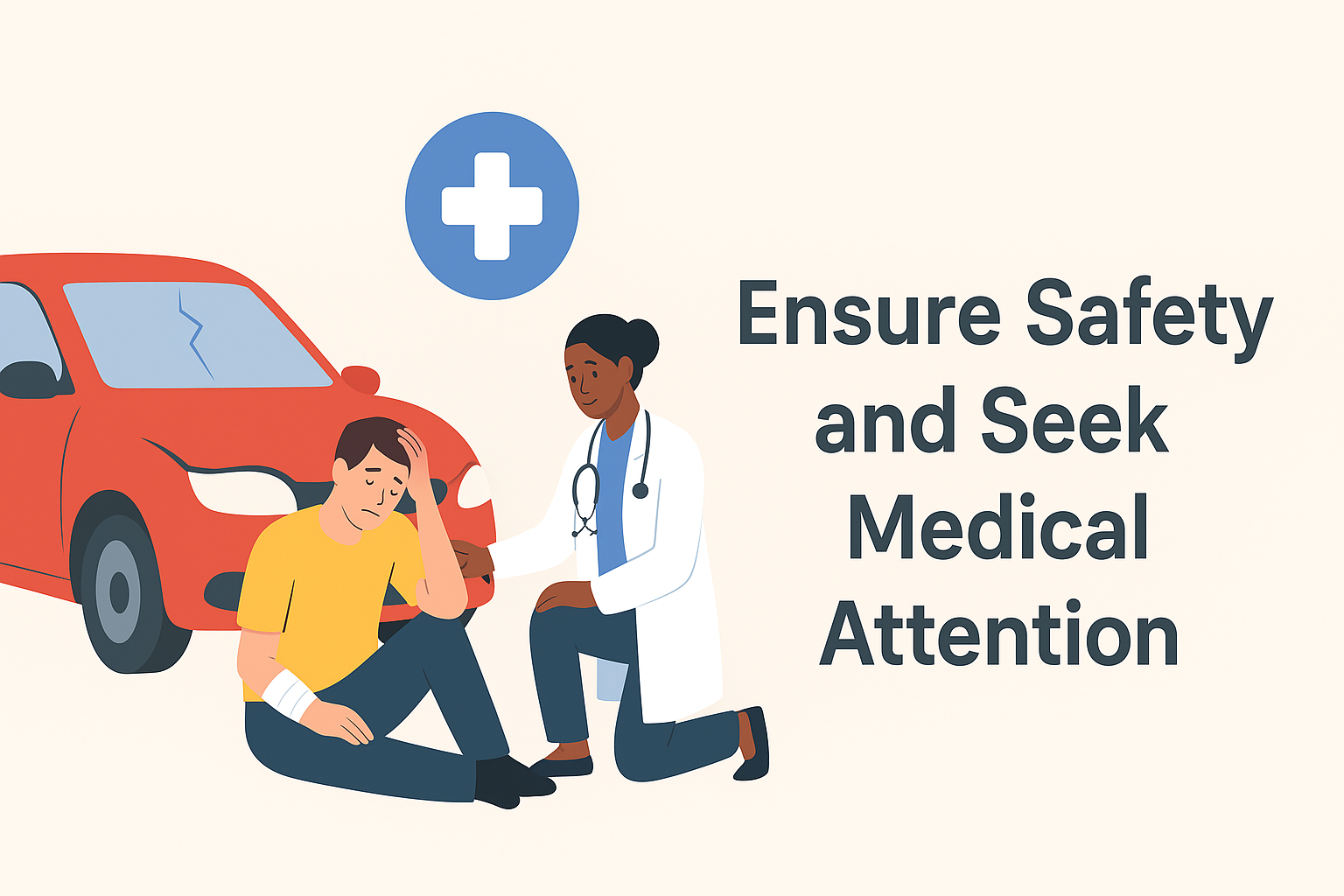
Some injuries don’t announce themselves right away. Whiplash, concussions, and internal bleeding can take hours or days to produce symptoms. Getting evaluated promptly protects your health, and it also creates the medical record that any UM/UIM claim will lean on later.
2. Report the Accident to Police
A police report is the backbone of an uninsured or hit-and-run claim. It documents the location, the vehicles involved, and any witnesses, and it gives your insurer something independent to check your account against.
3. Document Everything You Can
Thorough documentation strengthens your case. Collect what you can, including:
- Photos and video of the scene, vehicle damage, and visible injuries
- Contact information for anyone who witnessed the crash
- Medical records and bills from treatment received right after the crash and afterward
- Repair estimates or replacement costs for your vehicle
- Any written or recorded communication with insurance companies
4. Notify Your Own Insurance Company Promptly
Your policy almost certainly requires prompt notice after an accident, even one caused entirely by someone else. Contact your insurer, provide documentation, and be careful about how you describe the accident, recorded statements can be used against you later, even in a claim against your own UM/UIM coverage.
What Can You Recover Under UM/UIM Coverage?
UM/UIM coverage is meant to put you roughly where you’d be if the at-fault driver had carried adequate insurance. Typical recoverable damages include:
- Medical expenses, hospital visits, surgery, rehabilitation, and ongoing care
- Lost wages, income lost during recovery, including reduced future earning capacity in serious cases
- Pain and suffering, the physical and emotional toll of the injury
- Property damage, vehicle repair or replacement, sometimes handled separately from the bodily injury claim
Your recovery is capped by your own policy’s UM/UIM limits. That’s the whole reason reviewing your declarations page matters before you assume a certain outcome.
The Mandatory Arbitration Process for Disputed UM/UIM Claims
Illinois law builds a dispute-resolution mechanism directly into UM/UIM coverage. When you and your own insurer disagree about coverage or the value of your damages, either side can request arbitration rather than going straight to a lawsuit. Each side picks an arbitrator, those two pick a third, and the panel’s decision is binding up to a statutory cap, currently $75,000 per person or $150,000 per accident, or your actual policy limits, whichever is lower. Disputes above that threshold can still be litigated in court. This arbitration requirement is one of the more overlooked pieces of Illinois UM/UIM law, and it changes the negotiating dynamic, your own insurer knows a dispute won’t simply drag out indefinitely, which sometimes moves them toward a faster, fairer offer.
Can You Stack Coverage Across Multiple Vehicles?
Some drivers assume that insuring two or three vehicles on one policy multiplies their UM/UIM protection. In Illinois, that’s usually not how it works. Insurers typically write anti-stacking language into the policy, meaning $100,000 in UM coverage on a two-car policy is still $100,000, not $200,000. Illinois courts generally enforce these anti-stacking clauses when the policy language is clear. Where it gets more interesting is when a household has genuinely separate policies, your own auto policy and, say, a policy in a family member’s name that also covers you as a resident relative. Whether that second policy’s UM/UIM coverage is available to you depends heavily on the specific policy language and how “insured” is defined in each contract. This is exactly the kind of question worth having a lawyer actually read your policies for, rather than assuming either way.
Settling With the At-Fault Driver Without Losing Your UIM Claim
A common and costly mistake: accepting a settlement check from the at-fault driver’s insurer without telling your own UIM carrier first. Most UIM policies require you to notify your insurer and get consent before finalizing that settlement, because settling on your own can eliminate your insurer’s subrogation rights, and some policies treat that as a forfeiture of your UIM claim entirely. There’s a protection built into Illinois law that softens this somewhat. Since a change effective January 1, 1997, Illinois law makes clear that settling with the at-fault driver for less than their full policy limits doesn’t automatically bar a later UIM claim, even though many UIM policies still technically require exhausting the at-fault driver’s limits first. In practice, the safest move is always the same: don’t sign anything or cash a settlement check from the other driver’s insurer until your own UIM carrier has signed off on it in writing.
A Hypothetical Illustration
Say a driver runs a red light on Western Avenue and hits a car making a protected left turn. The at-fault driver carries only Illinois’s minimum $25,000/$50,000 liability coverage. The injured driver’s medical bills alone come to $80,000, with additional lost wages and ongoing physical therapy stretching out over several months. The at-fault driver’s insurer tenders the full $25,000 policy limit almost immediately, it’s obviously not enough to cover what actually happened. Because the injured driver carries $100,000 in UIM coverage and properly notified her own insurer before accepting that $25,000 tender, she’s able to pursue the remaining gap through her own UIM coverage, net of a setoff for what the at-fault insurer already paid. Her UIM carrier disputes part of the claimed lost wages, and that piece ends up going to arbitration rather than being resolved by negotiation alone. This is a simplified illustration, not a guarantee of any particular outcome, every claim turns on its own policy language and facts.
What If You’re Not Sure You Have UM/UIM Coverage at All?
Not every driver knows what’s on their own policy. Some people rejected UM/UIM coverage years ago, in writing, without realizing what they were giving up. Others assume they’re covered because it’s supposedly mandatory, without checking the actual declarations page. If you’re in the middle of dealing with an uninsured driver right now, call your insurance agent or carrier directly and ask them to read you the UM/UIM limits in plain terms, don’t rely on memory or assumption from years ago. If it turns out you truly have no UM/UIM coverage, you’re not necessarily without options. A third-party claim against another responsible party, a claim against the at-fault driver personally, or coverage through an umbrella policy are all worth checking before assuming there’s nothing left to pursue. This is exactly the kind of gap an attorney can spot quickly that a claimant reading through policy language alone might miss.
Legal Challenges in Uninsured and Underinsured Cases
Even with UM/UIM coverage on your side, these claims aren’t automatic. Common friction points include:
- Insurance disputes, your own insurer may minimize the payout, question pre-existing conditions, or dispute the extent of damages, since they’re now effectively on the other side of the table from you.
- Policy limits, if your own UM/UIM limits are low, full compensation may require looking at other sources entirely, not just your primary auto policy.
- Comparative fault, Illinois follows a modified comparative negligence rule, so your recovery can be reduced, or barred entirely past 50% fault, if you’re found partly responsible for the crash.
These are exactly the kinds of disputes where having someone negotiate on your behalf, rather than handling it solo against an insurance company’s claims team, tends to change the outcome.
Filing a Lawsuit: When It Becomes Necessary
If arbitration or negotiation doesn’t fully resolve your UM/UIM claim, the statute of limitations for most Illinois car accident personal injury claims is two years from the date of the crash. That clock matters even when you’re still negotiating with your own insurer, so don’t assume ongoing settlement talks automatically pause it. A personal injury attorney handling a claim like this typically:
- Reviews your policy to determine actual UM/UIM limits and any exclusions or gaps
- Calculates the full value of damages, including future medical care and reduced earning capacity where applicable
- Handles arbitration or negotiation with your own insurer, and litigation if it comes to that
Additional Recovery Options
Depending on the facts, other avenues sometimes exist alongside a UM/UIM claim:
- Third-party claims, if another party contributed to the crash (a commercial driver’s employer, a defective vehicle part), a separate claim may be available against them.
- Health insurance or medical liens, health insurance may cover immediate treatment costs, which are then reimbursed out of any eventual settlement.
- The at-fault driver’s personal assets, rare, but if the at-fault driver has meaningful assets beyond their insurance, a judgment can sometimes reach them directly.
Why Talk to an Attorney Before You Settle
Uninsured and underinsured motorist claims put you in an unusual position: you’re negotiating against your own insurance company, the one you’ve paid premiums to for years. That doesn’t mean they’re acting in bad faith, but it does mean their financial interest and yours aren’t identical in this specific negotiation. At Phillips Law Offices, our approach on these claims includes:
- Reviewing your actual policy language before assuming what is or isn’t covered
- Documenting the full scope of your damages, including costs that aren’t obvious until later, like future medical care
- Handling arbitration or negotiation directly with your insurer so you’re not doing it alone
- Litigating when it’s necessary, rather than accepting a lowball offer just to close the file
Call us at (312) 346-4262 for a free consultation if you’re dealing with an uninsured or underinsured driver claim in Chicago. There’s no cost to find out where you actually stand.
Final Thought
Being hit by a driver who can’t pay for what they caused is frustrating in a specific way, the crash wasn’t your fault, and now the burden of figuring out how to get paid falls on you anyway. Illinois law gives you real tools to deal with this through your own UM/UIM coverage, but those tools come with real procedural traps: notice requirements, consent-to-settle clauses, arbitration caps, and anti-stacking language that most people never read until it matters. None of that is a reason to handle it alone. With decades of experience representing Illinois accident victims, we know where these claims typically get contested and how to prepare for it before your insurer’s adjuster does.
Authoritative Sources
- Illinois Department of Insurance
- Illinois State Bar Association, UM/UIM Arbitration Limitation Periods
Related Chicago Accident Guides
- How Long Do I Have to File a Car Accident Lawsuit in Illinois?
- How Is Fault Determined in a Chicago Car Accident?
- What Should I Do After a Car Accident in Chicago?
- What Evidence Do You Need for an Illinois Car Accident Claim?
- Dealing with Insurance Companies After a Chicago Car Accident: Tactics to Watch
- Intersection Accidents in Chicago: Red Light, Stop Sign & Right-of-Way Claims
FAQs
What if the at-fault driver has no insurance?
Your own uninsured motorist (UM) coverage steps in, subject to your policy’s limits, assuming you didn’t reject it in writing when you bought the policy.
Can underinsured coverage help after serious injuries?
Yes. If the at-fault driver’s policy limits are too low to cover your damages, your own underinsured motorist (UIM) coverage can make up part of the gap, up to your policy’s limits.
What documents help a UM/UIM claim?
Your policy declarations page, the police report, medical records and bills, and any written communication with either insurer are the core pieces.
Do I have to go through arbitration for a UM/UIM dispute?
Illinois UM/UIM policies generally include a mandatory arbitration provision for coverage and damages disputes, though claims above the statutory cap can still go to court.
Can I settle with the at-fault driver’s insurer and still file a UIM claim?
Possibly, but notify your own UIM carrier and get their consent before accepting any settlement, settling without that step can jeopardize your UIM claim.
Does insuring multiple cars on one policy multiply my UM coverage?
Usually not. Illinois insurers commonly include anti-stacking language, so your UM/UIM limit generally applies once per policy, not once per vehicle.
When the at-fault driver has no coverage or not enough, your own policy is the route to recovery. See our guide to uninsured and underinsured motorist claims.
Every guide in our series on uninsured and underinsured motorist claims
- Underinsured Motorist Setoffs in Illinois: Why Your UIM Limit Is Not What You Collect
- What Happens When Your UM or UIM Claim Is Denied: Arbitration Under Your Illinois Policy
- What If the At-Fault Driver Has a Nonstandard Insurer Like The General?
- How to Find Out the Other Driver’s Insurance Policy Limits in Illinois
- Illinois Minimum Auto Insurance Limits (25/50/20) and What Happens When Coverage Is Too Low
Talk to a Chicago uninsured motorist lawyer. Phillips Law Offices offers a free case review, and there is no fee unless we recover for you. Call (312) 346-4262 or request a free case review.
This article is general information about Illinois law, not legal advice, and reading it does not create an attorney-client relationship. Illinois law changes; confirm anything you intend to rely on with a licensed Illinois attorney.