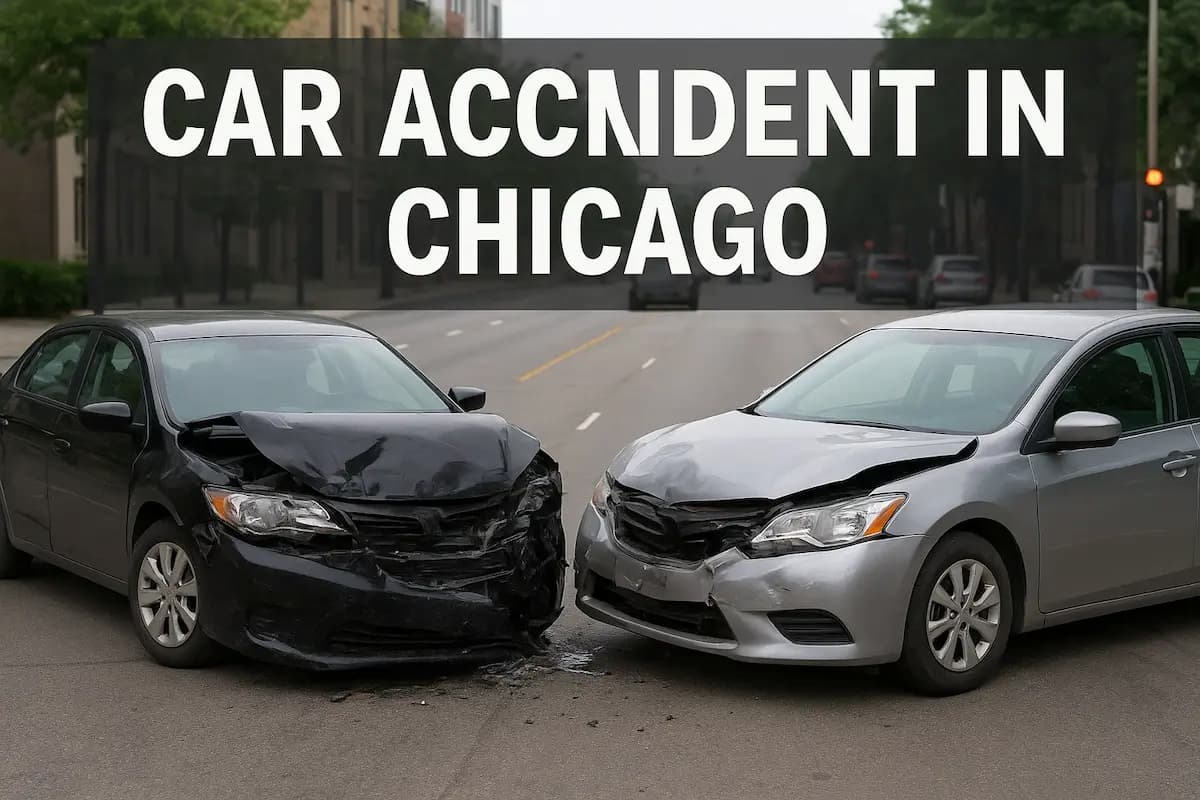

Rear-end collisions are the most common type of car accident in Chicago and throughout Illinois. While these crashes often seem straightforward, the driver in back hit the driver in front, proving fault and recovering fair compensation involves more complexity than many victims realize. Here is what you need to know about rear-end collision claims under Illinois law.
The Presumption of Rear Driver Fault
In Illinois, there is a rebuttable presumption that the rear driver is at fault in a rear-end collision. This presumption is based on a simple principle: drivers have a duty to maintain a safe following distance that allows them to stop safely if the vehicle ahead slows or stops.
Under 625 ILCS 5/11-710, Illinois law states that the driver of a motor vehicle shall not follow another vehicle more closely than is reasonable and prudent, having due regard for the speed of the vehicles and the traffic upon and the condition of the highway.
This means if you rear-end another vehicle, the legal system assumes you were following too closely, unless you can prove otherwise. The word “rebuttable” matters here: this is a starting assumption, not an unbreakable rule, and Illinois courts have recognized real exceptions.
When the Rear Driver Isn’t at Fault
While the presumption favors the front driver, it can be overcome with evidence. The rear driver may not be liable, or may share reduced liability, in several situations.
Sudden and Unexpected Stops
If the front driver stopped suddenly for no legitimate reason, such as “brake checking” another driver out of road rage or stopping in the middle of a highway lane without cause, liability may shift toward the front driver.
Malfunctioning Brake Lights
Drivers rely on brake lights to know when the vehicle ahead is slowing. If the front vehicle’s brake lights were not working, the front driver may share fault for failing to maintain the vehicle in safe operating condition.
Unsafe Lane Changes
When a driver cuts in front of another vehicle and immediately brakes, or fails to leave adequate space when merging, they may be at fault for the resulting collision. This is technically a lane-change accident wearing the appearance of a rear-end crash, not a true following-distance case.
Reversing Vehicle
If the front vehicle was backing up, in a parking lot or driveway, for example, and struck the vehicle behind it, the “rear” position in the collision does not determine fault at all; the reversing driver bears the primary duty of care.
Road Hazards
Debris, potholes, or other sudden road hazards that caused the front driver to stop unexpectedly may reduce the rear driver’s liability, though a following distance appropriate to the road should account for at least some unexpected events, so this defense has limits.
What to Do at the Scene of a Rear-End Collision
Because the presumption of rear-driver fault can be challenged, what happens in the first few minutes after impact matters more than most people realize. Move to a safe location if the vehicles are drivable and it is safe to do so, since secondary collisions in the same lane are a real risk, particularly on expressways. Call 911 even for a crash that feels minor; a responding officer’s report, including any citation issued to the other driver, becomes some of the most persuasive evidence in a later dispute. Exchange insurance and contact information with the other driver, but keep the conversation limited to the facts needed for that exchange rather than discussing who was at fault or how you are feeling. Photograph both vehicles from multiple angles, the road and lane markings, any skid marks, and the general traffic conditions before anything changes. If you feel any pain at all, even something you would normally shrug off, mention it to the responding officer and seek medical evaluation the same day if possible, since an emergency room or urgent care note timestamped to the day of the crash is difficult for an insurer to argue away later.
Common Rear-End Collision Injuries
The sudden impact of a rear-end collision causes specific, recognizable injury patterns.
Whiplash
The signature rear-end collision injury, whiplash occurs when the head is thrown forward and backward violently. Symptoms include neck pain, stiffness, headaches, and reduced range of motion. Whiplash can become chronic, causing months or years of ongoing suffering rather than resolving in a few weeks.
Back and Spinal Injuries
The force of impact can herniate or bulge spinal discs, strain back muscles, and in severe cases cause spinal cord damage. These injuries often require extensive treatment and may result in permanent limitations, particularly when the impact occurs at highway speed.
Traumatic Brain Injuries
Even without direct head impact against the steering wheel or window, the brain can be injured by the sudden acceleration and deceleration forces of a rear-end crash. Concussions and more serious traumatic brain injuries can result even from crashes that look minor from the outside.
Shoulder and Arm Injuries
Bracing against the steering wheel or being jerked violently by the seatbelt can cause rotator cuff tears, shoulder strains, and arm injuries that sometimes require surgical repair.
Facial Injuries
Impact with the steering wheel, dashboard, or a deploying airbag can cause facial lacerations, broken noses, dental damage, and eye injuries.
Proving Your Rear-End Collision Claim
Even with the presumption of rear driver fault working in your favor, building a strong claim still requires solid evidence, especially once an insurer starts looking for an exception to argue. Think of the presumption as shifting the burden, not eliminating it: the rear driver’s insurer has to affirmatively prove one of the exceptions above applies, but if you have not preserved any evidence of your own, a well-prepared adjuster can sometimes manufacture doubt out of a thin record even where none legitimately exists.
Police Report
Always call police after a rear-end collision. The officer’s report documents the scene, driver statements, and often includes a preliminary fault determination. Citations for following too closely or distracted driving strengthen your claim considerably.
Photographic Evidence
Photograph the damage to both vehicles, including the location and severity of the impact, any skid marks or their absence (which can indicate a sudden stop or a failure to brake at all), traffic conditions and road layout, weather and visibility conditions, and your own visible injuries.
Witness Statements
Other drivers or pedestrians who saw the collision can confirm that the rear driver was tailgating, distracted, or speeding before impact, corroborating your account with an independent perspective.
Dashcam Footage
If you or a nearby witness has dashcam video, this provides powerful, largely undisputable evidence of exactly what happened in the seconds before impact.
Cell Phone Records
If the rear driver was texting or using a phone at the time, subpoenaed phone records can prove distracted driving, which is often the underlying reason a driver failed to notice slowing traffic in time.
Comparative Negligence in Rear-End Collisions
Under Illinois’s modified comparative negligence law (735 ILCS 5/2-1116), your compensation is reduced by your percentage of fault. If you are 50 percent or more at fault, you recover nothing.
Insurance companies often try to assign partial blame to front drivers in rear-end collisions by arguing you stopped suddenly without good reason, your brake lights were out, you were distracted and did not notice slowing traffic ahead, or you failed to pull off the road when your vehicle had mechanical problems. An experienced attorney can counter these arguments with the police report, witness statements, and vehicle inspection records, protecting your recovery from an unsupported fault split.
Multi-Vehicle Rear-End Pileups
Chain-reaction rear-end collisions involving three or more vehicles create complex liability questions. In these cases, the last vehicle in the chain typically bears significant fault, middle vehicles may be both victims and at-fault parties simultaneously, multiple insurance policies may apply, and careful accident reconstruction is often needed to determine the actual sequence of impacts rather than assuming everyone hit the car in front of them at the same moment.
If you are the front vehicle in a pileup, you may have claims against multiple drivers behind you, and identifying which driver actually caused which impact matters a great deal for how the case gets resolved.
Damages in Rear-End Collision Cases
Economic Damages
Economic damages include medical expenses, both past and reasonably certain future costs, lost wages and any reduced future earning capacity, vehicle repair or replacement, and out-of-pocket costs such as transportation to appointments and hired home care.
Non-Economic Damages
Non-economic damages include pain and suffering, emotional distress, loss of enjoyment of life, and scarring or disfigurement.
Rear-end collision settlements range widely, from a few thousand dollars for minor fender-benders to hundreds of thousands of dollars or more for serious injuries requiring surgery or causing permanent damage. Where a specific case falls in that range depends heavily on liability clarity, injury severity, and available insurance coverage. Because Illinois’s minimum required liability coverage is only 25/50/20, a driver with only the state minimum can leave a badly injured victim without enough insurance to cover their actual losses even in a case where fault is completely undisputed, which is exactly the situation your own uninsured or underinsured motorist coverage exists to address.
A Realistic Example: When the Presumption Gets Challenged
Hypothetical: a driver rear-ends another vehicle on the Kennedy Expressway during evening rush hour. The insurer for the rear driver initially accepts the presumption of fault, but during investigation discovers the front driver’s brake lights were not functioning, confirmed by a mechanic’s inspection report obtained after the crash. The insurer now argues the front driver should share 20 percent of the fault for failing to maintain a working brake light system. Because the rear driver was also found to be traveling 10 mph over the posted limit at the time, an independent accident reconstruction concludes both factors contributed, and the parties eventually settle with the front driver’s recovery reduced by roughly 15 percent rather than either the full presumption of pure rear-driver fault or the higher fault percentage the insurer initially proposed. This illustrates how the presumption is a strong starting point in negotiations, not an unshakeable guarantee, and why evidence still matters even in a “clear” rear-end case.
Rear-End Crashes Involving Commercial Vehicles
A rear-end collision involving a delivery van, box truck, or semi-truck raises the stakes considerably. Commercial vehicles weigh far more than passenger cars, so a rear-end impact at the same speed transfers substantially more force into the vehicle ahead, which is one reason rear-end crashes involving trucks produce a disproportionate share of catastrophic injuries relative to their overall crash numbers. Commercial drivers and their employers are also subject to federal hours-of-service and vehicle maintenance regulations under the Federal Motor Carrier Safety Administration, and a violation of those rules, driving while fatigued past the legal hours limit, or operating with known bad brakes, can support a claim not just against the driver but against the trucking company itself for negligent hiring, training, or vehicle maintenance. These cases typically involve a separate, much larger insurance policy than a standard personal auto policy, which changes both the settlement dynamics and the investigation needed to build the claim, including preserving electronic logging device data before it is routinely overwritten.
Common Insurance Tactics in Rear-End Cases
Despite the presumption of rear driver fault, insurance companies still employ tactics to minimize your claim, including “low impact” arguments claiming minor vehicle damage means minor injuries, pre-existing condition blame attributing your injuries to prior conditions rather than the crash, quick lowball offers made before you know the full extent of your injuries, and delay tactics hoping you will accept less out of frustration or financial pressure as bills pile up.
Vehicle Damage and Property Claims
Alongside the injury claim, a rear-end collision usually generates a separate property damage claim for repairing or replacing your vehicle. If repair costs approach or exceed a set percentage of the vehicle’s actual cash value, the insurer will typically declare it a total loss and offer a payout based on comparable vehicle sale prices rather than paying for repairs. That total-loss valuation is itself frequently negotiable; insurers sometimes use pricing tools that undervalue a vehicle’s actual condition, mileage, or regional market value, and it is worth pushing back with your own comparable listings if the initial number looks low. If your vehicle needed a rental during repairs, rental reimbursement is generally available either through your own policy’s rental coverage or through the at-fault driver’s property damage liability coverage, and diminished value, the reduction in resale value a vehicle suffers simply from having been in a reported accident even after a proper repair, can sometimes be claimed separately from the repair cost itself under Illinois law.
Statute of Limitations for Rear-End Collision Claims
Illinois’s standard personal injury statute of limitations, 735 ILCS 5/13-202, gives you two years from the date of the crash to file a lawsuit for a rear-end collision claim, the same deadline that applies to any other type of car accident. If a government vehicle, such as a CTA bus or a city-owned truck, was involved in the collision, a separate one-year written notice deadline under the Illinois Local Governmental and Governmental Employees Tort Immunity Act applies instead, and missing that shorter notice window can bar an otherwise valid claim entirely.
Get Help from Phillips Law Offices
Even “simple” rear-end collision cases can become complicated when insurance companies dispute liability or minimize injuries. At Phillips Law Offices, we have handled a large volume of rear-end collision claims and know how to overcome insurance company tactics.
We will investigate your accident, document your injuries, and fight for the full compensation you deserve, not the lowball offer the insurance company hopes you will accept. That includes identifying every source of available coverage, pushing back on any comparative fault argument that is not backed by real evidence, and taking a case to trial rather than accepting an unfair number when negotiation alone does not produce a fair result.
If you have been injured in a rear-end collision in Chicago, contact Phillips Law Offices at (312) 346-4262 for a free consultation.
Authoritative Sources
Related Chicago Accident Guides
- What Evidence Do You Need for an Illinois Car Accident Claim?
- Dealing with Insurance Companies After a Chicago Car Accident: Tactics to Watch
- Intersection Accidents in Chicago: Red Light, Stop Sign & Right-of-Way Claims
FAQs
Are rear-end crashes always the trailing driver’s fault?
Often yes, but not always. Sudden unjustified stops, malfunctioning brake lights, unsafe lane changes, or chain-reaction pileups can shift some or all liability away from the rear driver.
What injuries are common in rear-end collisions?
Whiplash, neck strain, back and disc injuries, and concussion symptoms are frequently reported, even in crashes that look minor from the vehicle damage alone.
Should I seek treatment even after a low-speed rear-end crash?
Yes. Some symptoms appear hours or days later, and early medical records help both your recovery and the strength of your claim if you ultimately need to pursue compensation.
Does the fault presumption mean I do not need evidence?
No. The presumption is a strong starting point, but it is rebuttable, and insurers regularly look for an exception to argue. Photos, witness statements, and a police report still meaningfully strengthen a claim.
Related guides on Chicago crash types
- Start here: Chicago Car Accident FAQ: Your Questions Answered
- Parking Garage Accident Claims in Chicago
- Parking‑Lot Crashes in Chicago: Low‑Speed, High‑Dispute Claims
- Teen Driver Accidents in Chicago: Illinois GDL Rules and Claims
Talk to a Chicago car accident lawyer. Phillips Law Offices offers a free case review, and there is no fee unless we recover for you. Call (312) 346-4262 or request a free case review.
This article is general information about Illinois law, not legal advice, and reading it does not create an attorney-client relationship. Illinois law changes; confirm anything you intend to rely on with a licensed Illinois attorney.