
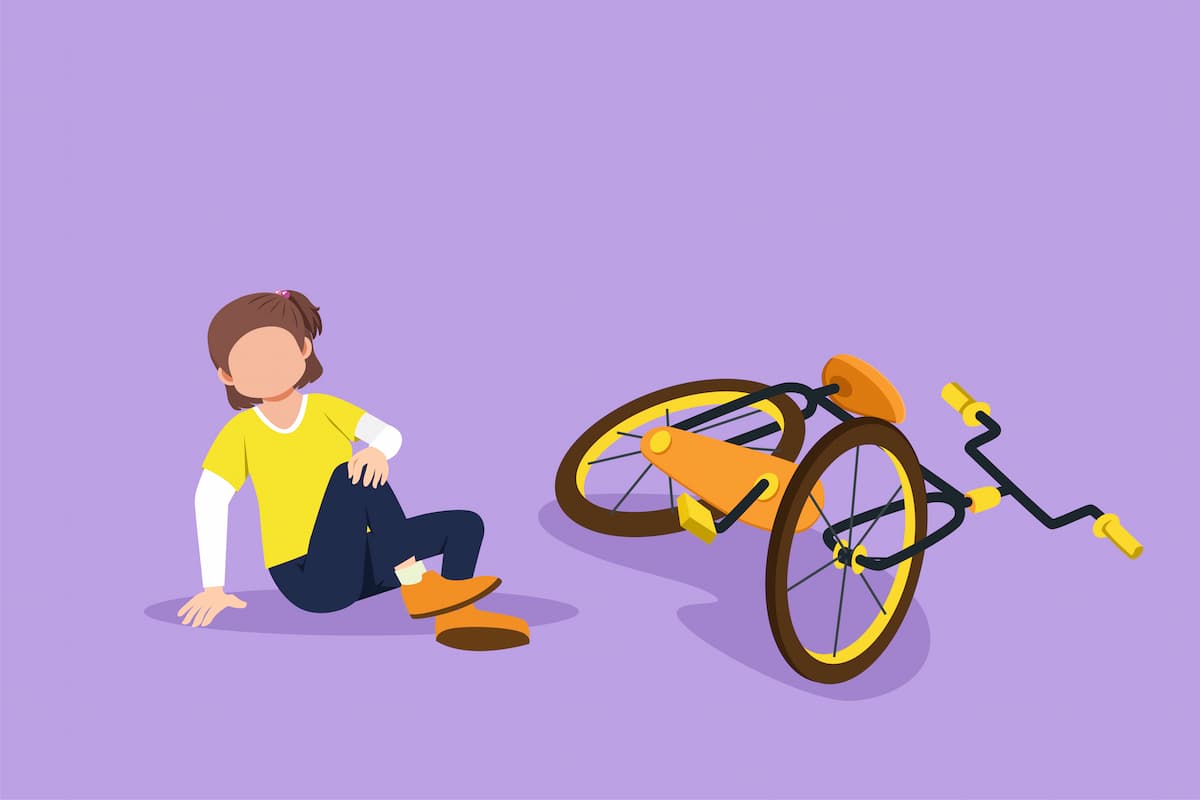
Getting hit by a car is bad enough. Watching the driver keep driving is worse, and it leaves an injured cyclist with a question that has nothing to do with fault and everything to do with money: who actually pays for this? As a Chicago personal injury lawyer with more than 30 years of experience, I’ve handled enough hit-and-run bicycle cases to know that the driver disappearing doesn’t mean the compensation disappears with them – it just means the path to getting paid runs through a different door.
Illinois law gives injured cyclists real options even when the at-fault driver is never identified. This guide covers what the law actually requires of a driver who causes a crash, how a claim gets paid when that driver is gone, and what to do in the hours after a hit-and-run to protect both your health and your case.
Hit-and-run bicycle crashes are not a rare edge case in Chicago. Drivers flee for all kinds of reasons, no insurance, an outstanding warrant, panic, driving impaired, and none of those reasons change what a cyclist is legally entitled to recover. The practical challenge is procedural, not legal: proving the crash happened, proving its severity, and finding a coverage source to pay for it without the usual starting point of a driver’s own liability policy.
What Illinois Law Requires of a Driver
Illinois law (625 ILCS 5/11-401) requires a driver involved in a crash causing injury, death, or property damage to stop immediately, exchange name, address, and insurance information, and render reasonable aid to anyone hurt. Leaving the scene without doing that is a criminal offense, not just a civil issue, and the penalties escalate quickly with the severity of the crash. When someone is injured, leaving the scene is a Class 4 felony carrying one to three years in prison. If the driver also fails to report the crash to police within 30 minutes, the offense becomes a Class 2 felony, carrying three to seven years. A fatal hit-and-run is a Class 1 felony. A conviction under this statute also triggers a mandatory driver’s license revocation.
Those criminal penalties matter to the person who fled, but they don’t put money in an injured cyclist’s pocket by themselves. That’s where the civil side of the case comes in.
The duty to render aid is worth understanding on its own, separate from the exchange-of-information requirement. A driver who stops, provides insurance information, but doesn’t call for help or check on an obviously injured cyclist hasn’t fully complied with the statute either. This matters practically because a driver’s partial compliance, stopping briefly then leaving before police or paramedics arrive, sometimes gets treated by insurers as less serious than a full hit-and-run, when Illinois law doesn’t actually draw that distinction as clearly as people assume.
Insurance Company Tactics in Hit-and-Run Claims
When there’s no third-party driver to point to, your own insurer becomes the party you’re negotiating against, and that changes the dynamic in ways worth knowing about upfront. Some of the more common tactics include disputing whether UM coverage extends to a bicycle crash at all (it generally does, but the policy language and Illinois case law both matter here), requesting an unusually detailed recorded statement before confirming coverage, delaying the claim while requesting repeated documentation, and offering an early lowball settlement before the full extent of injuries, especially anything requiring ongoing treatment, becomes clear. None of these tactics are illegal on their own, but they’re worth recognizing for what they are: standard claims-handling behavior aimed at minimizing payout, not signs that your claim lacks merit.
If the Hit-and-Run Was Fatal
When a hit-and-run crash proves fatal, Illinois law allows the deceased’s estate and surviving family members to pursue a wrongful death claim. The same UM coverage and driver-identification avenues generally apply, and the criminal exposure for the driver escalates to a Class 1 felony if they’re ever identified and prosecuted. The filing deadline for a wrongful death claim generally runs from the date of death rather than the date of the crash, which can matter when someone survives the initial collision but passes away from complications weeks or months later.
How a Hit-and-Run Claim Actually Gets Paid
1. Uninsured Motorist Coverage
If you carry auto insurance, your policy’s uninsured motorist (UM) coverage can pay for injuries from a hit-and-run even though you were on a bicycle rather than in a car at the time. Illinois requires UM coverage on every auto policy, which means a lot of cyclists who don’t think of themselves as having relevant insurance actually do, through their own policy or a household member’s. UM coverage typically pays for medical expenses, lost wages, pain and suffering, and permanent disability or long-term impairment resulting from the crash.
2. Identifying the Driver After the Fact
Plenty of hit-and-run drivers do eventually get identified, sometimes through police investigation, sometimes through a private investigator working the case, and sometimes just from a break like a witness who caught a partial plate number or nearby security footage catching the vehicle. Paint transfer on your bicycle, vehicle debris left at the scene, and any traffic camera in the area are all worth chasing down quickly. If the driver is identified, whether at the scene, days later, or after the case is already underway, the claim can shift to a direct personal injury lawsuit against them for full damages.
3. Other Insurance Sources
If you don’t carry an auto policy at all, a few other coverage sources sometimes apply. Homeowner’s or renter’s insurance occasionally covers injuries that happen away from the property under certain policy language, and a personal umbrella policy can add coverage on top of whatever else is available. These aren’t guaranteed, and coverage language varies enormously between insurers, which is exactly the kind of detail worth having an attorney actually read rather than assuming based on the policy’s general description.
At Phillips Law Offices, we run down every one of these avenues rather than stopping at the first one that seems to apply, because hit-and-run cases are exactly the situation where insurance companies are most likely to argue a claim doesn’t qualify.
A Realistic Example
The following is a hypothetical scenario used for illustration only, not an account of an actual case or a guaranteed outcome.
Imagine a cyclist riding in a marked bike lane when a delivery van sideswipes them and keeps going, leaving the rider with a fractured collarbone and a damaged bike. No plate number, no witnesses who got a clear look. The cyclist’s own auto policy carries UM coverage from a car they rarely drive, and that coverage becomes the entire path to compensation. The insurer initially questions whether UM coverage applies to a bicycle crash at all, since the policy’s language focuses on vehicle-to-vehicle collisions. A closer read of the policy, plus Illinois case law establishing that UM coverage extends to a policyholder struck while walking, biking, or otherwise not in a vehicle, resolves the dispute in the cyclist’s favor. The claim proceeds and is paid through a source the cyclist didn’t initially realize applied to them.
What If You Don’t Own a Car
A lot of cyclists don’t carry their own auto policy, which sometimes leads to the mistaken assumption that UM coverage simply isn’t available to them. That’s not always true. UM coverage can sometimes apply through a policy held by a spouse, parent, or other household member, even if the cyclist’s name isn’t on the policy directly, depending on how the household and the specific policy are structured. This is exactly the kind of detail worth having reviewed by someone who can actually read the policy language rather than assuming coverage doesn’t exist just because you don’t personally own a car.
Compensation Available to Injured Cyclists
A hit-and-run bicycle claim in Illinois can pursue several categories of damages:
- Medical costs, including hospital bills, surgery, rehabilitation, physical therapy, and ongoing care
- Lost income, including missed workdays and reduced future earning capacity for a career-limiting injury
- Property damage to the bicycle, helmet, and other gear
- Pain and suffering, emotional distress, and permanent disability or disfigurement
Because there’s no identified driver to negotiate with directly in most of these cases, the claim runs against your own insurer instead – which means it’s still an adversarial process, just with a different opponent. Insurers routinely resist paying UM claims quickly, precisely because there’s no third-party driver whose clear fault forces their hand.
Proving the future-facing categories, ongoing rehabilitation, reduced earning capacity for a career-limiting injury, or long-term care costs, generally takes more than an itemized bill. A treating physician’s opinion on prognosis, and in more serious cases a vocational expert’s assessment of how the injury affects your ability to work, carries real weight in getting an insurer to move past an early number that only reflects costs already incurred.
What to Do After a Hit-and-Run Bicycle Accident
- Call 911. Get medical help moving and make sure a police report gets filed even though the driver is gone.
- Gather whatever evidence exists immediately. Photos, any partial plate or vehicle description, and paint transfer on your bike or clothing all matter.
- Canvass for witnesses and cameras. Nearby businesses, doorbell cameras, and traffic cameras are your best shot at identifying the driver, and that footage doesn’t stay available for long. Most commercial security systems overwrite footage on a rolling cycle measured in days, not weeks, so a request sent even a few days late can arrive too late to matter.
- Get medical care and documentation, even for injuries that seem minor. A same-day exam ties your injuries to the crash in a way that matters for both a UM claim and a possible later claim against the driver.
- Contact a personal injury attorney early. Preserving evidence and identifying every applicable coverage source both work better the sooner they start.
How Long You Have to File a Claim
Illinois generally gives injury victims two years from the date of the crash to file a personal injury lawsuit (735 ILCS 5/13-202). A UM claim against your own insurer typically runs on a separate timeline set by your policy, which can be shorter than the statutory two years, so checking your specific policy’s notice requirements matters even before the general deadline becomes relevant. Missing either deadline can permanently close off a claim that was otherwise valid. If the driver is identified later, whether during the initial investigation or months into a UM claim, the deadline for pursuing them directly still runs from the date of the original crash, not from whenever they’re finally identified, which is one more reason not to delay filing while waiting to see if the driver turns up.
If You Were Partially at Fault
Illinois’s modified comparative negligence rule (735 ILCS 5/2-1116) still applies in a hit-and-run case. A cyclist who shares some responsibility for the crash, for instance by not having required lights on at night, can still recover compensation as long as their own fault is 50 percent or less, with the recovery reduced by their percentage of fault. Because there’s no driver present to dispute the facts, an insurer handling a UM claim sometimes leans harder on this argument than a driver’s own insurer might in a standard case, which is one more reason not to negotiate a hit-and-run claim without legal help.
Free Consultation, No Upfront Cost
Most hit-and-run bicycle cases, including ours, are handled on a contingency basis, meaning there’s no upfront legal fee and nothing owed unless the case results in a recovery. That structure matters most in exactly this type of case, where an injured cyclist is often dealing with a damaged or destroyed bike, mounting medical bills, and an insurer that isn’t in a hurry to pay – a free case review costs nothing and gives you a clear picture of which coverage sources actually apply before you decide anything.
Why Legal Representation Matters
Hit-and-run claims involve more moving parts than a standard crash claim: identifying every possible coverage source, dealing with your own insurer as an adversary rather than a neutral party, and sometimes working alongside a police investigation that’s still ongoing. A Chicago personal injury lawyer can investigate the crash and preserve evidence before it disappears, identify every available coverage source, negotiate with your own insurer to secure fair compensation, and pursue a direct lawsuit if the driver is later identified. That last point matters more than it might seem: because the deadline to sue an identified driver still runs from the crash date, a case an attorney has already built out with evidence and documentation is ready to move immediately the moment a driver surfaces, rather than starting from scratch under time pressure. That head start on the paperwork and evidence trail can make the difference between a quick resolution and months of additional delay once a driver is finally tracked down. For a deeper look at picking the right attorney for this specific type of case, see our guide on how to choose a Chicago hit-and-run accident lawyer.
Contact Phillips Law Offices Today
A hit-and-run leaves a cyclist dealing with an injury and an unanswered question about who’s responsible, but Illinois law provides a real path to compensation even when the driver is never found. Call (312) 346-4262 for a free consultation. We’ll review every coverage source that might apply to your situation and handle the insurance conversations so you don’t have to fight your own insurer alone.
Authoritative Sources
Related Chicago Accident Guides
- What Should I Do if I’m Hit by a Car While Riding My Bike in Illinois?
- Who is at Fault in a Chicago Pedestrian Accident?
- What Damages Can I Recover After a Chicago Car Accident?
- What Evidence Do You Need for an Illinois Car Accident Claim?
- Dealing with Insurance Companies After a Chicago Car Accident: Tactics to Watch
- Intersection Accidents in Chicago: Red Light, Stop Sign & Right-of-Way Claims
FAQs
Can I make a claim after a bicycle hit-and-run in Illinois?
Yes. Coverage options may include uninsured motorist benefits depending on policy terms and facts.
What evidence matters most in bicycle hit-and-run cases?
Scene photos, witness details, police reports, and nearby camera footage can be critical.
Should I seek care even if symptoms seem minor?
Yes. Early medical records help both treatment and claim support if symptoms worsen later.
What happens to the driver if they’re caught?
Leaving the scene of a crash that causes injury is a Class 4 felony in Illinois, with penalties escalating to a Class 2 felony if the driver fails to report within 30 minutes, and a Class 1 felony if the crash was fatal.
Does it cost anything to talk to a hit-and-run bicycle accident lawyer?
No. Most cases, including ours, are handled on a contingency basis, so there’s no upfront cost and no fee unless you recover compensation.
Cyclists have the rights of a vehicle on Illinois roads. See our Chicago bicycle accident lawyer page.
Related guides on bicycle and e-scooter crashes
- Start here: What Should I Do if I’m Hit by a Car While Riding My Bike in Illinois?
- E-Scooter and Bicycle Crash Claims in Chicago
- Dooring Accidents in Chicago: Liability, Evidence, and Injury Documentation
Talk to a Chicago bicycle accident lawyer. Phillips Law Offices offers a free case review, and there is no fee unless we recover for you. Call (312) 346-4262 or request a free case review.
This article is general information about Illinois law, not legal advice, and reading it does not create an attorney-client relationship. Illinois law changes; confirm anything you intend to rely on with a licensed Illinois attorney.