
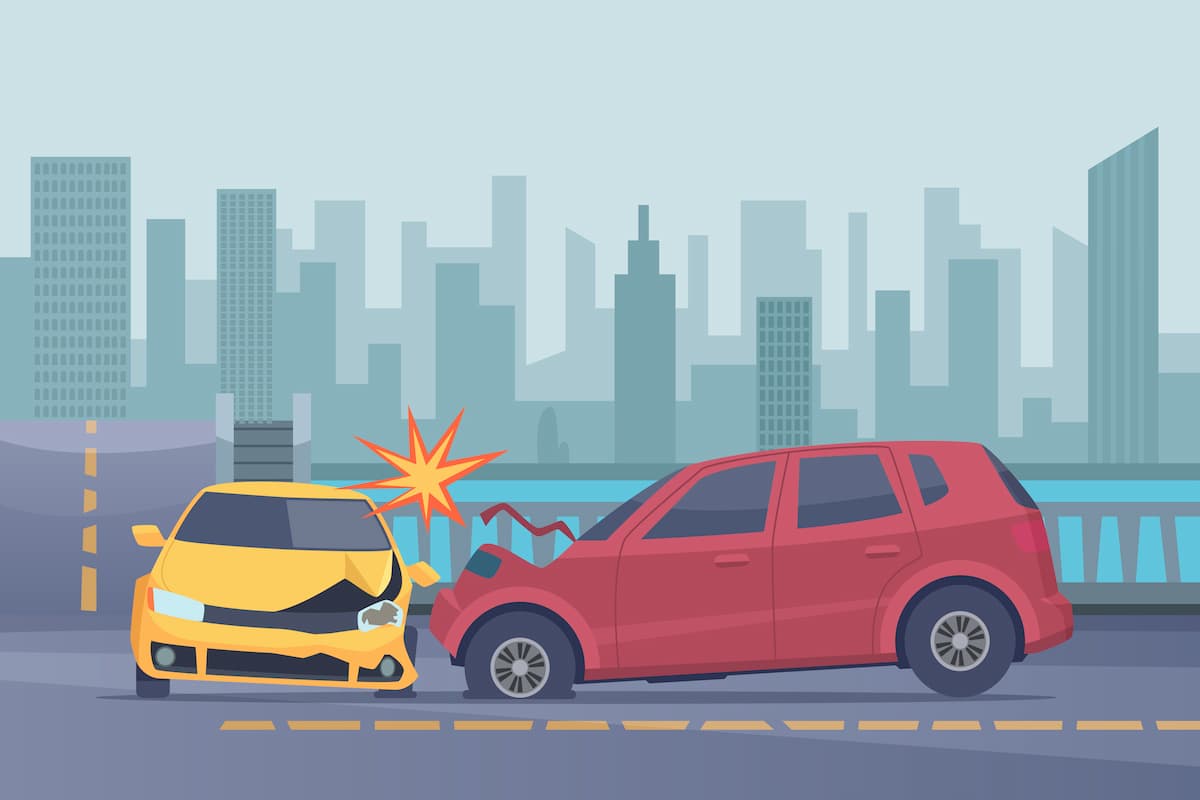
A serious car accident in Chicago can change your life in an instant. One moment you’re driving to work or heading home, and the next you’re facing a whirlwind of medical appointments, mounting bills, and uncertainty about how long recovery will actually take. Beyond the physical pain, many victims deal with anxiety, disrupted sleep, and the frustration of not being able to return to their normal routine on any predictable schedule.
As a Chicago personal injury lawyer, one of the most common questions I hear from clients is: “What damages can I actually recover after this?” It’s a fair question. When someone else’s negligence causes your injuries, you’re entitled to more than an apology and a repair estimate.
Understanding Damages in a Chicago Car Accident Case
In legal terms, “damages” means the monetary compensation awarded to a victim to make up for harm caused by another person’s negligence. After a car accident, these damages are meant to make you financially whole again, as much as money can do that.
1. Economic Damages
Economic damages cover tangible financial losses. These are typically proven through bills, receipts, or employment records, and may include:
- Medical expenses, emergency care, surgeries, hospital stays, rehabilitation, physical therapy, and projected future medical treatment.
- Lost wages, income lost while you’re recovering.
- Loss of earning capacity, compensation for a reduced ability to work or earn income going forward, relevant when injuries are permanent or long-lasting.
- Property damage, repair or replacement costs for your vehicle and any personal property damaged in the crash.
- Out-of-pocket costs, transportation to appointments, medical devices, home modifications, and related expenses.
Accurately calculating these numbers takes real documentation. It’s rarely as simple as adding up the bills you’ve received so far, especially when treatment is ongoing.
2. Non-Economic Damages
Non-economic damages compensate for the emotional and psychological impact of the crash, the losses that don’t come with a bill but affect your life just as much. These may include:
- Pain and suffering, the physical pain and emotional distress caused by your injuries.
- Loss of enjoyment of life, being unable to do things you used to do without thinking twice about them.
- Emotional distress, anxiety, depression, or post-traumatic stress tied to the accident.
- Loss of companionship or consortium, the impact on family relationships, sometimes claimed separately by a spouse.
These are harder to put a number on than a medical bill, but they’re treated as just as real. Attorneys typically rely on medical records, sometimes expert testimony, and your own account of how the injury has actually changed your day-to-day life.
3. Punitive Damages
In uncommon situations, punitive damages come into play. These apply when the at-fault driver’s conduct goes beyond ordinary carelessness into something closer to recklessness or intentional wrongdoing, drunk driving, texting while driving at high speed, deliberately running a red light in a way that shows conscious disregard for others.
Punitive damages aren’t meant to compensate you directly. Their purpose is to punish the wrongdoer and discourage that kind of conduct generally. They’re the exception in car accident cases, not the rule, and courts apply them narrowly.
How Are Car Accident Damages Calculated in Illinois?
Illinois follows a modified comparative negligence system, meaning your compensation can be reduced based on your own share of fault. Under 735 ILCS 5/2-1116, if you’re partially responsible for the crash, your damages are reduced proportionally. If you’re found 20% at fault, you can still recover 80% of your total damages. If your fault exceeds 50%, you’re barred from recovering anything at all.
Insurance companies know this rule well and often look for ways to shift blame onto the victim to reduce their own payout. They scrutinize statements, look for inconsistencies, and sometimes highlight minor actions to suggest shared fault where there really isn’t much. Even an innocent remark made in an early phone call can end up used against you later.
The Collateral Source Question
A question that comes up often: does it matter that your health insurance already paid some of your medical bills? Generally, the fact that a collateral source like your own health insurer covered part of your treatment doesn’t automatically reduce what the at-fault driver owes you, though exactly how billed amounts versus paid amounts get presented and argued in an Illinois case is a genuinely technical area. This is one of those places where a general explanation only goes so far, and it’s worth having your actual attorney walk through how it applies to your specific medical bills rather than assuming either way. It also intersects with medical liens: if health insurance, Medicare, or Medicaid paid toward your treatment, part of your eventual settlement may need to go toward reimbursing that payer before you see the remainder, which is another reason a rough back-of-envelope estimate of your damages rarely matches what actually lands in your pocket.
Evidence That Supports Your Claim
To recover the maximum possible damages, your attorney needs to gather and present evidence that clearly demonstrates both how the crash happened and the real impact of your injuries. Documentation is what turns a claim from “he said, she said” into something an insurer or a jury can actually evaluate.
Some of the key evidence your attorney will collect includes:
- Police reports and witness statements, an official account of the accident plus independent observations from bystanders that can corroborate your version of events.
- Medical records and expert evaluations, documentation of your injuries, treatment plans, and prognosis, sometimes paired with expert testimony connecting your injuries directly to the crash.
- Employment and wage documentation, pay stubs, tax records, and employer statements used to calculate lost income and diminished earning capacity.
- Accident scene photos and vehicle inspection reports, visual evidence of the crash scene, vehicle damage, and skid marks that helps establish how the accident actually occurred.
Together, this evidence makes it much harder for an insurer to undervalue your claim. A well-documented file is genuinely difficult to argue against, even for an adjuster whose job is to minimize the payout, and it’s the difference between a claim that gets taken seriously from the first phone call and one that gets stuck in a slow, grinding back-and-forth over basic facts that should never have been in dispute.
How Future Damages Get Calculated
For injuries that will keep costing you money after your case resolves, future medical care, ongoing therapy, permanent reduced earning capacity, damages aren’t simply guessed at. Serious cases often rely on a life care planner or medical expert to project future treatment needs and costs, and sometimes an economist to calculate the present value of lost future earnings. This is part of why cases involving permanent injuries typically take longer to resolve than a straightforward soft-tissue claim: getting these projections right actually matters to the outcome.
Common Mistakes That Reduce Compensation
Even seemingly minor missteps after a car accident can meaningfully affect the value of a claim. Insurance companies look for any opening to reduce a payout, and mistakes made in the immediate aftermath can be used against you long after the crash itself.
Here are some of the most common pitfalls to avoid:
- Admitting fault or apologizing at the scene. Even a simple “I’m sorry” can be interpreted as an admission of responsibility, which can reduce your recovery under Illinois’ comparative negligence rules.
- Delaying medical treatment. Waiting to seek care makes it harder to prove your injuries were actually caused by the crash. Early documentation matters for both your health and your case.
- Posting about the accident on social media. Comments, photos, or status updates can be taken out of context and used to argue you weren’t seriously hurt.
- Accepting a quick settlement offer. Early offers rarely account for future medical bills, lost wages, or long-term pain and suffering. Once you accept and sign a release, you typically can’t go back for more, even if new problems show up later.
The safest move is talking to a Chicago personal injury lawyer before communicating with any insurance company, including your own. A skilled attorney can guide you through each step and handle the communications that tend to trip people up.
How Insurers Actually Value a Claim
Most large insurers don’t have an adjuster simply eyeballing your file and picking a number. Claims-evaluation software plays a real role in generating an initial valuation, weighing factors like injury type, treatment duration, and billed amounts against historical claims data. An adjuster then works from that starting figure, often downward, during negotiations.
Knowing this matters practically: the reason a lowball first offer often looks suspiciously specific, not round numbers, is because it’s frequently a software-generated starting point rather than a genuine reflection of your damages. Pushing back with your own documentation and a demand letter that actually lays out your damages category by category is what moves that number toward something realistic.
What If There Isn’t Enough Insurance to Cover Your Damages?
Sometimes the at-fault driver’s policy simply isn’t large enough to cover what you’ve actually lost, even when liability isn’t in dispute at all. This is where your own underinsured motorist coverage can fill part of the gap, assuming you carry it and didn’t reject it in writing when you bought your policy. It’s worth checking your own declarations page early in the process, not after the at-fault driver’s insurer has already tendered their limits.
Settlement Negotiation Versus Trial
Most car accident claims in Illinois resolve through negotiated settlement rather than a trial verdict. That’s not a sign of weakness in a case, it’s simply how most claims get resolved once both sides have a clear picture of the damages and liability. Settlement negotiations typically start once your medical treatment has reached a stable point, sometimes called maximum medical improvement, since settling too early risks underestimating what your recovery will actually cost.
Litigation becomes the right move when an insurer refuses to offer a number that reflects the actual damages, or disputes liability without a reasonable basis. Being prepared to actually try a case, rather than treating litigation as an empty threat, tends to change how seriously an insurer negotiates in the first place.
Don’t Lose Track of the Filing Deadline
While you’re gathering records and negotiating, Illinois still enforces a hard deadline: generally two years from the date of the crash to file a lawsuit for most car accident injury claims. Ongoing settlement talks, however promising they seem, don’t pause that clock on their own. It’s worth confirming your specific deadline with an attorney early, rather than assuming negotiations alone protect your right to sue later.
A Practical Example
Say a driver is rear-ended on Lake Shore Drive during rush hour. Her vehicle sustains moderate damage, and she initially feels only mild soreness, so she doesn’t see a doctor for five days. By the time she’s diagnosed with a cervical strain requiring months of physical therapy, the at-fault driver’s insurer is already pointing to that five-day gap as evidence the injury might have come from something else, or from an unrelated cause entirely.
Her attorney counters with the original police report noting she declined treatment at the scene “because she felt shaken but okay,” her own contemporaneous notes from the days following the crash, and her treating physician’s opinion connecting the delayed onset of symptoms to a documented pattern seen in soft-tissue injuries. The claim eventually settles for a figure that accounts for the full treatment course, not just the initial soreness she described at the scene. This is a simplified illustration, not a prediction of how any specific claim would turn out, but the gap-in-treatment problem is common enough that it’s worth planning around from day one.
When a Crash Results in a Death
When a car accident is fatal, the damages framework shifts. Illinois handles fatal accident claims through the Wrongful Death Act (740 ILCS 180), a separate statute from an ordinary injury claim, with its own damages categories (loss of financial support, loss of companionship for surviving family members) and its own filing clock. If you’re dealing with the loss of a family member in a crash, that’s a distinct legal process from what’s described above, worth discussing directly with an attorney rather than assuming it works the same way. The people entitled to bring that claim, typically a surviving spouse or next of kin acting on behalf of the estate, aren’t necessarily the same people who would have brought an injury claim had the victim survived, which is its own source of confusion for grieving families trying to sort out next steps.
Why Choose Phillips Law Offices
At Phillips Law Offices, we’ve spent decades standing up for accident victims throughout Chicago and across Illinois. Over the years we’ve secured verdicts and settlements for clients dealing with serious injuries, lost income, and the emotional toll that follows a life-changing crash.
When you work with us, you’re not just hiring a lawyer, you’re gaining a team that handles every part of your case: investigating the crash, gathering evidence, managing insurance communications, and pursuing litigation when that’s what it takes. Our goal is straightforward: maximize your compensation while you focus on actually recovering.
Get Help from an Experienced Illinois Accident Attorney
If you’ve been injured in a Chicago car accident, you may be entitled to significant compensation for medical expenses, lost wages, and pain and suffering. Navigating the claims process alone is overwhelming, and small missteps early on can quietly shrink the value of your case before you even realize it’s happening.
At Phillips Law Offices, our experienced Chicago car accident lawyers handle all communications with insurance companies, collect and present evidence, and fight for the maximum compensation you’re owed, whether through settlement negotiations or litigation. Call us at (312) 346-4262 for a free consultation. You pay nothing unless we win your case.
Authoritative Sources
Related Chicago Accident Guides
- What If the Other Driver Was Uninsured or Underinsured in Chicago?
- Should I Talk to the Other Driver’s Insurance Company After an Accident?
- Can a Car Accident Cause Chiari Malformation? Understanding the Link
- What Evidence Do You Need for an Illinois Car Accident Claim?
- Dealing with Insurance Companies After a Chicago Car Accident: Tactics to Watch
- Intersection Accidents in Chicago: Red Light, Stop Sign & Right-of-Way Claims
FAQs
What damages are recoverable after a car accident?
Common categories include medical costs, wage loss, property damage, and pain and suffering. Punitive damages are possible but uncommon.
Do all injury claims include future damages?
Only when supported by evidence such as a physician’s treatment plan or expert projections, not just an assumption that costs will continue.
Why is documentation important for damages?
Clear records directly support how your claim is valued and negotiated with an insurer.
Does my own health insurance paying my bills reduce what I can recover?
Not automatically, but how paid versus billed amounts are handled in an Illinois claim is technical enough to discuss directly with your attorney.
Is a fatal accident claim handled the same way as an injury claim?
No. Fatal crashes are generally handled under Illinois’ separate Wrongful Death Act, with its own damages categories and filing deadline.
Every guide in our series on what your claim is worth
- Burn Injury Claims After a Car Accident in Illinois
- PTSD and Psychological Injury Claims After a Car Accident
- Illinois Wrongful Death Claims After a Car Accident
- What Is My Chicago Car Accident Case Worth?
- How Much Is My Car Accident Case Worth? Illinois Settlement Factors
- What Is the Average Settlement for a Car Accident in Illinois?
- What is Auto Accident Settlement?
- How Long Does a Chicago Car Accident Settlement Take?
- The Final Settlement Offer Is Too Low: Should You File a Lawsuit?
- Can I Reopen My Claim After Signing a Settlement Release?
- Property‑Damage Claims in Illinois: Repair vs. Total Loss + Diminished Value
Talk to a Chicago car accident lawyer. Phillips Law Offices offers a free case review, and there is no fee unless we recover for you. Call (312) 346-4262 or request a free case review.
This article is general information about Illinois law, not legal advice, and reading it does not create an attorney-client relationship. Illinois law changes; confirm anything you intend to rely on with a licensed Illinois attorney.