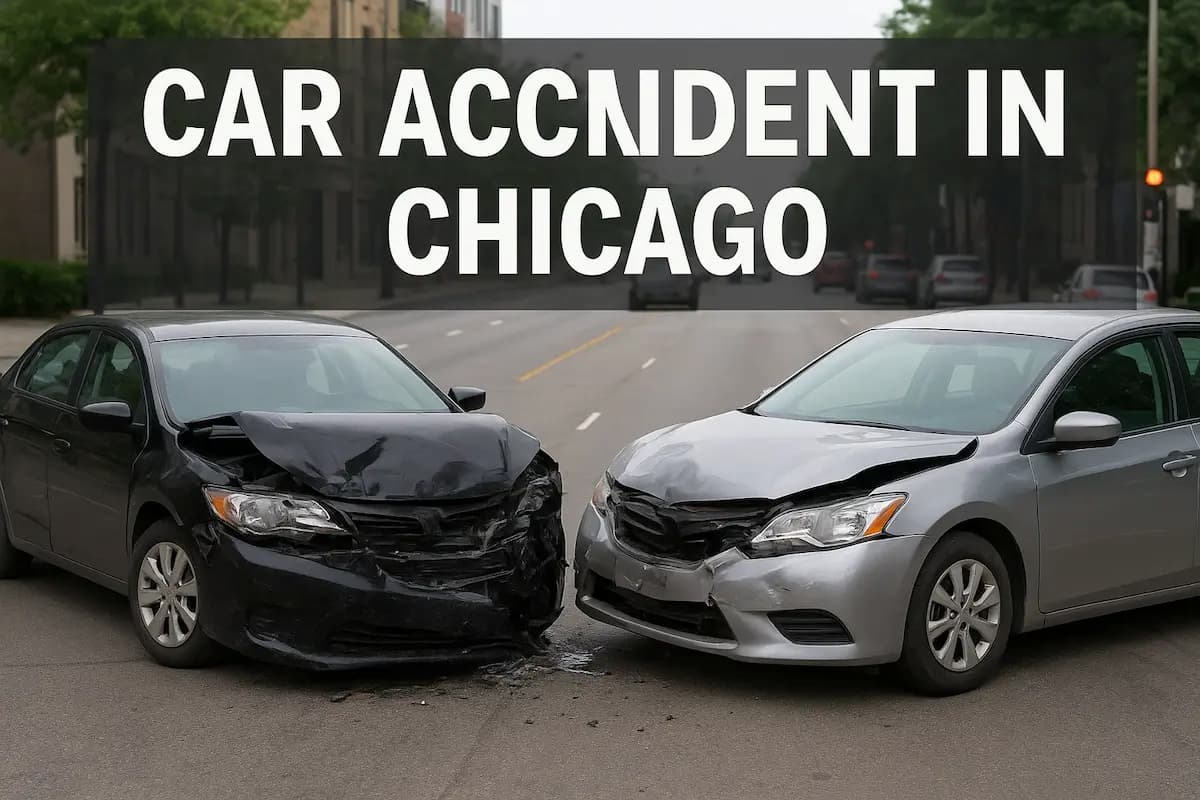
In my 30+ years representing Chicago pileup victims, I have learned that the chaos of a chain-reaction crash on the Kennedy or the Dan Ryan does not stop at the scene. It carries into the claims process. Insurance adjusters use the confusion to point fingers at every other driver and to push individual fault percentages up. Without a lawyer who knows how to sequence a multi-impact case, the people most seriously hurt are the ones who recover the least.
Chicago expressway pileups are a foreseeable consequence of speed, density, weather, and distraction colliding at the same instant. This guide walks through how Illinois law allocates fault in a chain-reaction crash, what injury patterns to expect when a vehicle is struck from multiple directions, and how Phillips Law Offices investigates pileups before the evidence disappears.
Why Multi-Vehicle Pileups Are More Serious Than People Think
Multi-vehicle pileups concentrate in a few high-risk corridors in Chicago: the Kennedy approach to O’Hare, the Dan Ryan through the South Side, the Edens in winter, and the Eisenhower between Mannheim and downtown. Fog, snow squalls, sun glare, and sudden lane closures all create the conditions for a vehicle to brake hard, the vehicle behind to fail to stop, and the chain to grow within seconds.
The injury cost of a pileup is not additive. Each subsequent impact compounds the previous one. A driver who takes a moderate rear-end and is then struck from the front, then from the side, can sustain catastrophic injury even though no single impact was extreme. Add commercial trucks into the chain, and the energy involved jumps an order of magnitude.
The most common contributing factors I see in Chicago pileups include:
- Following too closely in heavy or weather-degraded conditions
- Sudden, unrecoverable lane closures with poor advance warning
- Commercial vehicles operating under unrealistic delivery deadlines
- Sun glare during rush hour on east-west expressway segments
- Snow squalls and lake-effect visibility drops
- Distracted driving that delays braking by even half a second
Illinois Law on Multi-Vehicle Pileup Cases
Illinois follows modified comparative fault under 735 ILCS 5/2-1116. In a pileup, that rule produces a separate fault-percentage analysis for every driver involved. A single client may have claims against multiple at-fault drivers, multiple insurance policies, and (when commercial vehicles are in the chain) the motor carriers who employ those drivers.
The basic following-distance duty comes from 625 ILCS 5/11-710, which requires every driver to keep a distance that is reasonable and prudent for the speed and conditions. In a pileup, that statute applies to every driver in the chain, and the further back you sit in the line of vehicles, the more weight that duty carries.
The statute of limitations under 735 ILCS 5/13-202 is two years from the crash date for personal injury, two years from the date of death for wrongful death. Because pileups frequently involve government-owned vehicles (Illinois State Police, IDOT trucks, CTA buses) shorter notice deadlines may also apply.
Common Injuries I See in Multi-Vehicle Pileup Cases
Pileup injuries are compound. The same body absorbs multiple impacts from multiple directions, often within seconds of each other. The injury patterns I see repeatedly:
- Multi-mechanism cervical and lumbar spine injury. The cervical spine takes a rear-end whip, then a frontal whip, then sometimes a lateral whip as the vehicle is struck again. Disc herniation and ligamentous instability are common.
- Traumatic brain injury. Two or three head-acceleration events in sequence produce diffuse axonal injury and post-concussive syndrome that can last for months.
- Chest and rib fractures. Repeated seatbelt loading and steering-column contact produces multi-rib fractures, sternum fractures, and pulmonary contusions.
- Lower-extremity crush injury. Front-end intrusion onto the pedals is common when a heavier vehicle pushes the front-end footwell inward.
- Burn injury. Pileups produce vehicle fires more often than single-vehicle crashes because of broken fuel lines, ruptured tanks, and damaged electrical systems.
- Psychological trauma. Being trapped in a vehicle while subsequent impacts occur is a recognized cause of PTSD and acute stress disorder.
How Insurance Companies Try to Minimize Multi-Vehicle Pileup Claims
Carriers use pileup chaos to their advantage. The recurring tactics include:
- “Pick a fault driver.” Each carrier points at the next driver in the chain. Without coordinated investigation, the client gets caught between conflicting accounts.
- Quick policy-limits demands. Where the at-fault driver carries minimum limits, the carrier may try to settle quickly to extinguish the claim before the client realizes UIM coverage and other at-fault parties are in play.
- Pre-existing condition blame. They will attribute neck and back pain to age or prior injury rather than the crash sequence. The eggshell-plaintiff rule defeats that defense when the medicine is properly developed.
- Delay until you fold. Pileups generate massive paperwork: multiple police reports, multiple insurers, hospital lien holders, health-insurance subrogation. Carriers exploit the complexity by delaying their response.
- Denial of UIM coverage stacking. Where multiple at-fault drivers carry inadequate insurance, properly invoking your own UIM coverage requires careful sequencing.
Common Mistakes That Hurt Multi-Vehicle Pileup Cases
The biggest mistakes that hurt Chicago pileup claims:
- Settling with one at-fault driver’s carrier before identifying all responsible parties, which can release claims against the others.
- Failing to identify and preserve evidence of commercial-vehicle involvement (DOT log books, ECM data, dispatch records) before it is destroyed.
- Skipping the ER because “the other people were hurt worse.” Pileup injuries can be subtle and delayed.
- Giving recorded statements to multiple insurance companies without coordination.
- Posting at-the-scene photos or recovery updates to social media.
- Letting the damaged vehicle be towed and disposed of before crush-pattern, intrusion, and seatbelt loading have been documented.
- Missing UIM notice deadlines under your own auto policy.
How Phillips Law Offices Approaches Multi-Vehicle Pileup Cases
When clients ask about my firm’s approach to Chicago multi-vehicle pileup cases, the answer is in our track record, the trial bench we have built, and the way we treat every file as if it could go to a jury.

Phillips Law Offices
Chicago Multi-Vehicle Pileup Attorneys at Phillips Law Offices
Phillips Law Offices represents drivers, passengers, and families of victims of chain-reaction pileups on Chicago expressways and surface streets. The firm’s pileup files routinely involve five, ten, or more vehicles and multiple commercial defendants, each with separate insurance coverage and separate legal counsel.
What sets the firm apart in pileup cases is its insistence on simultaneous investigation of every vehicle in the chain. That means same-week preservation letters to every motor carrier involved, ECM data downloads from commercial trucks, and reconstruction work that establishes the sequence of impacts before defense experts can rewrite it.
A Legacy of Multi-Vehicle Pileup Excellence Since 1945
Phillips Law Offices was founded in 1945 and has spent eight decades representing injured Illinois residents. Few firms in the state can claim that kind of continuity. Three generations of Phillips attorneys have built the firm’s reputation in the Cook County personal injury bar, and that institutional memory shows up in how each multi-vehicle pileup case is investigated, valued, and tried.
Stephen D. Phillips, who leads the firm today, has personally handled some of Illinois’s most significant injury and wrongful-death verdicts. He brings the same level of preparation to a serious multi-vehicle pileup case as he brings to a multimillion-dollar medical malpractice trial. The firm’s philosophy is that every client deserves that level of attention, regardless of the dollar value on the file.
That experience is why insurance adjusters and defense firms treat the firm’s pileup demands seriously. There is a track record behind every demand letter.
Comprehensive Multi-Vehicle Pileup Representation
Phillips Law Offices handles the full range of Chicago multi-vehicle pileup claims, including:
- Expressway chain-reaction crashes (Kennedy, Dan Ryan, Edens, Eisenhower, Stevenson)
- Weather-driven pileups in snow, ice, fog, and lake-effect conditions
- Commercial truck-initiated pileups on I-80, I-90, and I-94
- Sun-glare and visibility-related pileups at dusk and dawn
- Construction-zone pileups from sudden lane closures
- Multi-vehicle crashes involving rideshare drivers and passengers
- Pileups with vehicle fires and post-collision burn injury
- Wrongful-death pileup cases involving catastrophic loss
The firm coordinates medical record collection, accident reconstruction, lost-wage documentation, and expert testimony so the client can focus on recovery rather than paperwork.
Proven Results in High-Value Multi-Vehicle Pileup Cases
The verdicts and settlements below reflect the kinds of catastrophic-injury and wrongful-death outcomes Phillips Law Offices has achieved over the years. They are not all multi-vehicle pileup cases, but each one demonstrates how the firm approaches a serious-injury claim: full investigation, full medical workup, and willingness to try the case if the insurer will not pay fair value. Those are the same principles applied to every Chicago multi-vehicle pileup accident file.
$5,000,000 Trucking Collision Wrongful Death
The spouse of a 53-year-old truck driver killed in a collision with the defendant’s truck recovered after the firm tried the case to closing argument. Trucking wrongful-death recoveries are a frequent outcome in pileups where a commercial vehicle initiated or escalated the chain.
$25,000,000 Dram Shop / Drunk-Driver Wrongful Death
A widow’s husband of 40 years was killed by a drunk driver after the driver had consumed 21 shots and additional wine at two different restaurants. The firm pursued the dram-shop defendants in addition to the driver, resulting in one of the largest dram-shop recoveries in Illinois history. Where impairment, recklessness, or commercial liability is in the chain, the firm pursues every responsible party, including dram-shop and motor-carrier defendants.
$1,500,000 Trucking Negligence Wrongful Death
A man was killed by the negligence of another truck driver. Trucking negligence is a recurring fact pattern in serious Chicago pileups.
$14,000,000 Permanent Neurological Injury
A 46-year-old father suffered permanent neurological injuries after being improperly discharged from an emergency room in Mattoon, Illinois. The case required six years of litigation and a two-week jury trial. Pileups produce the multi-impact head-acceleration events that lead to permanent neurological injury. This is the benchmark verdict for such cases.
$4,000,000 Boating Wrongful Death
A woman died following a boating accident. Although boating is a different mechanism, this catastrophic-loss recovery demonstrates how the firm values a single-event wrongful-death case at trial; the same valuation approach applies to fatal pileups.
These outcomes are not promises of future results. Every case is evaluated on its own facts. They are evidence that the firm has the trial experience and the financial capacity to take a case the distance when an insurer refuses to pay fair value.
Respected Trial Attorneys in Chicago
Phillips Law Offices has built its reputation in front of Cook County juries, not in television commercials. Its lawyers are known on the Daley Center civil bench for thorough preparation, clean trial work, and disciplined cross-examination. That courtroom credibility translates into stronger settlement positions in multi-vehicle pileup cases, because defense counsel and adjusters know the firm is prepared to try the case.
The firm’s particular strengths include:
- Decades of cumulative jury-trial experience in Illinois personal injury cases
- In-house investigation and reconstruction resources for crash analysis
- Long-standing relationships with Chicago-area orthopedic, neurology, and neuropsychology experts
- Direct senior-attorney involvement on every file, not just signature appearances
- Established protocols for handling underinsured-motorist arbitration
- Strong working knowledge of commercial trucking regulations under FMCSA
- A reputation for being unwilling to accept inadequate offers
Meet the Attorneys at Phillips Law Offices

Stephen D. Phillips
The firm’s lead trial attorney, Stephen D. Phillips has spent more than three decades representing seriously injured Illinois residents and the families of victims of wrongful death. He has tried catastrophic injury, medical malpractice, and trucking cases to jury verdict throughout the state, and he personally directs the firm’s most complex multi-vehicle pileup files.
Stephen J. Phillips
Stephen J. Phillips brings sharp investigative skills and a strong client-communication style to every case he handles. He works closely with multi-vehicle pileup clients from the first call through resolution, coordinating medical documentation and economic-loss analysis.
Terrence M. Quinn
Terrence M. Quinn is a veteran Illinois trial lawyer who has handled significant injury and wrongful-death cases across the state. His preparation and cross-examination work have produced verdicts that move case values across the regional personal injury bar.
Michael J. Phillips
Michael J. Phillips contributes to the firm’s commercial-vehicle and trucking litigation practice. He focuses on the regulatory and motor-carrier issues that often decide the outcome of serious multi-vehicle pileup cases involving a tractor-trailer or delivery truck.
Alec D. Mesrobian
Alec D. Mesrobian rounds out the firm’s trial team with a focus on case-development strategy and medical-evidence analysis. He works directly with clients on injury documentation and expert coordination.
What Clients Say About Phillips Law Offices
The firm’s Google reviews are written by clients who have lived through serious injury cases and come out the other side with the firm representing them. These are some of the recurring themes.
Dani Berny describes a firm that took her case seriously from day one and kept her informed through every phase of the file.
Khaled Aboushaala highlights the professionalism of the team and the result the firm obtained when other counsel had declined the case.
Marge S. credits the firm with patient, careful work over many months of treatment and litigation.
Brandon DeWitt recommends the firm for its responsiveness and the personal attention each client receives.
Sasha Spektor emphasizes how the firm fought for full value rather than accepting the insurance company’s early offer.
Reagan Tokoly describes the experience as one in which the family felt heard, respected, and properly represented.
“I highly recommend Phillips Injury Attorneys of Chicago for anyone that needs a highly skilled injury lawyer in Chicago. Stephen Phillips has an amazing record of providing great representation throughout the greater Chicagoland area. If you’re living in Chicago, you should know about Stephen and his firm’s abilities to help people that have been involved in an accident. If I was ever in an accident, I would call Stephen Phillips.”
Darrell Blue
Client-Focused Representation
Phillips Law Offices operates on a contingency-fee basis for personal injury cases, which means clients pay no attorney fees unless and until the firm recovers compensation for them. There is no fee for the initial case evaluation, and the firm advances the costs of investigation, expert review, and litigation.
From the first phone call, a client speaks with a member of the legal team, not a referral service or a call center. That direct contact continues throughout the case. Clients receive plain-English updates, prompt responses to questions, and copies of the key documents in their file.
The firm also handles communication with treating providers and health-insurance carriers, including hospital and ERISA liens, so that the final net recovery to the client is as large as the law allows.
Deep Roots in Chicago and Illinois
Phillips Law Offices is a Chicago firm in the fullest sense of the word. Its lawyers have practiced for generations in Cook County courtrooms, sat on bar association committees, and represented families from every neighborhood across the city and the collar counties.
That experience matters in pileup cases. The firm knows which Chicago expressway segments produce chain-reaction crashes, which Cook County and DuPage trauma centers receive the pileup transports, and which judges and defense firms handle the resulting multi-defendant litigation.
Why Clients Choose Phillips Law Offices for Chicago Multi-Vehicle Pileup Cases
The reasons clients and referring attorneys send multi-vehicle pileup cases to Phillips Law Offices are concrete:
- Eight decades of continuous Illinois personal injury practice
- Multiple seven and eight-figure verdicts and settlements in catastrophic-injury cases
- Senior-attorney involvement on every file
- In-house investigation and accident reconstruction
- Long-established medical expert network in Chicago
- Trial readiness on every case, which strengthens settlement value
- Direct handling of underinsured and uninsured motorist claims
- Comprehensive commercial-trucking litigation experience
- Transparent contingency-fee structure with no upfront cost to the client
- Reputation for honest, plain-English communication with clients
Those are the practical reasons. The deeper reason is that the firm treats every multi-vehicle pileup client the way it would treat a family member injured in the same crash. Every case is evaluated on its own facts, and prior results do not predict future outcomes.
Contact Phillips Law Offices
Address: 161 N Clark St, #4925, Chicago, Illinois 60601
Phone: (312) 346-4262
Website: phillipslawoffices.com
Frequently Asked Questions
My car was in the middle of a 12-car pileup. Who do I sue?
Likely multiple drivers, each of their insurers, and (if commercial vehicles are in the chain) the motor carriers who employ those drivers. We sequence the investigation so that no responsible party is missed and no early settlement releases the wrong claims.
One driver’s insurance offered me their policy limits the day after the crash. Should I take it?
Not without legal review. If you accept a policy-limits settlement from one at-fault driver, you may inadvertently release claims against others or trigger UIM exhaustion issues with your own carrier. Let counsel coordinate the resolution.
A commercial truck was involved. Does that change anything?
Significantly. Commercial trucks carry larger insurance limits and are governed by federal motor-carrier regulations. We send same-week preservation letters for the ECM data, the driver’s log books, and dispatch records. Those documents have short retention periods and disappear if not preserved.
The pileup happened in winter conditions. Does that affect my case?
Drivers in Illinois must drive reasonably and prudently for the conditions. Weather is not an automatic defense. Following too closely or going too fast for visibility remains negligence under 625 ILCS 5/11-710.
My passenger was killed in the pileup. What do I tell their family?
Tell them to call our office before they sign anything for any insurance company. Wrongful-death claims in Illinois have specific procedural requirements and a two-year statute of limitations under 735 ILCS 5/13-202. We can guide the family through the next steps.
Authoritative Sources
- 735 ILCS 5/2-1116 – Modified comparative fault
- 735 ILCS 5/13-202 – Two-year statute of limitations
- 625 ILCS 5/11-710 – Following too closely
- Illinois Courts