
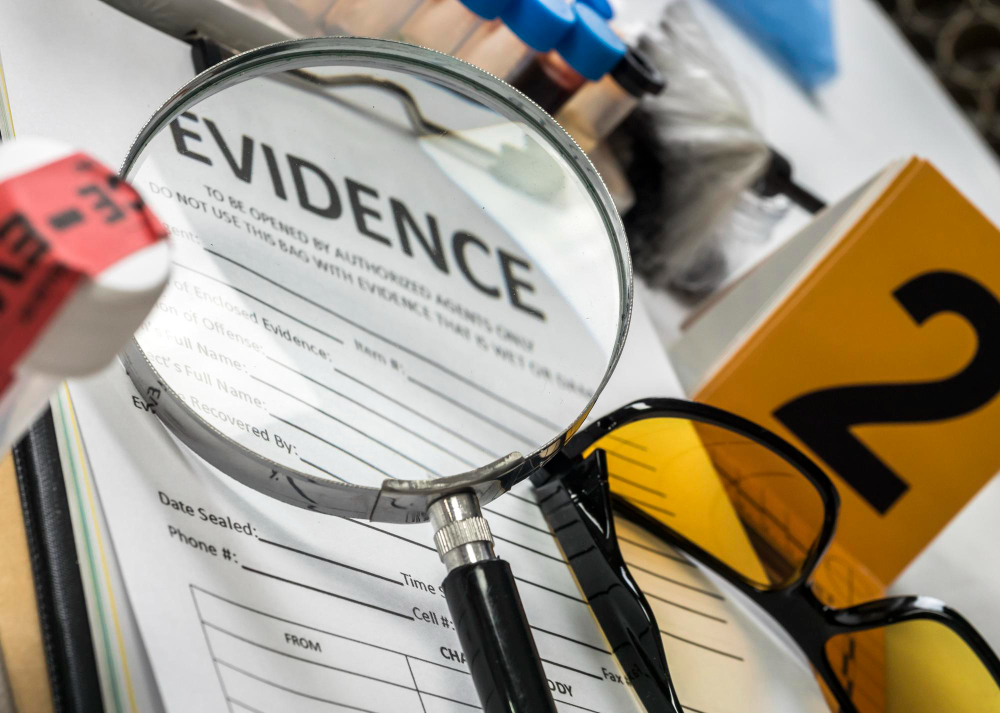
The strength of your car accident claim depends on the evidence you gather. In Illinois, proving negligence requires demonstrating that another driver breached their duty of care and caused your injuries. Strong documentation can mean the difference between a successful claim and a denied one, and insurers routinely use thin evidence as a reason to offer far less than a claim is actually worth.
Why Evidence Quality Matters So Much
Insurance adjusters and, if a case goes to trial, juries do not take a claimant’s word for what happened. They evaluate a claim based on documented facts: medical records that clearly tie an injury to the crash, financial records that prove actual losses, and independent evidence like photos, witness accounts, or camera footage that corroborates the claimant’s version of events. A claim built on memory and general assertions is far easier for an insurer to dispute than one built on a clear paper trail assembled from the first day forward.
Evidence to Gather at the Accident Scene
If you are physically able, collect this evidence immediately after the crash.
Photographs and Video
Use your smartphone to document vehicle damage from all angles, including wide shots showing overall damage and close-ups of specific damage points; debris and skid marks, which are physical evidence that can be cleaned up quickly; traffic signals and signs, which help prove what controls existed at the intersection; road conditions such as potholes, ice, wet pavement, or an active construction zone; weather and lighting conditions at the time; your own visible injuries, continuing to photograph as bruising or swelling develops over the following days; the final positions of the vehicles after impact; and the license plates of every vehicle involved.
Other Driver Information
Exchange and document the other driver’s license (photograph it if possible), insurance information including the policy number and company, vehicle registration, phone number and address, and license plate number.
Witness Information
Independent witnesses provide crucial third-party accounts. Collect names and phone numbers, email addresses, and brief notes on what each person actually saw. Ask witnesses if they would be willing to provide a statement later, since a witness who agreed at the scene is far more likely to actually follow through than one contacted cold weeks afterward.
Scene Notes
While details are fresh, note the exact time of the accident, what you were doing before impact, what the other driver was doing, the direction each vehicle was traveling, rough speed estimates, and anything the other driver said at the scene, since an admission of fault made in the moment is powerful evidence later.
Official Documentation
Police Report
Always call 911 after an accident. The police report includes the officer’s observations of the scene, statements from both drivers, witness statements, a preliminary fault determination, any citations issued (which are powerful evidence of a traffic violation), and a diagram of the accident scene.
Obtain a copy of the police report; you can request it from the responding department or through the Illinois State Police.
Accident Report (SR-1)
Under 625 ILCS 5/11-406, if police did not respond to the scene, Illinois law requires drivers to file a written SR-1 report with the Illinois Secretary of State within 10 days whenever the crash involves injury, death, or property damage exceeding $1,500, or $500 if any vehicle involved was uninsured. Failing to file this report can result in suspension of your driving privileges, separate from anything related to your injury claim.
Medical Evidence
Medical documentation is the foundation of your injury claim. Comprehensive, consistent records are essential, because this is the evidence category insurers scrutinize most closely.
Seek Immediate Medical Attention
See a doctor within 24 to 48 hours of your accident, even if you feel fine. This establishes a clear connection between the accident and your injuries, creates baseline documentation of your condition, and shows that you took your injuries seriously from the start.
Delayed treatment gives insurance companies ammunition to argue your injuries were not caused by the accident, or were not serious enough to matter.
What Medical Records Should Include
Ensure your records document the mechanism of injury, meaning how the accident specifically caused your injuries; a diagnosis stated in precise medical terminology; objective findings from physical examination and imaging; the treatment plan, including prescribed medications, therapies, and procedures; a prognosis covering expected recovery timeline and any permanent limitations; and the specific functional limitations the injury creates in daily life.
Follow Your Treatment Plan
Consistent medical treatment creates a paper trail proving your injuries required ongoing care, that you took reasonable steps to recover, and the actual severity and duration of your symptoms. Gaps in treatment undermine your claim, since insurers routinely argue a gap means the injury had already resolved. Keep all appointments and follow medical advice.
Diagnostic Imaging
Objective medical evidence carries real weight: X-rays document fractures and bone injuries, MRI scans reveal soft tissue damage and disc herniations that X-rays miss, CT scans show detailed internal injuries, and EMG studies document nerve damage from whiplash or other trauma.
Financial Documentation
Economic damages require proof of actual financial losses, not estimates.
Medical Bills and Expenses
Keep hospital and emergency room bills, doctor visit invoices, physical therapy costs, prescription medication receipts, medical equipment purchases, and mileage logs for medical appointments.
Lost Wages Documentation
Keep pay stubs showing your pre-accident earnings, a letter from your employer confirming missed work, tax returns if you are self-employed, documentation of any used sick or vacation time, and evidence of any lost bonuses, commissions, or overtime opportunities.
Property Damage
Keep repair estimates from multiple shops, final repair invoices, the total loss valuation if your vehicle was totaled, receipts for damaged personal property, and any rental car expenses incurred while your vehicle was out of service.
Digital and Electronic Evidence
Dashcam Footage
If you or any witnesses have dashcam video, preserve it immediately. This footage often provides indisputable proof of what actually happened, cutting through any dispute over who did what.
Traffic and Security Cameras
Note any nearby red light cameras, traffic monitoring cameras, business security cameras, or residential doorbell cameras. This footage may be deleted quickly on a routine cycle; an attorney can send preservation letters to prevent it from being erased.
Vehicle Data (Black Box)
Modern vehicles contain event data recorders that capture speed at impact, brake application, steering input, seatbelt status, and airbag deployment data. This data can prove speeding, a failure to brake, or other negligent driving that a driver’s own account might otherwise contradict.
Cell Phone Records
If you suspect the other driver was texting or using a phone, subpoenaed cell records can prove distracted driving at the time of the crash.
Personal Documentation
Pain and Symptom Journal
Keep a daily record of pain levels on a 1 to 10 scale, specific symptoms and their severity, medications taken and their effects, activities you could not perform, sleep disruption, and emotional impacts such as anxiety, depression, or frustration. This contemporaneous documentation supports non-economic damage claims for pain and suffering in a way a memory reconstructed months later cannot.
Impact Statements
Written statements from family members, friends, and coworkers describing how your injuries have affected your daily routine, participation in family activities, hobbies and recreation, personality and mood, and work performance can add real, independent weight to a pain and suffering claim.
Evidence Preservation Timeline
Evidence disappears quickly, so act fast. Immediately: scene photos, witness contacts, and other driver information. Within 24 to 48 hours: a medical examination and detailed written notes while memory is still fresh. Within days: the police report and preservation letters for any video footage. Ongoing: medical records, bills, the pain journal, and lost wage documentation as the claim develops.
When Evidence Points in Multiple Directions
It is common for a real accident scene to produce evidence that does not all tell the same clean story. A witness might remember the light being yellow when another remembers it as red, or the police report might note both drivers gave slightly different speed estimates. This does not automatically weaken a claim; it is normal for eyewitness accounts to vary in minor details even when the core sequence of events is consistent. What matters is whether the weight of the evidence, taken together, points clearly toward one driver’s negligence. An attorney’s job in reviewing evidence is not to find a single perfect witness but to build a coherent picture from everything available, including where accounts conflict and why the more objective evidence, camera footage, vehicle damage patterns, event data recorder output, should be weighted more heavily than a rushed verbal recollection given at the scene.
Common Evidence Mistakes That Weaken a Claim
Even careful people make evidence mistakes after a crash, often without realizing the damage until much later. Posting about the accident or your recovery on social media is one of the most common: a photo from a family gathering, even one where you are clearly still in pain, can be presented out of context to suggest your injuries do not limit you as much as claimed. Talking to the other driver’s insurer before speaking with an attorney is another; a recorded statement given in the confused, adrenaline-heavy hours after a crash rarely reflects the full picture and can be used to lock in an inaccurate account. Waiting too long to see a doctor creates a documentation gap that insurers exploit even when the delay had a perfectly reasonable explanation, such as not realizing the injury was serious until symptoms worsened days later. And discarding damaged personal property, a car seat, a helmet, damaged clothing, before it has been photographed and assessed removes physical evidence that can be difficult or impossible to recreate later.
Evidence for Passengers and Non-Driver Claimants
If you were a passenger, a pedestrian, or a cyclist rather than a driver, most of the same evidence categories still apply, but a few things deserve extra attention. As a passenger, you generally are not the one exchanging insurance information at the scene, so make a point of collecting the driver information yourself if you are physically able, since you cannot assume the driver you were riding with will pass along complete details later. As a pedestrian or cyclist, your own physical position and path at the moment of impact often become a central factual dispute, so photographing the crosswalk, bike lane, or exact location where the collision occurred, along with any relevant signage, is particularly important. In both situations, medical documentation and witness accounts carry even more relative weight, since you may not have your own vehicle’s damage or an event data recorder to help establish the mechanics of the crash.
Evidence in Cases Without a Police Report
Not every crash results in a responding officer, particularly minor parking lot incidents or crashes where both drivers initially agree to simply exchange information. Without a police report, the other categories of evidence carry more weight than they otherwise would: your own contemporaneous photos and notes, witness statements gathered at the scene, and prompt medical documentation all become more important when there is no official report to anchor the basic facts of what happened. This is also exactly the situation the SR-1 filing requirement is designed for, since the state still wants a record of qualifying crashes even when no officer investigated at the scene.
How an Attorney Helps Gather Evidence
An experienced car accident lawyer can send legal preservation letters to prevent evidence destruction, subpoena traffic camera footage, cell phone records, and black box data that are not otherwise accessible to an individual claimant, hire accident reconstruction experts when the facts are genuinely disputed, obtain comprehensive medical records and expert opinions, interview witnesses and secure written statements while memories are still fresh, and calculate the full scope of damages, including future costs an unrepresented claimant might not think to document.
A Realistic Example of Evidence Making the Difference
Hypothetical: two drivers collide at a stop-sign intersection in a residential neighborhood, and each says the other ran the sign. There is no red light camera at this intersection and no independent witness who stopped to give a statement. On paper, this looks like a difficult, he-said-she-said case. But one driver had photographed the scene within minutes, including skid marks starting well before the stop sign for one vehicle and none at all for the other, plus a doorbell camera visible on a nearby house. An attorney sends a preservation letter to the homeowner and recovers footage showing the actual sequence of events before the resident’s camera storage cycles out and overwrites it a week later. What looked like an unwinnable dispute becomes a straightforward liability case once the doorbell footage is secured, illustrating why acting within days, not weeks, on digital evidence requests is not just good practice but sometimes the entire case.
Contact Phillips Law Offices
At Phillips Law Offices, we know exactly what evidence is needed to build strong car accident claims. We act quickly to preserve critical evidence before it disappears and build comprehensive cases that maximize your recovery.
If you have been injured in a Chicago car accident, contact Phillips Law Offices at (312) 346-4262 for a free consultation. Time-sensitive evidence will not last, call today.
Authoritative Sources
Related Chicago Accident Guides
- Dealing with Insurance Companies After a Chicago Car Accident: Tactics to Watch
- Intersection Accidents in Chicago: Red Light, Stop Sign & Right-of-Way Claims
- Rear-End Collision Claims in Illinois: Proving Fault & Damages
FAQs
What evidence is most important after an Illinois car accident?
Photos, police report details, witness contacts, and early medical records are usually the strongest starting points, since they are hardest for an insurer to dispute later.
Can I still file a claim if I do not have video footage?
Yes. Claims can still succeed with medical records, witness statements, and thorough scene documentation, video footage simply makes a claim easier to prove when it exists.
How soon should I collect evidence after a crash?
As soon as possible. Some evidence disappears quickly, especially camera footage on a short retention cycle and witnesses who become harder to reach as time passes.
What happens if I forget to file the SR-1 report?
Failing to file an SR-1 when required can lead to suspension of your driving privileges, separate from your injury claim, so it is worth confirming with your attorney whether one is needed even when police responded to the scene.
For an overview of how Illinois car accident claims work and how the firm handles them, see our Chicago car accident lawyer page.
Every guide in our series on proving fault and evidence
- What Evidence Helps Strengthen a Car Accident Claim in Illinois?
- How Is Fault Determined in a Chicago Car Accident?
- Your Car’s Black Box: How EDR Data Helps Prove an Illinois Crash Claim
Talk to a Chicago car accident lawyer. Phillips Law Offices offers a free case review, and there is no fee unless we recover for you. Call (312) 346-4262 or request a free case review.
This article is general information about Illinois law, not legal advice, and reading it does not create an attorney-client relationship. Illinois law changes; confirm anything you intend to rely on with a licensed Illinois attorney.