
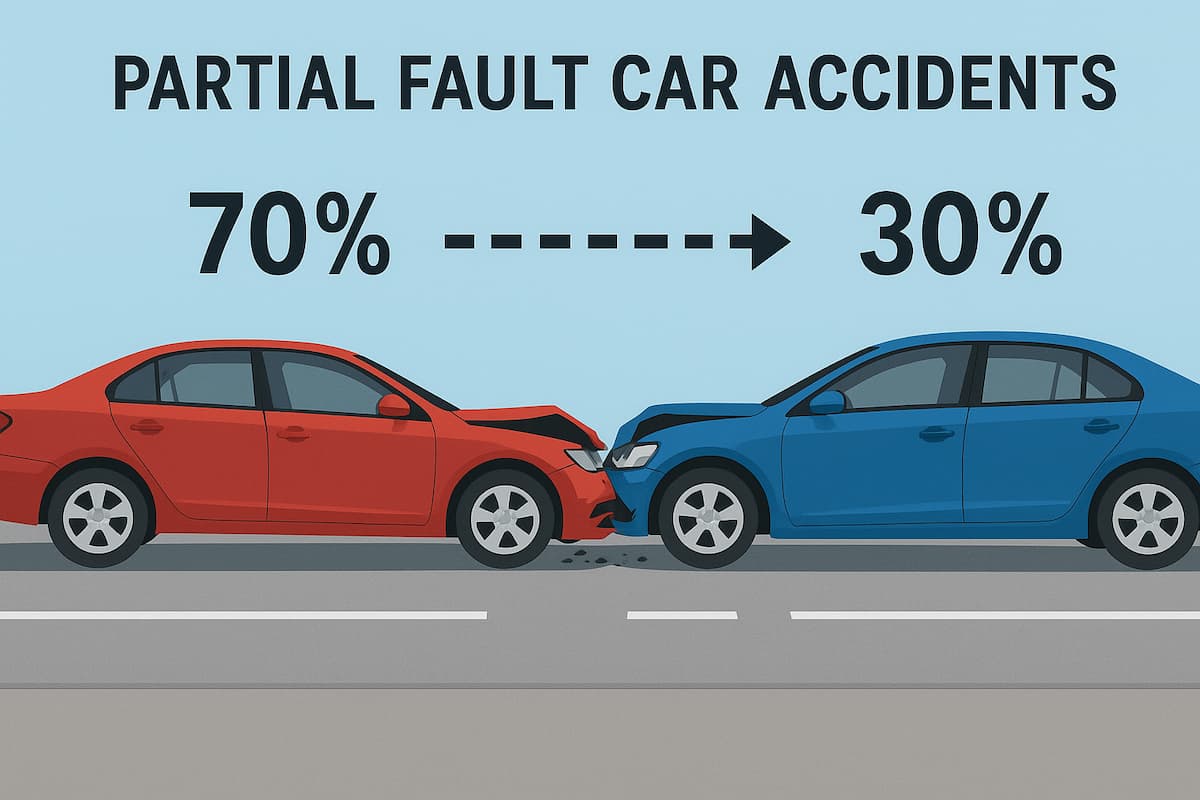
Being involved in a car accident is not only physically and emotionally stressful, but it can also be legally confusing, especially if there’s a chance you may share some responsibility for the crash. Many accident victims immediately wonder: “If I was partially at fault, can I still recover compensation?” The answer in Illinois is yes, but it comes with some important nuances.
Navigating the complexities of a shared-fault claim can be tricky, which is why working with an experienced attorney matters. At Phillips Law Offices, we have decades of experience helping accident victims throughout Illinois understand their legal options, negotiate with insurance companies, and pursue the compensation they deserve, even in cases where fault is shared.
What to Do First After a Partial Fault Accident
If you were partially at fault in a Chicago crash, it’s important to act quickly and strategically. Even a small misstep can affect your ability to recover fair compensation. Here’s what protects your rights and your recovery:
- Document everything: After an accident, evidence is your strongest ally. Take clear photos of the vehicles, the accident scene, skid marks, and any visible injuries. Collect witness statements and contact information, and keep all relevant documents, including repair estimates and medical records.
- Report the accident: Notify both local law enforcement and your insurance company as soon as possible. Filing a police report creates an official record of the incident, which can be crucial in proving liability.
- Seek medical attention: Even if your injuries seem minor, get evaluated by a doctor. Some injuries, whiplash or internal trauma, may not be immediately apparent, and medical records serve as critical evidence linking your injuries to the accident.
- Understand your fault percentage: Illinois follows a modified comparative negligence system. Your financial recovery can be reduced by your percentage of fault, but it’s not automatically denied. If you’re found 30% at fault, your compensation gets reduced by that percentage.
- Contact a Chicago personal injury lawyer: A skilled attorney can help maximize your recovery and push back against an inflated fault percentage.
Understanding Illinois Law
Illinois follows a modified comparative negligence system, often called the 51% Bar Rule. This rule determines whether you can recover compensation after a car accident, and how much:
- If you are 50% or less at fault: You’re still eligible to recover compensation for your injuries and damages, but your total recovery gets reduced by your percentage of fault. If your damages total $100,000 and you’re found 25% at fault, your recovery would be reduced to $75,000.
- If you are 51% or more at fault: You cannot recover any compensation. If the evidence shows you were mostly responsible for the accident, the law bars you from receiving damages entirely.
This rule is codified in the Illinois Compiled Statutes, 735 ILCS 5/2-1116, and it plays a central role in personal injury cases throughout the state.
Who Actually Decides the Percentage?
This is the part that surprises a lot of people: there’s no official government body that assigns a fault percentage before your case settles. If the case settles, the insurance adjusters on both sides negotiate a percentage as part of the deal. If it goes to trial, a jury decides, guided by Illinois Pattern Jury Instructions on negligence and comparative fault, but not bound by any fixed formula. That means the percentage attached to your case is genuinely negotiable, not a number handed down from on high, and a skilled attorney’s job is often specifically to move that number down.
Key Illinois Considerations
When you’re partially at fault in a car accident, a few Illinois-specific rules and habits can shape your outcome:
- Statute of limitations: Under 735 ILCS 5/13-202, most personal injury claims must be filed within two years from the date of the accident. Missing this deadline can bar you from recovering any compensation, even with a strong case.
- Evidence matters more, not less: In a shared-fault case, police reports, medical records, repair estimates, photographs, and witness statements all carry extra weight, because the fight isn’t just about whether the other driver was negligent, it’s about exactly how much.
- Negotiations with insurers get harder: Insurers often start shared-fault negotiations by pushing your fault percentage as high as possible, sometimes right up near the 50% line, specifically to shrink or eliminate your recovery.
How Insurers Try to Push Your Fault Percentage Higher
Because every additional percentage point of fault assigned to you directly reduces what the insurer pays, adjusters have a real financial incentive to inflate your share. A few tactics show up often:
- Pointing to minor, arguably irrelevant details, a slightly late reaction, an unsignaled lane position months earlier, to argue you contributed more than you did.
- Asking leading questions during a recorded statement designed to get you to describe your own driving in a way that sounds worse than it was.
- Citing a first officer’s preliminary notes on scene as if they were a final, unchallengeable fault determination, when police reports are often revised or supplemented later.
None of this is illegal. It’s just negotiation, and it’s exactly why having someone on your side who does this professionally changes the outcome.
What Happens When Multiple Defendants Are Also at Fault
Comparative fault gets more complicated once more than two parties are involved, a common situation in Chicago expressway pileups. Illinois has a separate rule for this, 735 ILCS 5/2-1117, that determines how much of the total judgment each defendant actually has to pay.
- A defendant found 25% or more at fault is jointly and severally liable for your non-medical damages, meaning you can collect that full share from them even if a co-defendant can’t pay.
- A defendant found less than 25% at fault is only severally liable for non-medical damages, meaning you can only collect their specific percentage from them.
- Medical expenses are treated differently from everything else: every defendant found liable, regardless of their percentage, is jointly and severally liable for your past and future medical bills. Even a defendant found only 10% at fault can be on the hook for your entire hospital bill if the other defendants can’t pay.
If you’re partially at fault yourself in a multi-vehicle crash, this rule still interacts with your own recovery bar. You still need to be under 50% at fault to recover anything, but once you clear that bar, how much you actually collect from each defendant depends on this separate 25% threshold, not just the raw percentages assigned to everyone in the crash.
Example: A Hypothetical Shared-Fault Case
The following is a hypothetical illustration only, not an account of any real client or case.
Imagine a driver merging onto the Kennedy Expressway who gets sideswiped by a car already in the lane going slightly over the limit. The merging driver didn’t fully check their blind spot; the other driver was speeding. A responding officer’s initial report notes both factors without assigning a clear percentage.
The insurer for the speeding driver opens negotiations by proposing the merging driver was 60% at fault, which would bar recovery entirely under the 51% rule. The merging driver’s attorney pulls the speeding driver’s estimated speed from witness statements and roadway skid analysis, arguing the actual split is closer to 30/70 in the merging driver’s favor. The case ultimately settles with the merging driver found 25% at fault, a result that would have been a complete denial of compensation if the insurer’s opening position had gone unchallenged.
Notice what actually moved the number: not a new law, not a judge’s ruling, just better evidence assembled and presented before the insurer’s first offer became the anchor point for the whole negotiation. That’s usually how these disputes get resolved, incrementally, through evidence, not through some dramatic reveal at trial.
How Your Own Insurance Fits Into a Shared-Fault Claim
Being partially at fault changes the math on your own auto policy too. If you carry collision coverage, your insurer will pay to repair your vehicle regardless of fault, then may seek reimbursement from the other driver’s insurer for their share, a process that happens behind the scenes and generally doesn’t require anything from you. Your comprehensive and collision deductible still applies up front, though, and getting it back later usually depends on the fault split being resolved in your favor.
Med-pay and personal injury protection coverage, where you carry it, typically pay out regardless of fault percentage, which makes them useful for covering initial medical costs while the comparative-fault fight over the liability claim is still being sorted out. Don’t wait for the fault dispute to resolve before using coverage that’s available to you now.
One more wrinkle: if the other driver was under-insured relative to the actual value of your claim, your own underinsured motorist coverage can come into play even in a shared-fault scenario, though your UIM insurer will typically apply the same comparative-fault reduction the at-fault driver’s insurer would have.
Common Mistakes to Avoid
If you were partially at fault in a car accident, it’s easy to make missteps that shrink your recovery further than the law actually requires. Watch for these:
- Admitting full fault: Even if you feel responsible, avoid admitting full blame at the scene or in statements to other drivers, witnesses, or adjusters. Illinois law reduces compensation based on your actual fault percentage, but admitting complete responsibility can unfairly cut off recovery you’re still entitled to.
- Delaying medical care: Seeking prompt medical attention is essential, even if injuries seem minor. Delaying treatment lets injuries worsen and weakens your claim on both the fault and damages sides.
- Speaking with insurance adjusters alone: Adjusters often ask leading questions specifically in shared-fault cases, designed to get you to describe your own conduct unfavorably.
- Failing to document evidence: Evidence is the backbone of any claim, and it matters even more here, since you’re fighting over a percentage, not just an outcome.
- Assuming a high fault percentage is final: An insurer’s opening position on your fault share is a negotiating tactic, not a legal ruling.
When to Contact a Chicago Personal Injury Lawyer
While not every accident requires legal representation, there are situations where it changes the outcome:
Insurance companies dispute fault or undervalue your claim. Insurers may assign a higher percentage of fault to you than the evidence supports. A skilled attorney can challenge inaccurate assessments and negotiate so your share of compensation reflects your actual responsibility, not the insurer’s opening offer.
Serious or long-term injuries. If your injuries require extended medical care, rehabilitation, or affect your ability to work, legal representation is crucial for calculating damages accurately.
Accidents involving multiple vehicles or commercial drivers. Complex accidents involving multiple vehicles, commercial trucks, or rideshare drivers often involve several insurance companies pointing fault at each other, including at you.
Uncertainty about your rights or case value. If you’re unsure about your fault percentage or potential compensation, a personal injury attorney can outline your options based on the actual facts, not an insurer’s characterization of them.
Call Phillips Law Offices at (312) 346-4262 for a free consultation if any of these situations apply to you.
Frequently Asked Questions
Can I recover compensation if I was partially at fault?
Yes, under Illinois’ modified comparative negligence law, you can recover damages reduced by your percentage of fault as long as you are 50% or less at fault.
How is fault determined in Illinois car accidents?
Fault is determined based on evidence, police reports, witness statements, and insurance investigations. Comparative negligence percentages are assigned to each party, either through negotiation or, if the case goes to trial, by a jury.
What happens if I am more than 50% at fault?
If your fault exceeds 50%, Illinois law bars you from recovering damages from the other party entirely.
How long do I have to file a claim?
The statute of limitations in Illinois for personal injury claims is generally two years from the date of the accident, so acting promptly is critical.
Should I speak to the insurance company if I’m partially at fault?
It’s best to consult a lawyer before speaking with insurers, since statements can be used to argue your fault percentage should be higher.
Can the fault percentage change after the insurance company gives an initial number?
Yes. An initial percentage from an adjuster is a negotiating position, not a final determination. New evidence, expert analysis, or negotiation can shift it substantially.
Does a citation I received at the scene decide my fault percentage?
A citation is evidence, not a verdict. It carries weight but can be outweighed by other evidence showing the other driver’s conduct contributed more to the crash.
If there were three cars in the crash, how does that change my fault percentage?
Fault gets divided among everyone involved, including any other at-fault drivers, not just between you and one other person. Under 735 ILCS 5/2-1117, how much you can actually collect from each defendant also depends on whether their individual share is above or below 25%, separate from the 50% bar that applies to your own recovery.
Will my own collision coverage still pay if I was partly at fault?
Yes, collision coverage generally pays regardless of fault, subject to your deductible. Reimbursement of that deductible from the other driver’s insurer depends on how the fault split is ultimately resolved.
Final Thoughts
If you were partially at fault in a Chicago car accident, don’t assume you have no legal options. Illinois law allows accident victims to recover compensation even when they share some responsibility for the crash. The amount you recover may be reduced based on your percentage of fault, but you’re still entitled to seek damages for medical bills, lost wages, property damage, and pain and suffering.
The key to protecting your rights is thorough documentation. Keep detailed records of your injuries, medical treatments, repair estimates, and any other expenses related to the accident. Photographs of the accident scene, vehicle damage, and visible injuries provide crucial evidence in determining fault and supporting your claim, and that evidence matters just as much for a shared-fault dispute as it does for proving damages.
At Phillips Law Offices, we specialize in helping clients navigate these complex cases, guiding them through documentation, insurance negotiations, and legal proceedings to help maximize their recovery.
A shared-fault case is rarely a clean, one-sided story. It’s a negotiation over degrees of blame, and the outcome usually reflects who came prepared to argue the percentage, not just who was technically right about what happened at the intersection or on the expressway that day.
Authoritative Sources
- Illinois Department of Insurance – Comparative Negligence (735 ILCS 5/2-1116)
- Illinois Pattern Jury Instructions – Civil
Related Chicago Accident Guides
- What Is the Average Settlement for a Car Accident in Illinois?
- How Is Fault Determined in a Chicago Car Accident?
- Who Pays for My Medical Bills After a Car Accident in Illinois?
- What Evidence Do You Need for an Illinois Car Accident Claim?
- Dealing with Insurance Companies After a Chicago Car Accident: Tactics to Watch
- Intersection Accidents in Chicago: Red Light, Stop Sign & Right-of-Way Claims
Related guides on Illinois traffic law and deadlines
- Start here: How Long Do I Have to File a Car Accident Lawsuit in Illinois? | Chicago Guide
- Illinois Seat Belt Law and Car Accident Claims: What Chicago Drivers Should Know
- Illinois Child Safety Seat and Booster Law: What Chicago Families Should Know
- Illinois School Bus Stop‑Arm Law: What Drivers Must Do and How Claims Work
- Scott’s Law (Move Over Law) in Illinois: What Drivers Must Do in Chicago
Talk to a Chicago car accident lawyer. Phillips Law Offices offers a free case review, and there is no fee unless we recover for you. Call (312) 346-4262 or request a free case review.
This article is general information about Illinois law, not legal advice, and reading it does not create an attorney-client relationship. Illinois law changes; confirm anything you intend to rely on with a licensed Illinois attorney.