A roadside crash can happen in seconds, especially in Chicago traffic where lanes are tight and shoulders are narrow. Scott’s Law, Illinois’s “Move Over” law, is designed to protect police, firefighters, tow-truck operators, IDOT crews, and anyone working on the side of the road. If you were hurt in a crash involving a stopped emergency or maintenance vehicle, knowing the law helps you understand fault, evidence, and next steps.
This guide explains what Scott’s Law requires, where it applies, and how it can affect liability and insurance claims after a Chicago crash.
Authoritative Sources
What is Scott’s Law in Illinois?
Scott’s Law is Illinois’s Move Over law. It requires drivers approaching a stationary authorized emergency or maintenance vehicle displaying flashing lights to change lanes when possible and slow down, proceeding with caution. The law is part of the Illinois Vehicle Code at 625 ILCS 5/11-907(c).
The law is named for Lieutenant Scott Gillen of the Chicago Fire Department, who was struck and killed by an intoxicated driver on December 23, 2000, while responding to a crash on the Dan Ryan Expressway. The purpose is simple: give roadside workers and emergency responders a safe buffer so they can do their jobs without being struck by traffic.
Quick summary: what drivers must do
- Move over into a farther lane if it is safe to do so
- Slow down and proceed with caution if a lane change is not safe or possible
- Stay alert for responders, cones, equipment, and people on the shoulder
In real-world Chicago traffic, this usually means signaling early and changing lanes when you can. If congestion makes that impossible, you must slow down and pass cautiously.
Which vehicles are covered under Scott’s Law?
The law applies to a wide range of vehicles displaying authorized flashing lights, including police vehicles, fire and EMS vehicles, ambulances, IDOT and highway maintenance vehicles, construction and road-work vehicles, and tow trucks and roadside assistance vehicles.
Illinois State Police guidance confirms that Scott’s Law applies to these vehicles when they are stopped and displaying authorized flashing lights. Recent legislative changes have also moved to extend protection to emergency vehicles that are actively responding, not just fully stopped, reflecting how many roadside incidents now involve a vehicle still in motion as it arrives at a scene.
Where Scott’s Law applies in Chicago
The law applies on expressways, city streets, and any roadway where an authorized vehicle is stopped with flashing lights. In Chicago, this commonly includes I-90/94 (the Kennedy, Edens, and Dan Ryan segments), I-290 (the Eisenhower), I-55 (the Stevenson), Lake Shore Drive and major arterials like Western, Ashland, Cicero, and Pulaski, construction zones with IDOT or municipal crews, and roadside tow operations after fender-benders.
If the vehicle is stopped on the shoulder or in a lane with flashing lights, Scott’s Law applies.
Why Scott’s Law matters for crash liability
If a driver fails to move over or slow down and causes a collision, that behavior can be strong evidence of negligence. In a civil claim, the core question is whether the driver used reasonable care under the circumstances. Violating a safety law can support a finding of fault, especially if the crash involves a stopped emergency or maintenance vehicle.
Common Scott’s Law crash scenarios include a driver clipping an IDOT truck on the shoulder because they did not move over, a tow operator getting hit while loading a car on the Dan Ryan, and a police car being struck during a traffic stop on the Kennedy. In each case, evidence that a driver failed to move over or slow down can help show responsibility.
Chicago-Specific Risks: Why Move-Over Crashes Happen Here
- Narrow shoulders: downtown expressways and underpasses leave little buffer for stopped vehicles.
- Heavy congestion: stop-and-go traffic creates abrupt lane changes.
- Frequent construction: lane shifts and short merges reduce reaction time.
- Winter conditions: ice, snow, and salt reduce traction and visibility.
Because these conditions are common, drivers are expected to be cautious and anticipate roadside hazards.
Increased Penalties and a Real Enforcement Shift
Illinois has taken Scott’s Law violations increasingly seriously in recent years as squad-car and tow-truck strikes have continued to make headlines. Fines for a first offense run at least $250, with steeper penalties, up to and including license revocation in more serious cases, for repeat violations or violations that cause injury or death. This trend toward harsher enforcement reflects a real, ongoing problem, not just symbolic legislation: Illinois State Police have reported many squad cars struck each year by drivers who failed to move over, some resulting in trooper injuries or deaths.
Evidence that supports a Scott’s Law-related claim
To prove fault, you need evidence showing where vehicles were, what lights were activated, and how the crash happened. Useful evidence includes police crash reports documenting the stopped vehicle and flashing lights, dashcam or traffic camera footage, photographs of the scene including warning lights and lane positions, witness statements from responders or nearby drivers, and vehicle damage patterns showing a failure to move over.
If emergency responders or tow operators were on scene, their statements can also help establish that Scott’s Law was triggered.
Evidence preservation tips
Move-over crashes often involve multiple agencies and vehicles. Evidence can disappear quickly if it is not preserved. Helpful steps include requesting dashcam or squad-car footage early, asking for preservation of tow-truck or work-zone camera footage, taking photos of the scene, lights, and traffic layout, and saving your own dashcam footage.
Early preservation can prevent missing evidence that may later become crucial to proving fault.
What to do after a move-over-related crash (checklist)
- Call 911 and request a police response
- Photograph the emergency or maintenance vehicle and its flashing lights if safe to do so
- Get names and badge numbers of responding officers
- Collect witness contact information
- Seek medical care and document all symptoms
- Preserve dashcam footage or request nearby video immediately
Camera footage can be overwritten quickly, especially from private systems. Early action matters.
How insurance companies analyze move-over crashes
Insurers typically focus on three questions: was the stopped vehicle displaying authorized lights, did the driver have room and time to move over, and if not, did the driver slow down and proceed with caution? Clear evidence of the lighted vehicle, lane layout, and traffic conditions helps answer these questions.
It is common for insurers to argue that a lane change was unsafe because of traffic. If that is true, the next question is whether the driver slowed down enough and passed cautiously. That is why speed estimates, skid marks, and dashcam footage matter in these cases.
Shoulder vs. travel-lane stops: why it matters
Crashes happen both when a vehicle is fully on the shoulder and when part of the vehicle is in a travel lane. In Chicago, narrow shoulders and construction zones can leave stopped vehicles partially in a lane. That does not eliminate Scott’s Law; drivers still must move over if possible and slow down when they cannot. In claims, insurers often focus on whether there was adequate room to change lanes and whether the driver had enough time to react. Clear photos of the roadway width, lane markings, and cone placement can help show what was realistically possible in the moment.
If you were the responder or tow operator
Scott’s Law crashes often involve people working on the roadside. If you were a responder, tow-truck operator, or road-crew worker, your claim may involve additional documentation such as work orders, dispatch records, or employer incident reports. Your employer may also have internal policies for preserving scene photos or dashcam data. These records can strengthen the liability picture by showing where you were positioned and what safety measures were in place. Depending on your employment status, a workers’ compensation claim may run alongside, rather than instead of, a civil claim against the at-fault driver, particularly if the at-fault driver was not your employer.
Mistakes that weaken a move-over claim
Insurance companies look for gaps. Common issues include waiting too long to request video footage, failing to document the flashing lights in photos, or giving a vague description of the lane layout. Even if the other driver clearly violated Scott’s Law, a lack of evidence can slow the claim. A short written timeline, clear photos, and prompt medical care help keep the claim focused on the move-over violation rather than on avoidable disputes.
What if a driver is cited under Scott’s Law?
Sometimes a police report notes a Scott’s Law citation. A citation is not the same as a civil liability finding, but it can still be helpful evidence because it shows the officer believed the driver violated the move-over requirements. If a citation is issued, your lawyer can obtain the report and use it to support the timeline and fault analysis. If no citation is issued, you can still pursue a claim; liability is based on the evidence, not just the ticket.
A Realistic Example
Hypothetical: a tow-truck operator is loading a disabled vehicle onto a flatbed on the shoulder of the Dan Ryan during evening rush hour, with amber flashing lights active. A driver in the right lane, distracted by a phone notification, fails to notice the tow truck’s lights until the last moment and swerves late, clipping the flatbed’s rear ramp and injuring the operator. The driver’s insurer initially argues traffic was too heavy for a safe lane change. Dashcam footage from a following vehicle, combined with the police report noting a Scott’s Law citation issued at the scene, shows there was in fact an open lane available and adequate time to move over well before the point of impact. The citation alone does not resolve the civil claim, but paired with the dashcam footage, it becomes difficult for the insurer to maintain the “no safe lane change” argument.
Comparative Fault in Scott’s Law Cases
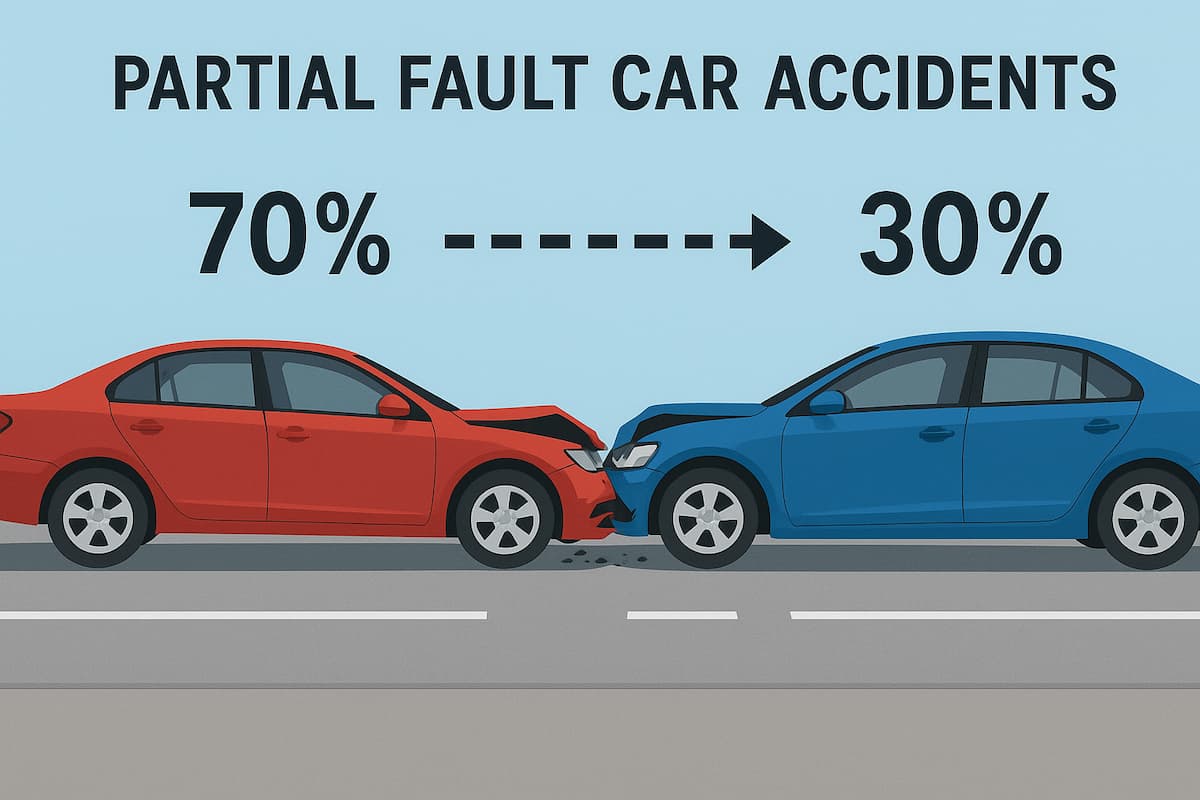
Even a clear Scott’s Law violation does not automatically resolve every liability question. Under Illinois’s modified comparative negligence rule, 735 ILCS 5/2-1116, an injured person’s own recovery can be reduced by their own percentage of fault, and eliminated entirely if they are found 50 percent or more at fault. In a Scott’s Law case, this can come up when the injured worker’s own positioning created some additional risk, for example, standing further into the travel lane than necessary given the available shoulder space, or when the responding vehicle’s own lights or placement were not fully compliant with standard safety protocols. These arguments do not erase a driver’s basic legal duty to move over or slow down, but insurers will look for them, which is another reason detailed scene photographs, showing exactly where the tow truck, worker, and traffic cones were positioned, matter as much for defending against a comparative fault argument as for proving the initial violation.
Multi-Vehicle Scott’s Law Incidents
Some of the most severe Scott’s Law crashes involve a chain reaction rather than a single vehicle striking the stopped emergency vehicle directly. A driver who swerves late to avoid a stopped squad car can clip another vehicle in an adjacent lane, or a secondary crash can occur when following traffic fails to react in time to the sudden braking of the vehicle ahead. These multi-vehicle scenarios require sorting out which driver’s failure to move over or slow down actually initiated the chain of events, since a driver who reacted reasonably to a sudden hazard created by someone else’s Scott’s Law violation is in a very different legal position than the driver who caused the original hazard.
Claim timeline: what happens after a move-over crash
Most claims begin with medical treatment and a crash report. In the weeks that follow, insurers collect statements, photographs, and any available video. If injuries are still being treated, settlement discussions usually happen later, after doctors have a clearer view of recovery and future care needs. While each case is different, early organization, records, receipts, and a clear timeline, helps reduce delays and protects the value of the claim. It also helps avoid disputes.
Keep wage-loss documentation from employers, save towing and repair receipts, and track out-of-pocket expenses such as parking, medications, and rides. These small items add up, and solid documentation makes them easier to recover. Illinois’s standard personal injury statute of limitations under 735 ILCS 5/13-202 gives you two years from the date of the crash to file a lawsuit; if the emergency or maintenance vehicle involved belonged to a city or state agency, a separate one-year written notice deadline under the Illinois Local Governmental and Governmental Employees Tort Immunity Act may also apply and is worth confirming early.
Injuries common in Scott’s Law crashes
Because these crashes often involve high speed and limited shoulder space, injuries can be severe: head injuries and concussions, neck and back injuries, fractures and crush injuries, shoulder, knee, and hip trauma, and psychological distress after a sudden impact.
Consistent medical documentation helps connect injuries to the crash.
Damages you may be able to recover
A Scott’s Law-related crash claim may include medical expenses (current and future), lost wages and reduced earning capacity, pain and suffering, and property damage and related expenses.
The stronger the evidence of a move-over violation, the stronger the liability case.
FAQs
Does Scott’s Law apply to tow trucks?
Yes. Illinois State Police guidance includes tow trucks among the vehicles covered when they are stopped with authorized flashing lights.
Does the law apply to construction and highway maintenance vehicles?
Yes. Scott’s Law covers authorized vehicles displaying flashing lights, including construction and maintenance vehicles.
What if I couldn’t move over because traffic was packed?
You still must slow down and proceed with caution. The law recognizes that a lane change is not always possible.
Can a violation affect an injury claim?
Yes. If a driver failed to move over or slow down and caused a crash, it can strongly support fault in a civil claim.
What are the penalties for a Scott’s Law violation?
A first offense carries a fine of at least $250, with steeper fines and potential license consequences for repeat violations or crashes that cause injury or death.
Talk to a Chicago Car Accident Lawyer About a Scott’s Law Crash
Crashes involving stopped emergency or maintenance vehicles can raise complex liability questions. A lawyer can help preserve evidence, identify responsible parties, and protect your claim.
If you or a family member was injured in a Scott’s Law-related crash in Chicago, call Phillips Law Offices at (312) 346-4262 for a free consultation.
This is general information, not legal advice.
Related Chicago Accident Guides
- Car Fires After Collisions in Chicago: Evidence Preservation, Product-Liability Flags, and Immediate Steps
- Car-vs-Pedestrian Crosswalk Claims in Chicago (Non-Fatal): Rights, Evidence, and Next Steps
- Post-Crash Social Media Mistakes: What Can Hurt a Chicago Car Accident Claim (and What to Do Instead)
Related guides on Illinois traffic law and fault
- Start here: Illinois Comparative Fault: How Partial Blame Affects Your Claim
- 2025 Illinois Personal Injury Law Changes: What Accident Victims Need to Know
- Illinois School Bus Stop‑Arm Law: What Drivers Must Do and How Claims Work
- Illinois Seat Belt Law and Car Accident Claims: What Chicago Drivers Should Know
Talk to a Chicago car accident lawyer. Phillips Law Offices offers a free case review, and there is no fee unless we recover for you. Call (312) 346-4262 or request a free case review.